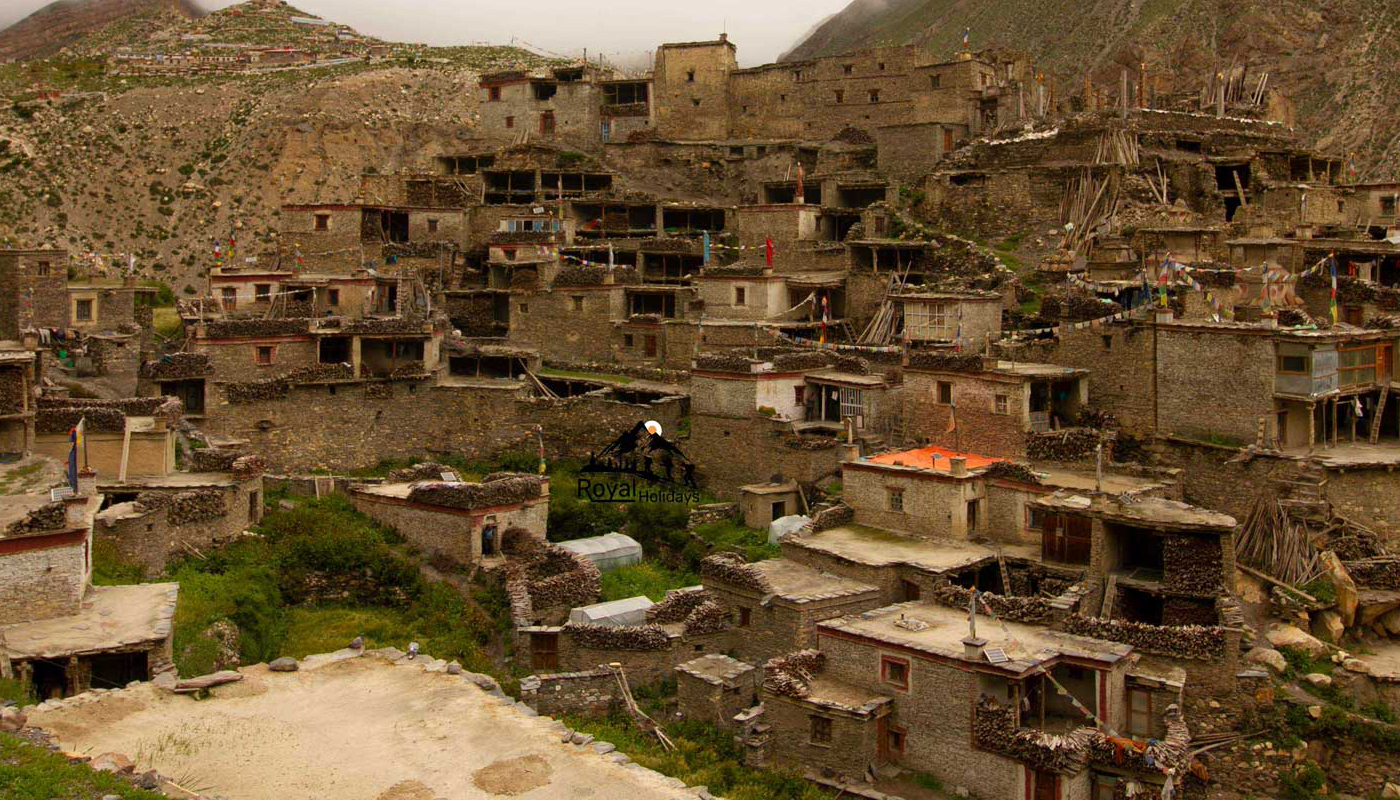
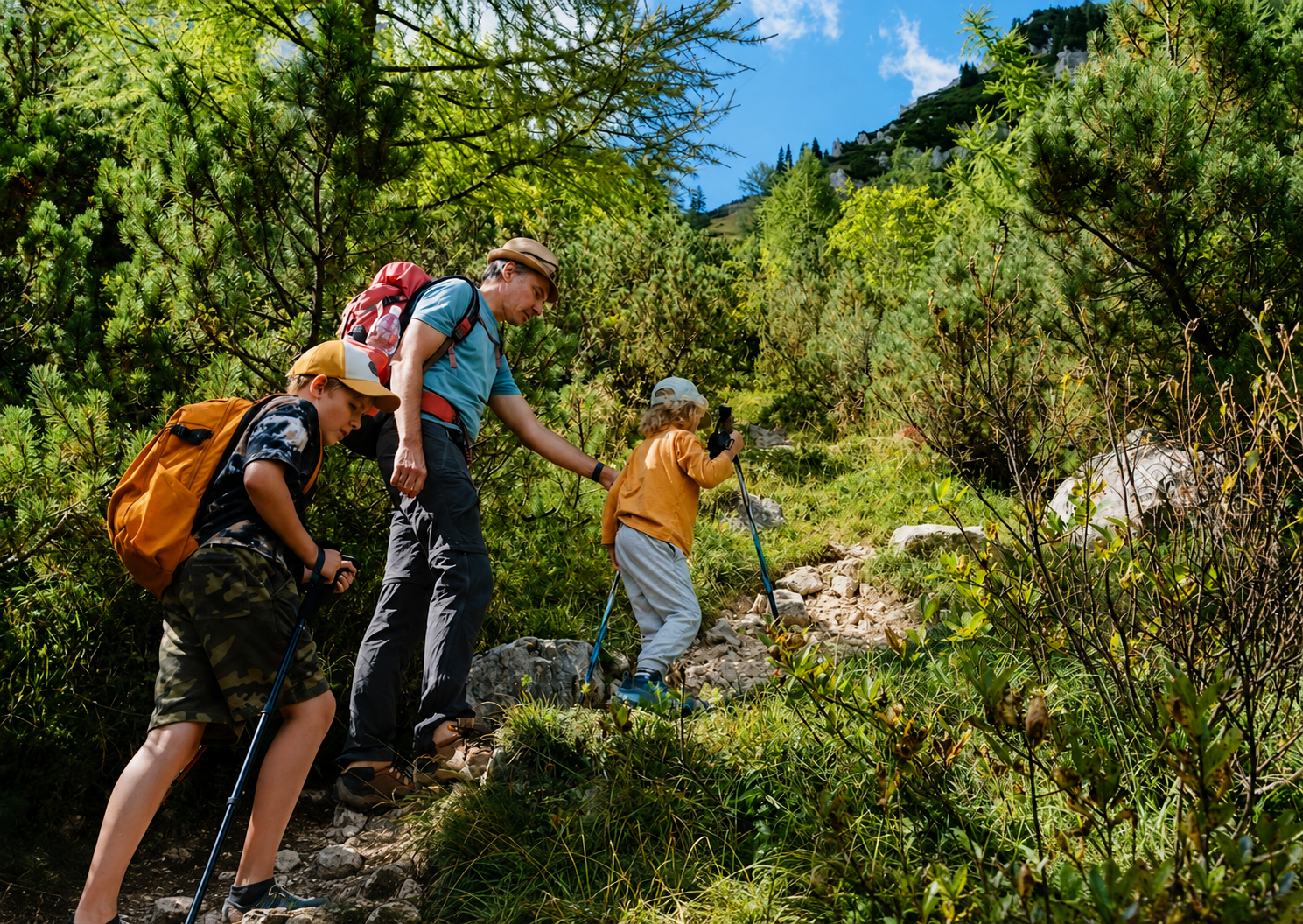
Explore Nepal With Kids: Top Family-Friendly Activities and Destination

‘Nepal’ known for its breathtaking Himalayan mountain range, diverse ecosystems, rich cultural heritage, and vibrant natural landscapes, Nepal offers an array of experiences ideal for families seeking adventure and cultural immersion. Explore Nepal with kids can be a deeply rewarding experience, providing opportunities for learning, bonding, and adventure in one of the world’s most spectacular settings. From ancient temples and bustling markets to serene lakes and lush jungles, Nepal has something to captivate every family member.

Nepal’s unique geographical and cultural diversity makes it an ideal destination for families. The country’s varied landscapes range from the towering peaks of the Himalayas to the lush, subtropical plains of the Terai region. This diversity means that families can experience a wide range of activities, from high-altitude trekking to wildlife safaris. Nepalese culture, steeped in centuries-old traditions and influenced by both Hinduism and Buddhism, offers a rich tapestry of festivals, rituals, and everyday life that can be fascinating for Explore Nepal With Kids.

Best Things To Do: Explore Nepal with Kids

Here are the best activities  you can do with your kids in Nepal:

Explore Around Kathmandu Valley

The Kathmandu Valley is a treasure trove of ancient temples, bustling markets, and serene landscapes. Family-friendly activities include visiting the iconic Swayambhunath (Monkey Temple), where kids will be delighted by the resident monkeys and panoramic views of the city. The historic Durbar Squares in Kathmandu, Patan, and Bhaktapur offer a glimpse into Nepal’s rich cultural heritage, with intricate palaces, courtyards, and temples. Easy hikes in the surrounding hills, such as Nagarkot, Nagarjun and Shivapuri National Park  provide stunning vistas and a taste of Nepal’s natural beauty.

Everest Base Camp Helicopter Tour with Kids

For an unforgettable family adventure, a helicopter tour to Everest Base Camp offers breathtaking views of the world’s highest peak without the strenuous trek. This short yet exhilarating experience allows kids to witness the grandeur of the Himalayas and the remote beauty of the Khumbu region. The tour typically includes a brief stop at the base camp or nearby, providing a rare opportunity to stand in the shadow of Mount Everest.

Jungle Safari in Chitwan National Park

Chitwan Jungle Safari is perfect for a family wildlife adventure. Activities include jeep safaris, canoe rides, and jungle walks, where kids can spot rhinos, elephants, deer, and even the elusive Bengal tiger. The park’s diverse ecosystem provides a chance to learn about Nepal’s wildlife and conservation efforts. Cultural Tharu village tours and elephant bathing sessions are also popular with children, offering unique insights into local traditions and a hands-on experience with the gentle giants.

Pokhara Exploration with Kids

Pokhara, a scenic city by Phewa Lake, offers a plethora of family-friendly activities. Enjoy boating on the tranquil lake, where kids can paddle and explore the small island with the Tal Barahi Temple. Visit the World Peace Pagoda, a serene spot offering stunning views of the Annapurna range and the city below. Drive to Sarangkot for a panoramic sunrise over the Himalayas, a sight that will leave the whole family in awe. For adventurous families, paragliding in Pokhara provides an exhilarating experience with spectacular aerial views of the lakeside and surrounding mountains.

Ghorepani Poon Hill Trek with Kids

This 3-night 4-days easy Poon Hill trek is ideal for families. The trek passes through lush forests, charming villages, and terraced fields, culminating in the breathtaking sunrise view from Poon Hill. The trail is well-marked and equipped with comfortable teahouses, making it suitable for kids. Along the way, families can interact with local villagers, learn about the traditional Gurung and Magar cultures, and enjoy the diverse flora and fauna.

Annapurna Base Camp Helicopter Tour with Kids

For a more accessible option to experience the Annapurna region, a helicopter tour to Annapurna Base Camp provides stunning views without the physical demands of trekking. This quick and thrilling journey offers children a unique perspective of the majestic mountains and the beauty of the Annapurna Sanctuary. The tour includes a stop at the base camp, where families can take in the awe-inspiring surroundings and capture unforgettable photos.

Family Adventure tour in Nepal With Royal Holidays Adventure

Plan an unforgettable family adventure in Nepal with Royal Holidays Adventure! They offer diverse experiences for all ages, from gentle treks and cultural tours to thrilling wildlife safaris. Explore ancient temples, majestic mountains, and serene lakes, all while enjoying safe adventures and comfortable family-friendly accommodations. Royal Holidays Adventure creates enriching experiences that blend adventure, relaxation, and cultural immersion for memories that will last a lifetime. Furthermore, you can contact Royal Holidays Adventure to make Perfect holiday itineraries for Nepal trip.

Is Nepal Safe to Explore with Kids?

Yes, Nepal safe destination for families with children. The Nepalese warmly welcome tourists, including families with young children, known for their hospitality and friendlinessWhile traveling in Nepal, it is important to take basic safety precautions. Major tourist areas and trekking routes are well-equipped to handle the needs of families, with accommodations and facilities that cater to children. Medical facilities are available in major cities like Kathmandu and Pokhara, and many trekking routes have access to basic health services. It is also advisable to carry a first-aid kit and ensure that travel insurance covers any potential medical needs.

Can we Find Child-Friendly Accommodation in Nepal?

Yes, many hotels and lodges cater to families and offer child-friendly amenities and services. Accommodations in popular tourist areas are well-equipped to meet the needs of families, providing comfortable and safe environments for children.

Can Young Children Handle the altitude in Nepal?

Gradual acclimatization and avoiding rapid altitude gain can help children adjust. Activities like helicopter tours provide high-altitude experiences without the strain of trekking for younger children. If the children age range is 4 to 9 years, they are not recommended for high altitude trek. They can do short hike or short treks mentioned above. Children, (over 10 years) can conquer high-altitude treks in Nepal like; Manaslu Circuit Trek or Everest Base Camp Trek. However, it’s important to remember that these adventures require a strong physical foundation to handle the challenges of high altitude.

What Should we Pack for the Family Trip to Nepal?

Pack comfortable clothing, sturdy shoes, sun protection, and any necessary medications. Depending on the season. If you are travelling in Autumn and Winter, you should bring warm clothes. Summer and Spring is hot so, warm clothes is not necessary. But if you planning to go mountain then you need warm clothes for sure.  A basic first-aid kit and travel insurance are recommended.

Are there good Medical Facilities in Nepal?

Major cities like Kathmandu, Pokhara, and Chitwan have good medical facilities. It’s advisable to carry a basic first-aid kit and check travel insurance coverage. In more remote areas and mountain areas there won’t be good medical  facilities. If you get sick during the trekking you will get rescued by helicopter and take you to the city. We strongly  suggest you to buy good insurance policy if you are doing high altitude trek.
Manaslu Circuit Trek in Autumn

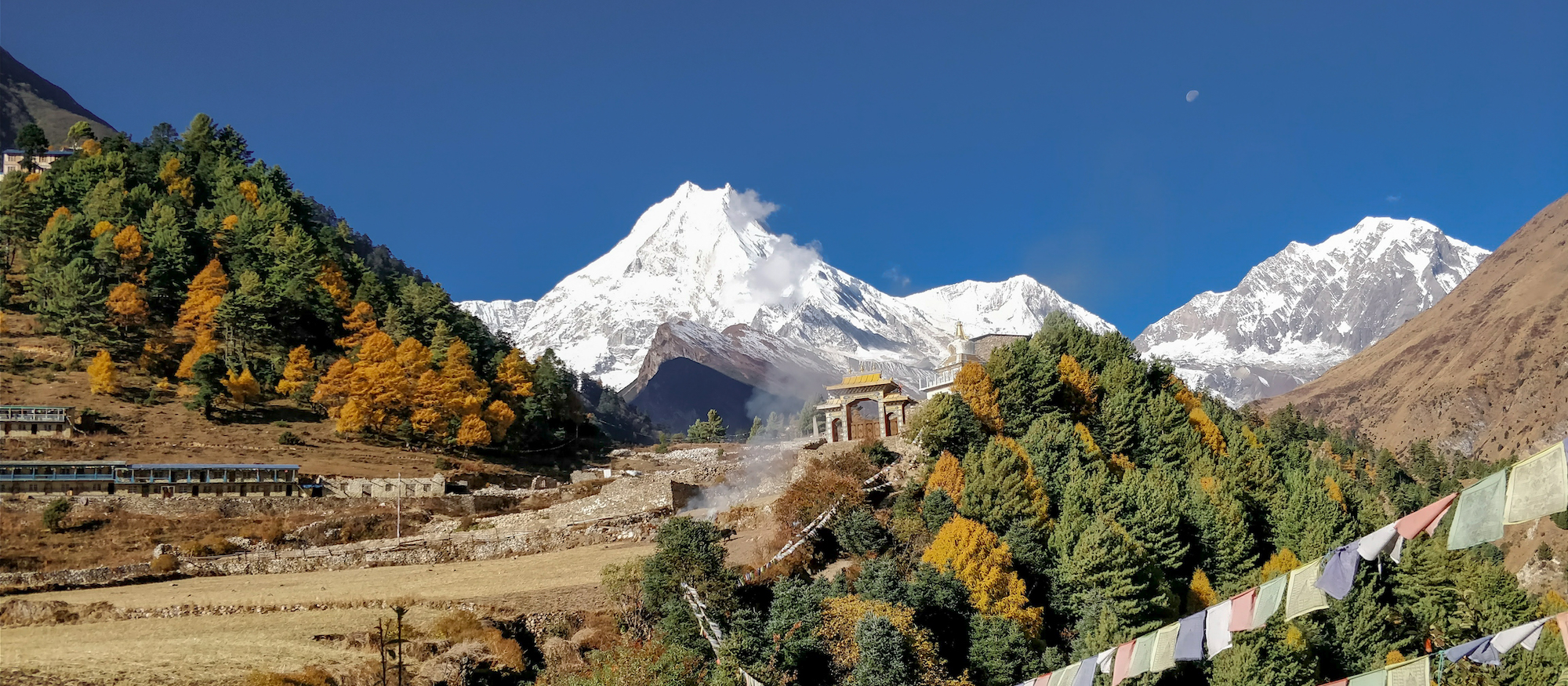
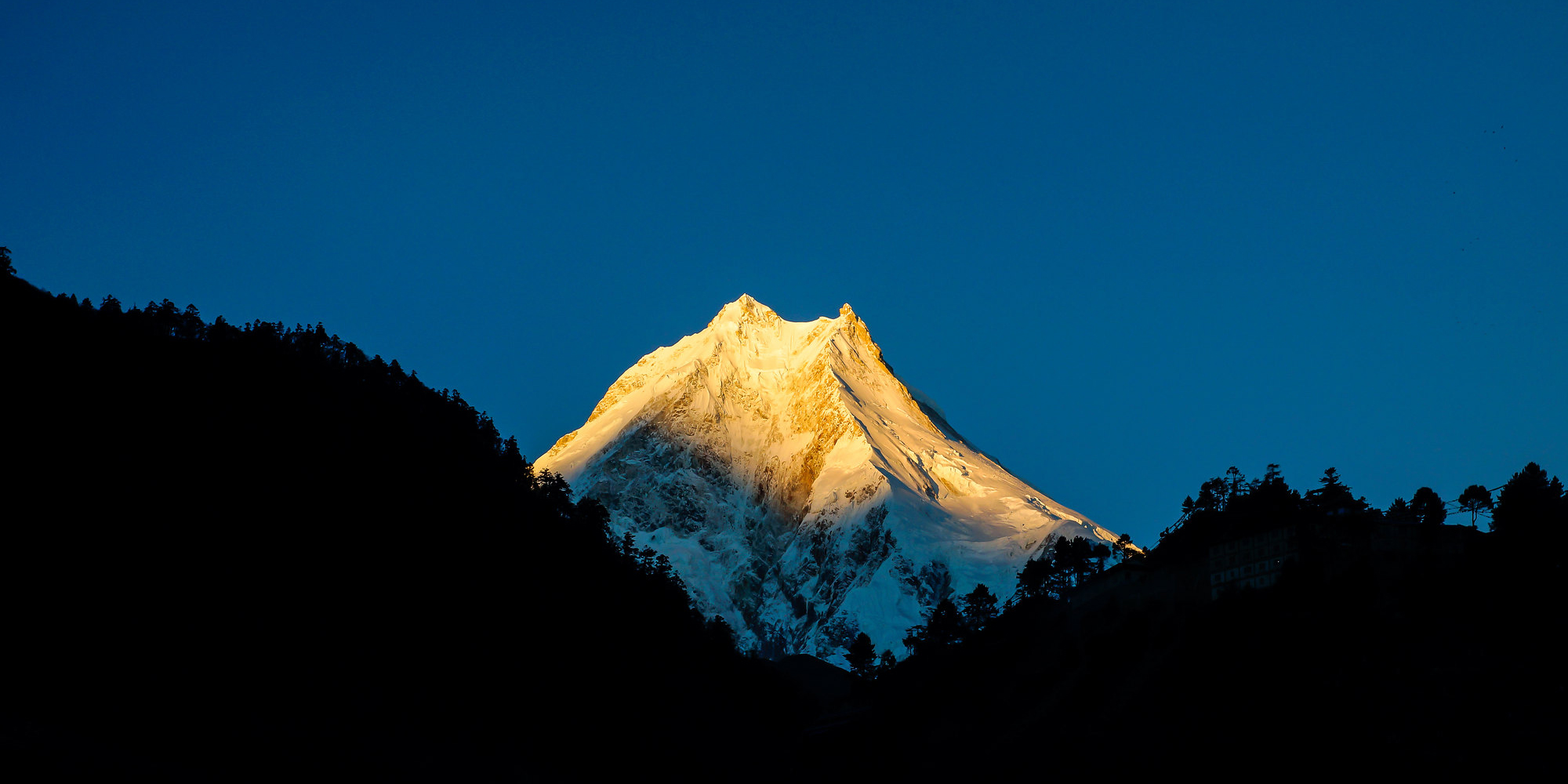
The unforgettable journey through the majestic landscapes of Nepal with experience the best of Manaslu Circuit Trek in Autumn, an adventure that captures the essence of the Himalayas. Renowned for its breathtaking scenery, rich cultural heritage, and challenging routes. This trek offers an unparalleled experience for those seeking to explore the beauty of the Nepalese wilderness. With its rising popularity among avid trekkers and nature enthusiasts, understanding the nuances of the Manaslu circuit trek, including the Manaslu circuit trek map, cost and itinerary, permit requirements, and seasonal weather conditions, becomes essential for a well-prepared and memorable expedition.

‘Experience the best of Manaslu Circuit Trek in Autumn’ delves into why autumn is considered the prime season for trekking the Manaslu Circuit, highlighting the key features that set this trek apart from others. From the vivid detail of the Manaslu circuit trek difficulty to insights on the Manaslu circuit trek cost, you will receive comprehensive information on what to expect each month during the autumn season, alongside a sample Manaslu circuit trek itinerary. Whether you’re meticulously planning your journey or simply dreaming of the adventure that awaits, this guide offers valuable resources, including a Manaslu circuit trek blog for personal experiences, to ensure your trek is nothing short of spectacular.

Why Autumn is the best season to experience the best of Manaslu Circuit Trek?

1. Clear Skies and Perfect Weather

Autumn marks a post-monsoon period where the skies clear and the weather stabilizes, making it an ideal time for trekking the Manaslu Circuit. The clear skies not only enhance the visibility but also unveil the marvelous beauty of the Himalayan vistas, which are ideal for photography and enjoying the scenery. This season experiences very little precipitation, around 5 mm in October, contributing to drier and more comfortable trekking conditions.

2. Moderate Temperatures

During autumn, the Manaslu Circuit enjoys moderate temperatures ranging from 5 to 15 degrees Celsius during the day, which creates a comfortable trekking experience. The nights are cooler, which is perfect for rest after a day’s trek. These temperatures are ideal for long treks as they prevent overheating and minimize the risk of heat exhaustion.

3. Festival Season in Nepal

Autumn is not only perfect for its climatic conditions but also vibrant with Nepalese cultural and festive atmospheres. Festivals such as Dashain, Tihar, and Mani Rimdu occur during this season, offering trekkers a unique opportunity to experience the rich cultural heritage of Nepal. The festive atmosphere is enhanced by the fresh-grown fruits and vegetables available during this period, adding to the overall experience of the trek. Engaging in these celebrations can provide a deeper understanding of the local traditions and community spirit.

Key Highlights of the Manaslu Circuit Trek in Autumn

1.Unbeaten Trails and Natural Beauty

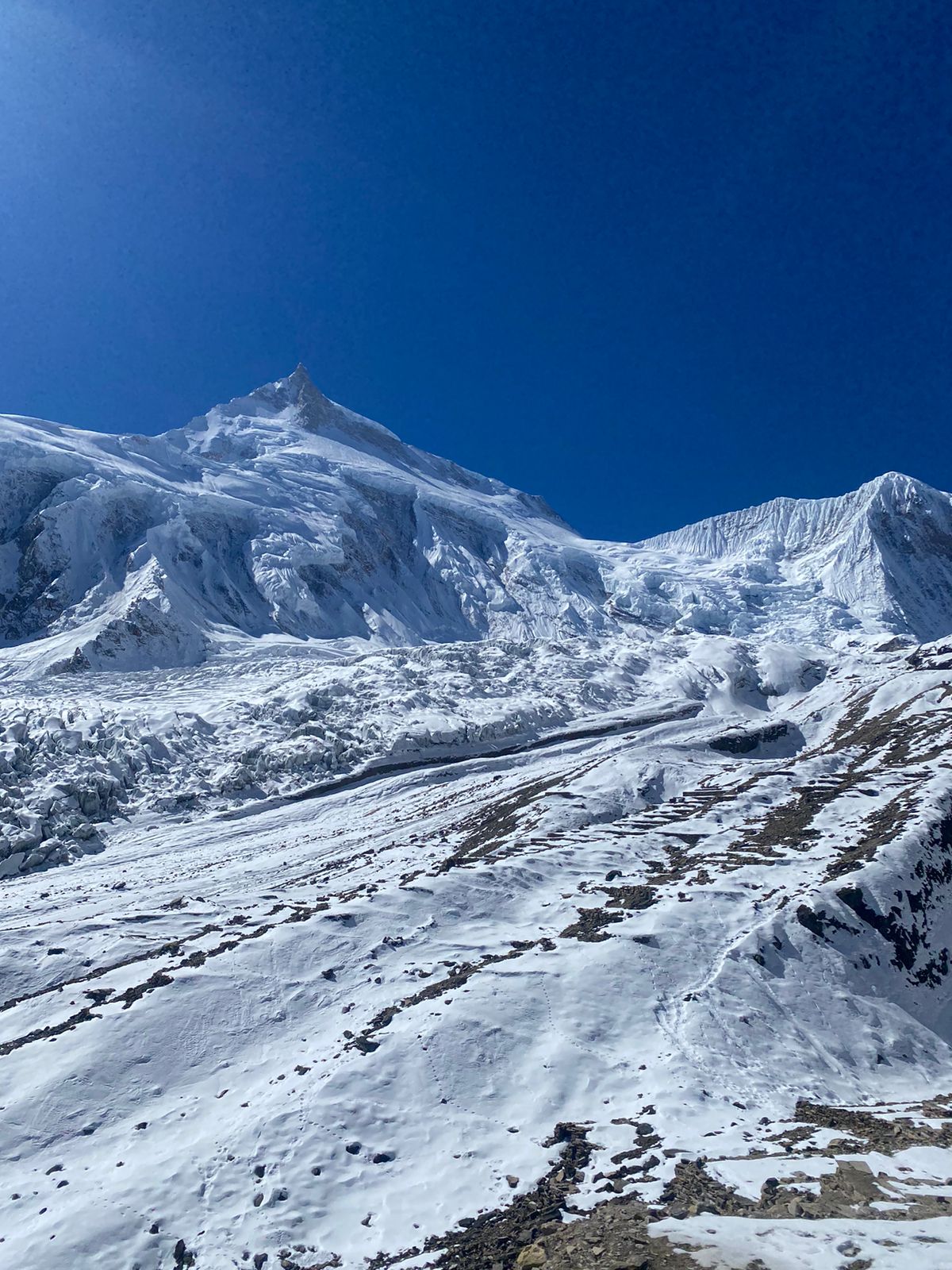
The Manaslu Circuit Trek offers a journey through some of the most untouched and pristine environments in the Himalayas. Trekkers traverse lush sub-tropical jungles, which gradually transform into dense forests and alpine meadows as they ascend. The region is renowned for its breathtaking landscapes, including the majestic Mount Manaslu, the eighth-highest peak in the world, providing awe-inspiring views that are both humbling and exhilarating. The trek also includes challenging passes like the Larke Pass, which offers panoramic views of the surrounding peaks and valleys, adding to the trek’s allure.

2.Cultural Experiences

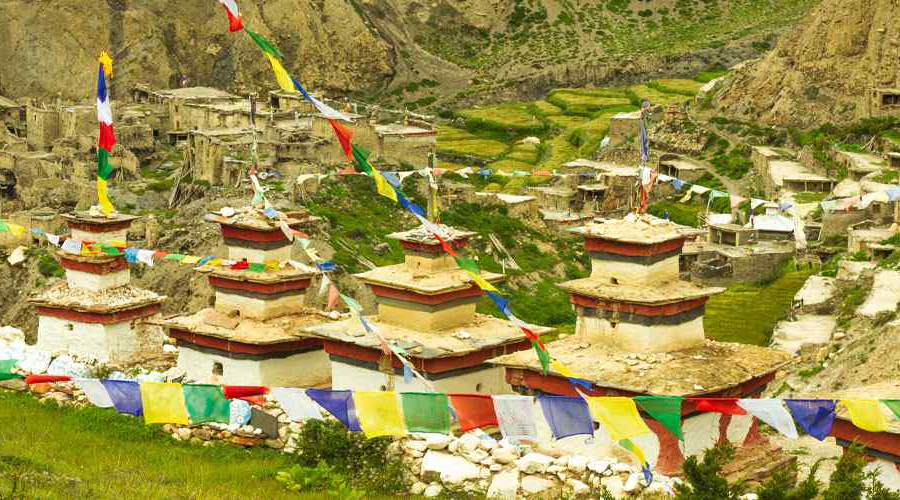
The Manaslu Circuit is not just a physical journey but also a deep dive into the cultural heritage of the region. Trekkers have the unique opportunity to engage with local communities, experiencing the warm hospitality and rich traditions of ethnic groups such as the Nubri and Tsum. The area is heavily influenced by Tibetan culture, evident in the numerous monasteries, chortens, and mani walls that trekkers encounter along the route. The trek coincides with the path of the ancient salt trading route between Nepal and Tibet, which enriches the cultural experience, providing insights into the historical trade practices and religious significance of the region.

3.Unique Flora and Fauna

The Manaslu Conservation Area, through which the trek passes, is a biodiversity hotspot. It is home to a variety of wildlife, including rare and endangered species like the snow leopard and red panda. The dense forests and alpine meadows provide habitats for 33 species of mammals, 110 species of birds, and a diverse range of flora, including rhododendrons and wildflowers, which add vibrant colors to the trekking experience. This rich biodiversity not only enhances the trek’s scenic beauty but also offers trekkers the chance to witness wildlife in their natural habitat, making it a truly immersive experience in nature.

What to expect each month to experience the best of Manaslu Circuit Trek in Autumn?

Manaslu Circuit Trek in September

September initiates the autumn trekking season in the Manaslu region, presenting a mix of weather patterns. Early in the month, trekkers might experience residual rainfall from the monsoon, particularly in the first week, with occasional late afternoon or evening monsoon clouds. However, as September progresses, the weather stabilizes significantly, offering clearer skies and more pleasant temperatures. This transition results in excellent visibility and the snow-capped peaks of the Himalayas become vividly visible, enhancing the trekking experience. The average temperature ranges from a mild 21°C in lower areas like Jagat to about 7°C at higher altitudes around 3860m, although nights can be quite cold, often dropping below freezing.

Manaslu Circuit Trek in October

October is widely regarded as the optimal month for trekking the Manaslu Circuit due to its stable and comfortable weather conditions. The clear skies and mild climate create ideal conditions for trekking and enjoying the breathtaking mountain landscapes. Daytime temperatures typically range between 13°C and 25°C, making the days pleasantly warm, while nighttime temperatures can drop to around -1°C, particularly at altitudes above 4000m. October also coincides with vibrant local festivals like Dashain and Tihar, offering trekkers a unique cultural immersion into Nepalese traditions. The trails are busier during this peak month, filled with trekkers attracted by the favorable weather and festive atmosphere.

Manaslu Circuit Trek in November

November marks the tail end of the autumn season and is characterized by colder and drier conditions, making it the last ideal month for trekking before winter sets in. The weather remains stable with minimal rainfall, and the visibility is excellent, providing unobstructed views of the Himalayan range, including Mount Manaslu. Daytime temperatures at lower altitudes like Arughat hover around 12°C, but as one ascends to places like Samagaon and Samdo, temperatures can plummet to -3°C at night. Despite the colder temperatures, November offers a quieter trail experience with fewer trekkers, allowing for a more serene and intimate encounter with nature. The region showcases a spectacular display of fall foliage, adding vibrant colors to the trekking experience.

Manaslu Circuit Trek Itinerary and Cost

Manaslu Circuit Trek outline itinerary
Day                        Itinerary
01Arrival in Kathmandu
02Drive from Kathmandu to Machha Khola
03Trek from MachhaKhola to Jagat
04Trek from Jagat to Deng
05Trek From Deng to Namrung
06Trek from Namrung to Sama Gaun via Lho village
07Sama Gaun rest day, Explore Manaslu Base Camp and Pungeyan Monastery
08Trek from Sama Gaun to Samdo
09Samdo acclimatization day, Visit Tibet boarder
10Trek from Samdo to Dharmasala
11Trek from Dharmasala to Bhimtang via Larky La Pass (5106 M)
12Trek from Bhimtang to Dharapani
13Drive from Dharapani to Kathmandu via Besisahar
14Final Departure to Airport

Manaslu Circuit Trek Cost Breakdown
  1. Government Licensed guide $40 per day
  2. Porter $25 per day
  3. Manaslu conservation area entry permit $30
  4. Manaslu restricted area entry permit $100
  5. Annapurna conservation area entry permit $30
  6. Public Transportation $60
  7. Private jeep $450-500
  8. Accommodation in tea house $10-15 per night
  9. Foods (Breakfast Lunch And Dinner) $25 -30
  10. Additional Expenses; Insurance, drinks,  Hiking Gears and other personal expenses $300

Conclusion

To sum up, through the vibrant hues of autumn, the Manaslu Circuit Trek emerges as a quintessential journey for trekkers aiming to immerse themselves in the immense beauty and diversity of the Nepalese Himalayas. However, this Trekking offers an exquisite blend of natural splendor, from the untouched trails that weave through lush forests and high-altitude passes, to the awe-inspiring vistas of Mount Manaslu. Coupled with the rich cultural tapestry and the chance to partake in local festivities, every step taken on this trek is a step closer to understanding the heart of Nepal. The careful consideration of the trek’s timing, challenges, and rewards, as outlined, aids adventurers in crafting an unforgettable experience.

Everest Base Camp Trekking In Spring

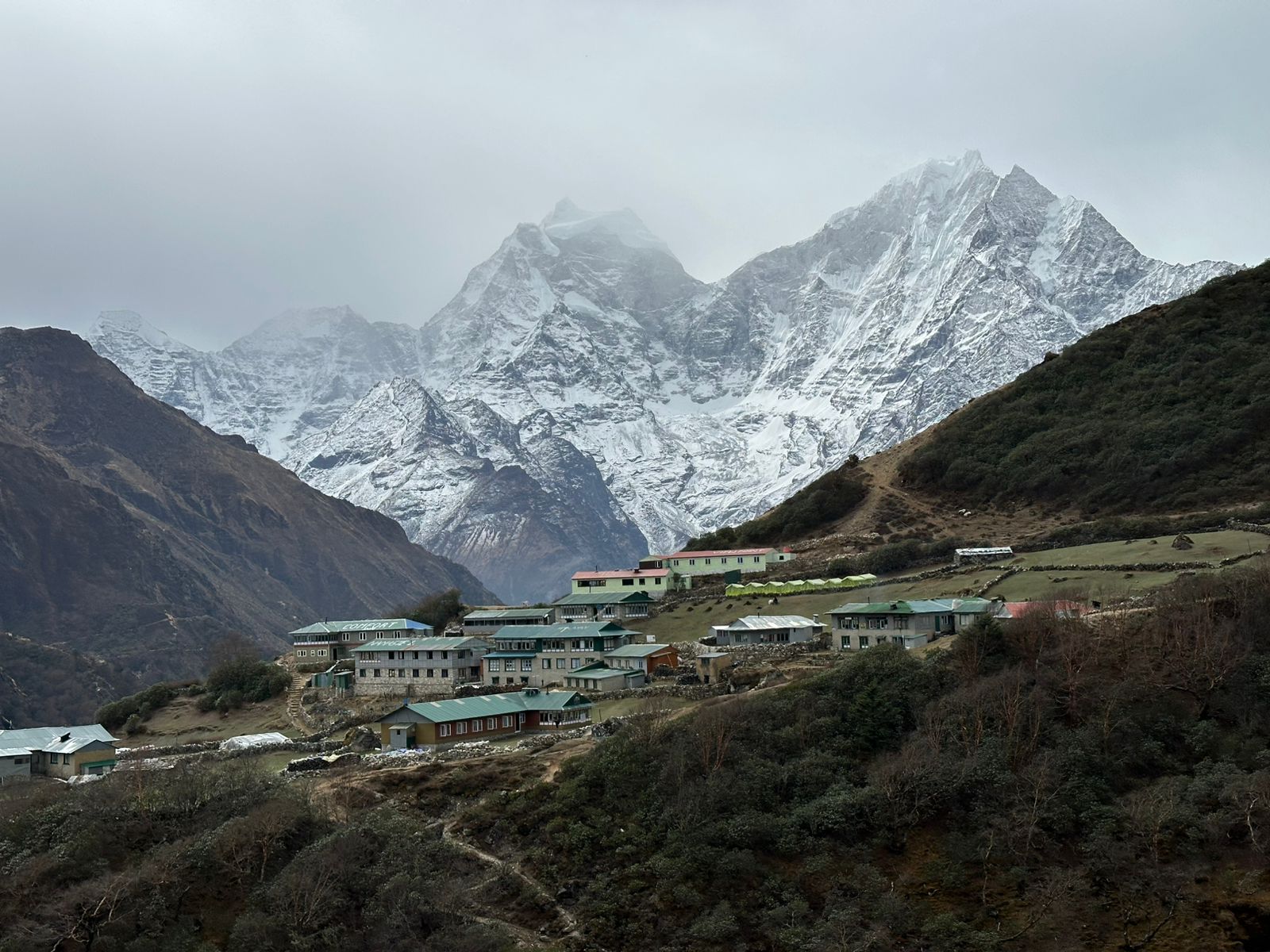
Everest Base Camp trekking is a dream adventure for many outdoor enthusiasts. This iconic journey through the Himalayas offers breathtaking mountain views, unique cultural experiences, and the thrill of reaching the foot of the world’s highest peak. Spring is a trendy time for Everest Base Camp Trek, with its moderate temperatures, clear skies, and blooming rhododendrons adding vibrant color to the landscape.

Everest Base Camp trekking in spring explores everything you need to know to plan a successful spring trek to Everest Base Camp. Proper preparation is key to making the most of this incredible trek. By focusing on physical fitness, packing the right gear, and allowing time to adjust to the altitude, adventurers set themselves up for a successful and enjoyable journey. The spring season provides ideal conditions to explore the Everest region, making it a perfect time to embark on this bucket-list adventure and create lasting memories. This Everest Base Camp Trek guide also highlights the best sights and experiences along the trail, from the bustling Sherpa town of Namche Bazaar to the panoramic viewpoint of Kala Patthar. By the end, you will understand what to expect and how to make the most of your Everest Base Camp Trek in Spring.

Weather Conditions at Everest Base Camp in Spring

Spring, spanning from March to May, is one of the most favorable seasons for Trekking to Everest Base Camp. This period marks the transition from the harsh winter to the milder summer, bringing about pleasant conditions for adventurers.

Temperature Range

As spring progresses, temperatures gradually increase, creating a more comfortable environment for trekkers. In March, daytime temperatures at Everest Base Camp typically reach highs of around 7°C, while nighttime temperatures can drop to approximately -12°C. By May, daytime temperatures can climb to about 15°C, with nighttime lows hovering around 0°C.

It’s worth noting that temperatures can vary significantly depending on the altitude. At Base Camp itself, temperatures can get up to about -6°C during the peak spring months. As trekkers ascend higher, they should be prepared for colder conditions. For instance, during the short window for summit attempts in May, temperatures at the peak can average -15°F (-26°C).

Precipitation for Everest Base Camp Trekking in Spring

Spring is characterized by relatively dry conditions, making it an ideal time for trekking. Rainfall is infrequent during this period, with an average precipitation of about 15 mm per month. This low precipitation contributes to better visibility and more stable trekking conditions.

Visibility

One of the key advantages of spring trekking is the excellent visibility. Clear skies are common, especially in the early mornings, allowing for stunning views of the Himalayan landscape. The good visibility extends throughout the day, with an average of 7 to 9 hours of sunshine per day by May.

The clear conditions not only enhance the trekking experience but also provide ample opportunities for photography and taking in the breathtaking mountain scenery. Trekkers can expect to enjoy panoramic views of the surrounding peaks, including Mount Everest itself.

It’s important to note that while spring offers generally favorable conditions, weather in the mountains can be unpredictable. Wind speeds during this season average around 14-15 km/h (approximately 9 mph). Trekkers should always be prepared for sudden changes in weather and temperature, especially at higher altitudes.

Preparation of Everest Base Camp Trekking in spring

Physical Fitness

Preparing physically for the Everest Base Camp trek is crucial for a successful and enjoyable experience. The key is to start early and gradually increase training intensity, allowing the body to adapt and strengthen for the challenging journey ahead. Strength training forms a vital part of preparation, focusing on core, lower back, and leg muscles to handle the demanding Himalayan terrain.

Aerobic or cardio workouts are essential to improve the body’s oxygen utilization, which becomes increasingly important at higher altitudes. Trekkers should aim to build endurance through 3 to 6-hour hikes with elevation changes, carrying a weighted backpack to simulate trekking conditions. It’s recommended to train 4 to 5 times a week, incorporating a mix of hiking, biking, swimming, and weight training.

Essential Gear

Proper gear is crucial for comfort and safety during the trek. Key items include:

  1. Waterproof jacket and trousers
  2. Lightweight down jacket
  3. Trekking trousers and shorts
  4. Thermal layers (top and bottom, preferably merino wool)
  5. Trekking t-shirts/shirts
  6. Fleece or warm mid-layer
  7. Waterproof gloves and glove liners
  8. Hiking socks and lighter walking socks
  9. Wool hat and sun hat
  10. Sunglasses
  11. Worn-in, waterproof hiking boots

It’s important not to overpack, as there are weight restrictions for both the flight to Lukla (15 kg total for checked and hand luggage) and what porters can carry (usually 15-20 kg). A four-season sleeping bag, rated at 0 degrees Fahrenheit (-17°C), is essential for comfort during cold nights.

Acclimatization

Acclimatization is crucial for a safe and successful trek to Everest Base Camp. As trekkers ascend, the air becomes less dense, reducing oxygen availability. The body needs time to adjust to these conditions to prevent Acute Mountain Sickness (AMS).

A proper acclimatization schedule includes strategically placed rest days. It’s highly recommended to spend three nights in Namche Bazaar at 3,440m (11,286 feet). This additional time at this critical elevation helps the body produce more red blood cells, improving oxygen transport and increasing the chances of safely reaching higher altitudes.

During acclimatization days, trekkers often take short hikes to higher elevations before descending to sleep, following the “climb high, sleep low” principle. This approach has been shown to significantly reduce the risk of altitude-related illnesses and improve overall trek success rates.

Highlights of Everest Base Camp Trekking in Spring

Spring trekking to Everest Base Camp offers a unique and captivating experience. The season brings forth a vibrant display of nature’s beauty, creating an unforgettable journey for adventurers.

Rhododendron Blooms

One of the most spectacular sights during spring trekking is the rhododendron bloom. The Everest region bursts into color as these flowers, Nepal’s national flower, carpet the landscape. Trekkers can spot more than 10 species of rhododendrons along the trails, each adding its unique hue to the scenery. The Tree Rhododendron, with its bright red flowers adorning trees up to 18 meters high, is a particularly striking sight. Other varieties, such as the yellow Curved-fruit Rhododendron and the pink Bristly Rhododendron, contribute to the colorful tapestry. This floral display, combined with the lush green forests, creates a fascinating visual feast for trekkers.

Clear Mountain Views

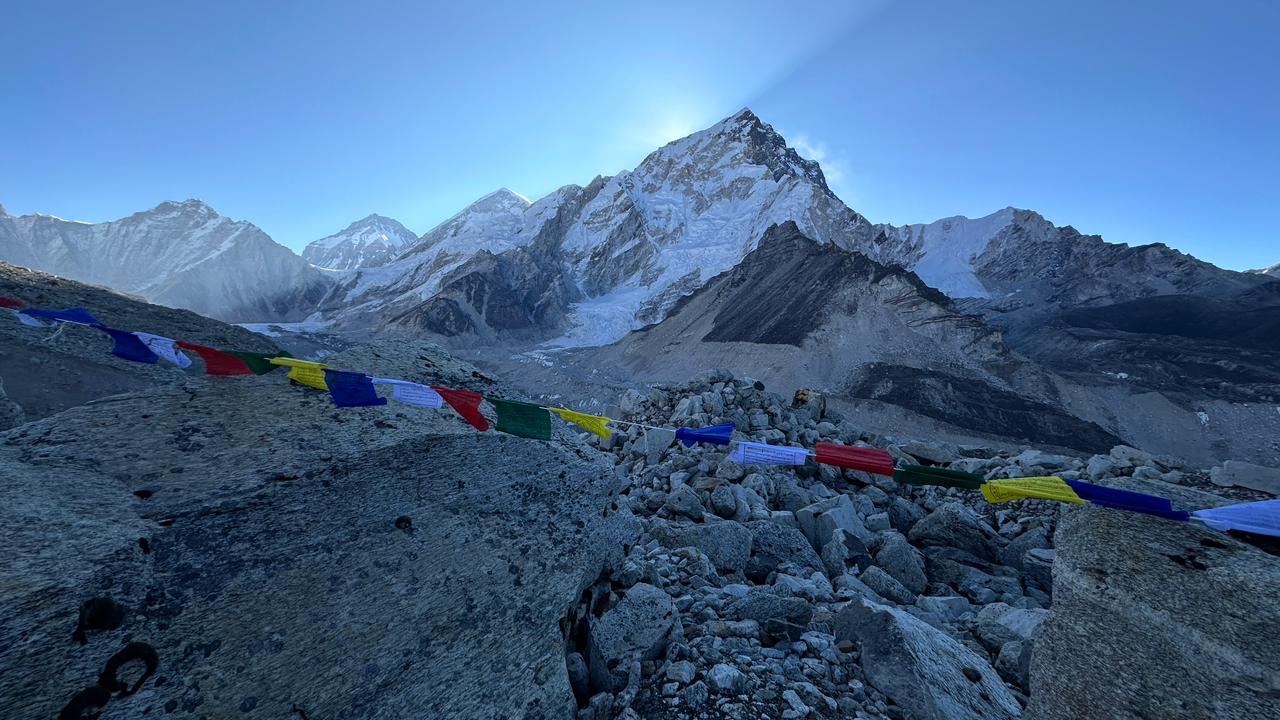
Spring offers some of the best conditions for mountain viewing. The weather is consistent and predictable, with clear skies and sunny days providing excellent visibility. Trekkers can enjoy breathtaking panoramas of the Himalayan giants, including Mount Everest (8,848.56m), Lhotse (8,516m), and Cho Oyu (8,188m). The crisp air and far-reaching visibility allow for stunning sunrise and sunset views, with the mountains bathed in golden light. These clear conditions also make spring an ideal time for photography, allowing trekkers to capture the majestic beauty of the Everest region.

Everest Base Camp in Action

Spring is a particularly exciting time at Everest Base Camp. As the climbing season begins, trekkers have a good chance of encountering Everest climbers preparing for their ascents. This adds an extra layer of excitement to the trek, allowing visitors to witness the buzz of activity that surrounds these ambitious expeditions. The trails are generally less crowded in spring compared to the busy autumn season, providing a more peaceful experience in nature. This quieter atmosphere allows trekkers to fully immerse themselves in the stunning rebirth of the Everest region after its long winter rest.

Conclusion

To wrap up, Everest Base Camp Trekking in spring offers a unique blend of natural beauty and adventure. The combination of blooming rhododendrons, clear mountain views, and the buzz of climbing activity creates an unforgettable experience. This journey has a profound impact on trekkers, challenging them physically and mentally while rewarding them with breathtaking scenery and cultural insights.

FAQs

Is it necessary to have a guide for the Everest Base Camp trek?

Yes, hiring a licensed guide is mandatory for the Everest Base Camp (EBC) trek. Recent regulations by the Nepalese government require all trekkers to employ a licensed guide and porter for their expedition.

What is the optimal time to trek to Everest Base Camp?

The ideal months for trekking to Everest Base Camp are between March to May and from mid-September to November. Specifically, April and May offer a vibrant atmosphere at the base camp, making these months particularly appealing.

How much money should I budget for daily expenses on the Everest Base Camp Trek?

It is advisable to budget approximately USD 30.00 to USD 35.00 per day for food and drinks. For a typical trek, this amounts to about USD 350.00 to USD 400.00 in total. For more information you can you can also read the Everest Base Camp trek cost breakdown.


Trekking to Everest Base Camp in Winter

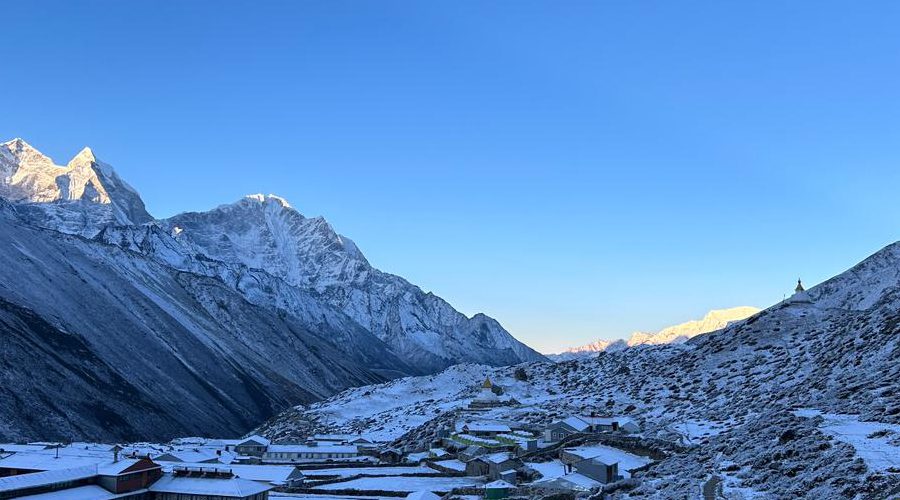
Trekking to Everest Base Camp in winter is challenges even the most seasoned adventurers with its extreme conditions and breathtaking solitude. Unlike the bustling high season with its crowded trails, winter transforms the Khumbu region into a pristine wilderness of snow-capped peaks and crystal-clear mountain vistas.

Winter trekking to  Everest Base Camp offers remarkable advantages despite its reputation for difficulty. Everest Base Camp Trek in Winter  presents dramatic landscapes blanketed in snow, while significantly reduced crowds allow for a more authentic experience. Additionally, winter hiking in Nepal typically means lower prices for accommodations and services. However, these benefits come with serious considerations temperatures can plummet well below freezing, requiring specialized cold weather trekking gear and thorough preparation.

This comprehensive guide examines everything you need to know about tackling this legendary journey during the coldest months of 2025 and 2026. From weather expectations and potential challenges to essential preparation strategies and gear requirements, we’ll help you determine if this extraordinary adventure aligns with your trekking aspirations.

Unique Things of the Trekking to Everest Base Camp in Winter

The winter months transform the journey to Everest Base Camp into a completely different experience compared to peak seasons. From December through February, the Khumbu region offers extraordinary opportunities for adventure seekers who don’t mind braving the cold. Here are some key points, why Everest Base Camp Trek in winter is unique.

1. Fewer crowds and peaceful trails

Winter brings remarkable solitude to normally busy trekking routes. In contrast to spring and autumn when trails can become congested with thousands of hikers, winter trekkers often find themselves alone with the mountains. Throughout December, January, and February, you’ll encounter only a handful of fellow adventurers along the way. This peaceful atmosphere allows for a more immersive experience, where you can trek at your own pace without feeling rushed.

The dramatic reduction in foot traffic creates an almost private mountain experience. Many travelers report having viewpoints entirely to themselves, particularly at sunrise and sunset when the light paints the Himalayan peaks in stunning colors. Furthermore, this isolation provides better opportunities to encounter Himalayan wildlife, which tends to be more visible when human presence diminishes.

For those seeking authentic cultural experiences, winter offers unique advantages. When tourist numbers drop, the region’s true character emerges. In Tibet’s case, winter actually brings more local Tibetans to holy sites, as farmers and nomads make pilgrimages during their off-season. This creates opportunities for meaningful cultural exchanges rarely possible during busier months.

2. Clear skies and stunning mountain views

Perhaps the most compelling reason for winter trekking to EBC is the exceptional visibility. The winter air becomes notably dry and crisp, creating perfect conditions for unobstructed mountain views. Photographers particularly appreciate these conditions, as the clarity allows for capturing postcard-perfect shots of Everest and surrounding peaks.

The weather pattern in winter typically features:

  • Consistently clear blue skies
  • Minimal rainfall or precipitation
  • Absence of clouds that might obstruct views
  • Freedom from insects and bugs that appear in warmer months

3. Lower costs for accommodation and services

Winter presents excellent value for budget-conscious trekkers. As an off-season period, prices drop substantially across accommodations, flights, and guide services. Everest Base Camp small group trek cost costs approximately USD 1300 in winter, compared to USD 1450 during peak season representing nearly 15% savings.

Weather conditions to expect in winter 2026

Winter brings the Everest region’s most extreme weather conditions. Understanding what awaits in 2025 can mean the difference between a challenging yet rewarding adventure and a potentially dangerous situation. The winter months, December through February present a unique set of weather patterns that demand thorough preparation.

1. Temperature ranges by location

Temperature variations across the Everest Base Camp trek route are dramatic, with significant differences between elevations and between day and night readings. As you ascend, temperatures drop considerably:

  • Lukla (2,840m): Daytime temperatures range from 5°C to 10°C (41°F to 50°F), while nighttime temperatures can drop to around -5°C to -10°C (23°F to 14°F)
  • Namche Bazaar (3,440m): Expect daytime readings between 0°C and 5°C (32°F to 41°F), with nights plunging to -10°C to -15°C (14°F to 5°F)
  • Dingboche (4,360m): Daytime temperatures hover between -5°C and 1°C (23°F to 34°F), with nighttime lows reaching -15°C to -20°C (5°F to -4°F)
  • Everest Base Camp (5,364m): Here, daytime temperatures typically range from -5°C to -10°C (23°F to 14°F), whereas nights can be brutally cold, falling to -20°C to -30°C (-4°F to -22°F)

January stands as the coldest month throughout the trek, with EBC night temperatures potentially dipping to -25°C (-13°F) or lower. Although days at lower elevations might reach a relatively comfortable 6°C (42.8°F), the higher you climb, the more severe the cold becomes.

2. Snowfall and wind patterns

Snow is a consistent feature of the winter trek, especially at higher elevations. Above 4,000 meters, snowfall becomes increasingly common, occasionally transforming trails into challenging winter landscapes. Fresh snow makes routes slippery, therefore proper boots with crampons are essential for safety.

The winter season is generally dry aside from occasional snowfall. December sees minimal rainfall, averaging just 3mm for the month, which contributes to excellent visibility. Nevertheless, unexpected snowstorms can occur, sometimes delivering over a meter of snow at base camp.

Wind adds another dimension to the cold. Average daily wind speeds during winter range from 12 to 19 kph (8-12 mph), but can increase to approximately 40 kph in some areas. At higher elevations, wind chill becomes a major factor turning already frigid temperatures into dangerously cold conditions. Around the summit area, winds can reach hurricane force (over 74 mph) on more than 50% of days during winter months.

3. Daylight hours and visibility

Winter trekkers must plan around limited daylight hours. Throughout December to February, expect approximately 5-7 hours of sunshine daily. This constraint requires efficient planning start early in the morning to maximize daylight and ensuring you reach your destination before darkness falls.

Nevertheless, these shorter days offer extraordinary visibility benefits. The winter air is remarkably dry and crisp, creating ideal conditions for unobstructed mountain views. On clear days which predominate during winter visibility extends for miles, providing spectacular panoramas of snow-capped peaks against deep blue skies.

Morning mist occasionally appears, yet the skies generally remain crystal clear. This exceptional clarity creates perfect conditions for photography, with the snow-draped Himalayan range standing in sharp relief against the horizon.

Weather patterns can change rapidly at high altitudes, so flexibility remains crucial for any winter trek to Everest Base Camp in 2026. A single day might present sunshine, clear skies, and even snowfall underscoring the importance of proper preparation for all possible conditions.

Challenges of trekking to Everest Base Camp in winter

Undertaking the Everest Base Camp winter trek requires confronting serious challenges that even experienced mountaineers must respect. Beyond the breathtaking scenery lies a series of obstacles that demand thorough preparation and realistic expectations.

1. Altitude and cold-related risks

Trekking to an elevation of 5,364 meters (17,598 feet) exposes your body to significantly reduced oxygen levels, making altitude sickness a primary concern regardless of season. In winter, this risk intensifies as extreme cold further stresses your respiratory system. At higher elevations like Gorakshep and Lobuche, daytime temperatures hover around 5°C (41°F) while nighttime lows can plummet to an alarming -25°C (-13°F) or colder.

These frigid conditions create serious health risks:

  • Hypothermia occurs when body heat loss exceeds production, causing shivering, confusion, memory loss, and fumbling
  • Frostbite becomes a genuine concern, particularly at extremities
  • The infamous “Khumbu cough” affects virtually all trekkers due to dust, high altitude, and low humidity

Moreover, medical facilities along the route are extremely limited. Basic clinics exist in some villages but lack resources for serious emergencies. Helicopter evacuation, often the only option for critical situations, depends entirely on weather conditions which can make rescue operations impossible during severe winter storms.

2. Limited accommodation and food options

Winter brings significant logistical challenges regarding where you’ll sleep and what you’ll eat. Many teahouses and lodges close completely during December through February due to reduced tourism. Those that remain open offer minimal services with simpler menus and fewer choices.

Even at accommodations that stay open year-round, comfort becomes a luxury. Rooms typically have plywood walls providing minimal insulation against sub-zero temperatures. Most establishments lack central heating, making sleeping difficult despite multiple layers. Additionally, hot water becomes scarce, and toilet facilities often located outdoors present their own frigid challenge.

Facilities gradually diminish as you ascend. By the time you reach higher villages near EBC, your options narrow considerably, with some areas offering just one place to stay. This makes advance planning crucial, as you cannot simply arrive and expect to find available accommodation.

3. Flight delays and trail closures

The journey begins with substantial uncertainty at Lukla Airport, aptly nicknamed the world’s most dangerous airport. Winter flights face frequent disruptions due to several factors:

Thick fog, sleet, and strong winds regularly cause flight cancelations as visual conditions deteriorate. January and February are particularly problematic months, with flights often grounded for days. Since the airport lacks instrumental landing systems for domestic flights, pilots rely entirely on visual navigation impossible during adverse weather.

Once on the trail, sudden snowstorms can block routes entirely, sometimes requiring diversions or halting progress until conditions improve. Heavy snowfall also increases avalanche risk, particularly on the path from Gorakshep to Base Camp. Shorter daylight hours (just 5-7 hours daily) further restrict trekking time, forcing earlier starts and finishes.

Yet these challenges, though formidable, represent precisely what makes winter trekking to EBC such an extraordinary achievement for those properly prepared.

How to prepare for a successful  trekking to Everest Base Camp in Winter

Successful preparation for the Everest Base Camp winter trek requires a comprehensive approach that begins months before your departure. Given the unique challenges of winter conditions, your preparation strategy must address physical conditioning, mental fortitude, and administrative requirements.

1. Physical training and altitude readiness

Beginning 4-8 weeks before your journey, focus on building cardiovascular endurance through activities like running, swimming, and cycling. This improves oxygen efficiency crucial for high-altitude trekking where oxygen levels are substantially reduced. Combine this with strength training that targets your lower body and core to handle rough terrain and carry your pack comfortably.

For specific altitude preparation:

  • Practice hiking with a weighted backpack (6-10kg), gradually increasing weight and duration
  • Aim for 4-5 training sessions weekly, incorporating hills or stair climbing
  • Train to handle elevation gains similar to those on the trail

Remember to hydrate extensively during training, as proper hydration helps minimize altitude sickness symptoms. Experts recommend drinking at least 1500ml daily during the trek itself.

2. Mental preparation and mindset

Mental resilience often determines success on winter treks more than physical fitness. Instead of viewing the entire journey as overwhelming, break it into manageable sections. When trails become challenging, pick visual targets ahead a specific rock or tree before taking your next rest.

Practice mindfulness and meditation to stay focused when conditions become difficult. These techniques help calm your mind, reduce stress, and improve concentration. Importantly, set realistic expectations about the physical demands and potential altitude challenges you’ll face.

3. Travel insurance and permits

Standard travel insurance policies typically cover only up to 3,000 meters, whereas Everest Base Camp sits at 5,364 meters. Hence, obtain specialized high-altitude insurance that explicitly covers:

  • Medical evacuations via helicopter (costing approximately $7,000)
  • Altitude-related illnesses including AMS, HAPE, and HACE
  • Coverage above 5,000 meters

Two mandatory permits are required: the Sagarmatha National Park Entry Permit (NPR 3,000 for foreigners) and the Khumbu Rural Municipality Permit (NPR 2,000-3,000). Apply for these at least 21 days in advance to allow for processing time. The national park permit can be obtained in Kathmandu, whereas the municipality permit must be acquired in Lukla or Monjo.

Essential gear and packing list for winter trekking to EBC

Packing the right gear stands as the cornerstone of a successful trekking to Everest Base Camp winter. Given the extreme conditions, every item must serve a specific purpose in your protection against harsh elements.

1. Clothing layers and insulation

Proper layering forms your first defense against bitter cold. Begin with moisture-wicking base layers made from merino wool or synthetic materials—never cotton, which absorbs sweat and stays damp. For mid-layers, include fleece jackets and insulated down vests to trap body heat. Your outer shell must be completely waterproof and windproof, preferably with Gore-Tex or similar technology.

2. Footwear and accessories

Invest in waterproof, insulated hiking boots with excellent ankle support. Subsequently, break them in thoroughly before arrival. Wear merino wool socks with thin liner socks underneath to prevent blisters. Pack gaiters to keep snow out of your boots, primarily essential for December through February trekking.

3. Sleeping gear and trekking tools

A high-quality sleeping bag rated for at least -10°C to -20°C (-4°F to -14°F) is non-negotiable. Trekking poles provide crucial stability on snow-covered trails. A headlamp with extra batteries becomes vital given limited daylight hours.

4. Health and hygiene essentials

Your first aid kit should include altitude sickness medication, pain relievers, blister treatment, and rehydration salts. Sunscreen (SPF 30+) and lip balm with SPF protect against intense high-altitude UV radiation. Hand sanitizer, biodegradable wet wipes, and toilet paper round out your hygiene essentials.

Langtang Valley Trek Cost and Itinerary

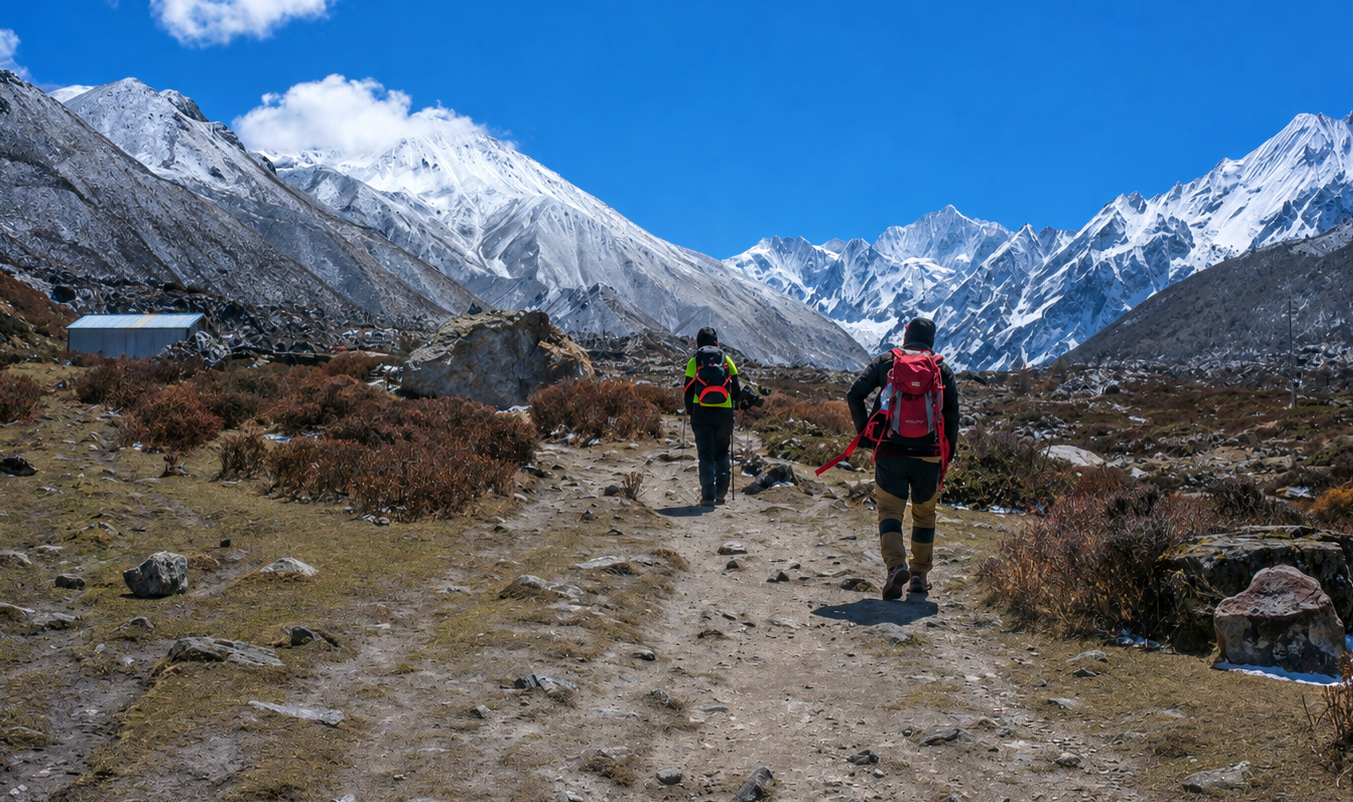
Langtang Valley Trek offers an incredible adventure through Nepal’s first Himalayan national park, often called the “Valley of Glaciers”. Unlike the more crowded routes, this spectacular journey combines affordability with breathtaking landscapes, making it perfect for budget-conscious trekkers seeking authentic experiences.

Planning your Langtang Valley Trek in Nepal requires understanding the costs involved, which typically range from $500 to $1,000 depending on your comfort level, guide services, and season. For shorter 5-7 day itineraries, you can expect to pay between $470 and $490. During this journey, you’ll hike approximately 5-6 hours daily and reach impressive heights like Tsergo Ri at 5,033 meters or Kyanjin Ri at 4,773 meters. Additionally, the trek begins with a scenic drive from Kathmandu to Syabrubesi, the gateway to Langtang National Park.

In this complete guide, we’ll walk you through everything you need to know about the Langtang Valley Trek Cost and Itinerary, from detailed cost breakdowns to itinerary planning. Whether you’re wondering about difficulty levels, permit fees, or the best time to visit, we’ve got you covered with practical advice to make your 2025 -2026 Langtang adventure both memorable and affordable.

Langtang Valley Trek Cost and Itinerary Overview and Why It’s Worth It

Nestled in the heart of the Himalayas, the Langtang Valley trek takes you through pristine wilderness that showcases Nepal’s extraordinary natural beauty without the crowds found on more popular routes. Consequently, this trek offers an authentic experience for adventurers seeking to connect with both nature and local culture.

Where is Langtang Valley located?

The Langtang Valley sits approximately 60 kilometers north of Kathmandu, making it one of the most accessible trekking regions in Nepal. Situated within Langtang National Park, the valley stretches along the border with Tibet. The trek begins in Syabrubesi, a small town reached after a 7-8 hour drive from Kathmandu. Furthermore, the region is home to the Tamang and Sherpa communities who have preserved their unique cultural heritage for centuries.

The valley forms part of Nepal’s first Himalayan national park, established in 1976, covering an area of 1,710 square kilometers. This protected area encompasses three distinct regions: the Langtang Valley itself, Gosaikunda Lake, and the Helambu region. Throughout this remarkable landscape, you’ll find dense forests, alpine meadows, and impressive glaciers that feed the rushing rivers below.

What makes it different from Everest and Annapurna treks?

The Langtang Valley trek stands apart from the more famous Everest and Annapurna circuits in several compelling ways:

  • Accessibility: While Everest requires an expensive flight to Lukla, Langtang is reachable by road from Kathmandu, significantly reducing costs and logistical challenges.
  • Fewer crowds: The trail sees far fewer trekkers than the commercial routes, offering a more peaceful experience and authentic interactions with locals.
  • Compact experience: Despite its shorter duration, the Langtang trek delivers remarkable diversity in landscapes, from subtropical forests to alpine meadows and glacial moraines.
  • Cultural immersion: The region’s Tamang heritage remains largely untouched by tourism, providing genuine cultural encounters.

Perhaps most importantly, the Langtang Valley trek provides a remarkable cost advantage. While Everest Base Camp trek typically cost $1,200-$1,800 and Annapurna Circuit around $1,000-$1,500, Langtang can be completed for approximately $500-$700, making it significantly more affordable for budget-conscious travelers.

Who is this trek ideal for?

The Langtang Valley trek is perfectly suited for several types of trekkers. First-time Himalayan trekkers will appreciate its moderate difficulty level and shorter duration while still experiencing stunning mountain views. Budget travelers benefit from lower costs for permits, accommodation, and transportation compared to other popular treks.

This journey is also ideal for those with limited vacation time, as it can be completed in 7-10 days, including travel to and from Kathmandu. Nature enthusiasts will be thrilled by the biodiversity—the park hosts over 1,000 plant species, 160 bird species, and rare wildlife including red pandas and Himalayan black bears.

Additionally, photographers find endless inspiration in Langtang’s dramatic landscapes, from terraced farmland to snow-capped peaks. The trek reaches maximum elevations around 4,984 meters at Tserko Ri, making it appropriate for trekkers seeking high-altitude experiences without the extreme elevations of Everest.

For those interested in cultural experiences, the predominantly Tamang villages along the route offer insights into traditional Himalayan life that remain relatively unaltered by outside influences. The opportunity to stay in family-run teahouses provides meaningful connections with local communities while contributing directly to their economy.

Langtang Valley Trek Cost Breakdown for 2025-2026

When planning Langtang valley trek in 2025-2026, understanding the cost breakdown helps you budget effectively. For a complete Langtang Valley trek, expect to spend between USD 400 and USD 900 in total, depending on your choices and comfort level.

Permit fees and where to get them

Initially, you’ll need two mandatory permits for the Langtang Valley trek:

  • Langtang National Park Entry Permit: Costs USD 25 (NPR 3,000) for foreign nationals, USD 15 (NPR 1,500) for SAARC nationals, and approximately USD 1-2 (NPR 100) for Nepali citizens.
  • TIMS Card (Trekkers’ Information Management System): Costs USD 15-20 (NPR 2,000) per person. SAARC nationals pay around USD 8-10 (NPR 1,000).

You can obtain both permits in Kathmandu at the Nepal Tourism Board office or at checkpoints in Dhunche before starting your trek. Be sure to carry your original passport, photocopies, and passport-sized photos when applying.

Accommodation and Food Costs

Teahouses along the Langtang trail offer basic but comfortable accommodations. Room prices generally range from USD 10 per night for basic rooms with shared bathrooms. Some locations offer private rooms with attached bathrooms for USD 15-20 per night.

Food costs increase with altitude due to transportation challenges. At lower elevations, meals cost between USD 5-10, while higher elevations charge around USD 12 per meal. Overall, budget approximately USD 25-35 per day for all meals and drinks.

Popular food options include traditional Nepalese dal bhat (rice and lentil soup), which often comes with unlimited refills, making it both nutritious and economical. Western options like pizza, pasta, and sandwiches are available but typically cost more, especially at higher elevations.

Guide and porter charges

Hiring experienced guides and porters enhances both safety and enjoyment:

  • Licensed Guides: Cost USD 30-35 per day, including their meals, accommodation, and insurance.
  • Porters: Cost USD 25 per day, with the ability to carry 20-25kg of gear.
  • Porter-cum-Guide: A middle option costing approximately USD 30 per day.

For female trekkers, local female guides are available at around USD 40-45 per day. Though not mandatory, guides provide valuable cultural insights and emergency assistance, while porters make your trek considerably more comfortable.

Transportation options and pricing

Getting to Syabrubesi (the trek’s starting point) from Kathmandu offers several options:

  • Local Deluxe Bus: The most economical choice at USD 12-15 per person one-way, taking 7-8 hours.
  • Private Jeep: Most comfortable option costing USD 200 one-way, but can be shared among 6-7 passengers.

For those extremely short on time, helicopter options exist but at significantly higher costs.

Optional expenses: Wi-Fi, hot showers, charging

Throughout the trek, several additional costs may arise:

  • Wi-Fi Access: USD 2-5 per day, with speeds varying by location.
  • Device Charging: USD 1-3 per device, more expensive at higher elevations.
  • Hot Showers: USD 2-5 per shower[, often solar-powered so availability depends on weather.
  • Bottled Water: Increases with altitude, from USD 0.50 in villages to USD 2 on the trail.

Many trekkers bring water purification systems to save on bottled water costs. Practically speaking, these optional expenses typically add USD 50-100 to your overall trek budget, depending on your personal preferences and usage.

Langtang Valley Trek Itinerary

The journey through Langtang Valley unfolds across a well-trodden path that balances adventure with accessibility. Let’s plan out your perfect trek through this magnificent landscape.

The classic Langtang Valley trek spans 8 days, covering approximately 70 kilometers round-trip. A typical 8-day itinerary breaks down as follows:

DayItinerariesElevationDuration
01Drive from Kathmandu to Syabrubesi1550 M6 hrs drive
02Trek to Lama Hotel2470 M5-6 hrs trek
03Trek to Langtang Village3430 M6-7 hrs trek
04Trek to Kyanjin Gompa3870 M4-5 hrs trek
05Acclimatization day with optional hikes to viewpoints (Kyanjing Rii 4770 M)4770 M6-7 hrs round
06Trek down to Lama Hotel2470 M6-7 hrs trek
07Trek back to Syabrubesi1550 M6-7 hrs trek
08Drive back to Kathmandu1350 M6 hrs drive

This gradual ascent helps your body adjust to increasing altitudes, making the trek accessible even for those new to Himalayan adventures.

Trek Difficulty, Altitude, and Preparation Tips

Preparing adequately for the Langtang Valley trek is essential for a safe and enjoyable adventure through this stunning Himalayan region. Understanding the physical demands and potential challenges will help you make the most of this remarkable journey.

Langtang Valley trek difficulty level

The Langtang Valley Trek is rated as a moderate difficulty trek, making it ideal for beginners with reasonable fitness levels. Unlike more demanding Himalayan treks, Langtang doesn’t involve technical climbing, yet it presents challenges through long daily hikes of 5-7 hours and increasing elevations.

The trail combines uphill and downhill sections with occasional steep ascents, particularly between Syabrubesi and Lama Hotel, where you’ll gain approximately 800m in altitude. Indeed, trekkers typically ascend 400-1,000 meters daily, requiring steady pacing and regular breaks.

How to prepare physically

Ideally, begin your preparation 2-3 months before your trek. Focus on building endurance through cardiovascular exercises like running, swimming, cycling, and uphill walking. Subsequently, incorporate strength training with emphasis on your legs, core, and back muscles to handle the uneven terrain.

Practice hikes with a loaded backpack (10-20kg) help simulate trekking conditions. Additionally, include exercises like:

  • Squats and lunges to strengthen legs
  • Planks and sit-ups for core stability
  • Shoulder exercises to prepare for carrying your pack

Altitude sickness and acclimatization

At higher elevations above 2,500 meters, the risk of altitude sickness increases due to reduced oxygen levels. Common symptoms include headache, nausea, dizziness, shortness of breath, and difficulty sleeping.

To prevent altitude sickness, follow these essential practices:

  1. Ascend gradually, avoiding gains of more than 500 meters per day above 3,000 meters
  2. Stay hydrated with 3-4 liters of fluid daily
  3. Take rest days for acclimatization, particularly at Kyanjin Gompa (3,870m)
  4. Consider medications like acetazolamide (Diamox) if recommended by your physician

If symptoms appear, immediately cease ascending, rest, and descend if symptoms worsen.

Best time to trek Langtang Valley

Primarily, spring (March-May) and autumn (September-November) offer the most favorable conditions for the Langtang trek. During autumn, daytime temperatures range from 10-15°C with clear skies and stable weather. Similarly, spring provides warm days (10-20°C) and showcases beautiful rhododendron blooms.

Winter (December-February) brings temperatures of 6-9°C during the day, dropping below zero at night. Whereas monsoon season (June-August) presents challenges with slippery trails and potential landslides.

For optimal trekking experiences with clear mountain views and comfortable temperatures, plan your Langtang adventure during the peak seasons of autumn or spring.

How to Plan and Save on Your Langtang Trek

Planning your Langtang Valley trek requires careful consideration of several factors to maximize enjoyment while minimizing expenses. Moreover, knowing when and how to book can make a significant difference in your overall experience.

Traveling with the Local trekking agency

As of April 2023, independent trekking in Langtang Valley is no longer permitted. All trekkers must now hire a licensed guide through a registered trekking agency. This regulation, introduced by the Nepal Tourism Board in collaboration with the Trekking Agencies’ Association of Nepal, applies to all routes through Langtang National Park. The mandate aims to ensure trekker safety, facilitate rescue operations, and provide comprehensive information about the region.

Nevertheless, you can still trek privately rather than joining a group, you simply need one licensed guide to accompany you throughout the journey. Without a guide, you risk being stopped at checkpoints, facing fines, or being turned back.

Tips to reduce costs for budget traveler

To make your Langtang trek more economical:

  • Choose local busses (USD 12-15) over private jeeps (USD 200)
  • Eat dal bhat (rice and lentils) which offers unlimited refills at a reasonable price
  • Carry a water purification system to save USD 5-10 daily on bottled water
  • Travel in a group to share guide costs and transportation expenses
  • Limit optional expenses like hot showers, Wi-Fi, and charging services

Essentially, staying at teahouses that offer free accommodation when you eat meals there can save USD 30-40 throughout your trek.

What to pack and what to rent

For documents, pack your passport, and travel insurance proof. Essential equipment includes a 40-50 liter backpack, sleeping bag, trekking poles, and water bottles.

In lieu of purchasing everything, rent gear in Kathmandu at reasonable rates: sleeping bags (NPR 200-500/day), down jackets (NPR 150-300/day). First-time hikers should bring their own boots from home to prevent blisters.

When to book for best prices

The off-season (December-February) offers 10-15% cheaper prices with clear, cold days and excellent mountain views. Early September and late November provide fine views at lower rates.

Book accommodations in advance during peak seasons. For maximum savings, consider group bookings to split guide and transportation costs. Booking directly with local agencies eliminates middleman commissions and ensures fair pricing.

Nepal Two Weeks Itinerary [Nepal Travel Guide 2026-2027]

Nepal is one of the world’s most fascinating travel destinations, where snow-capped Himalayan peaks, ancient temples, peaceful lakes, rich wildlife, and diverse cultures come together in one unforgettable journey. Whether you dream of standing beneath Mount Everest, exploring medieval cities, trekking through picturesque mountain villages, or spotting rhinos in the jungle, Nepal offers an incredible variety of experiences within a relatively small country.

A two-week trip is the perfect amount of time to discover Nepal’s highlights. With 14 days, you can experience the country’s vibrant culture, breathtaking landscapes, adventure activities, and warm hospitality without feeling rushed. From the bustling streets of Kathmandu to the tranquil lakes of Pokhara, the wildlife of Chitwan National Park, and the spectacular Himalayan trekking trails, every day brings a new adventure.

This detailed Nepal two weeks itinerary has been carefully designed by local travel experts to help you make the most of your journey. Whether you’re an adventure seeker, a nature lover, a cultural explorer, or a family traveler, this guide will help you plan a memorable vacation in Nepal.

Why Choose Nepal for a Two-Week Vacation?

Nepal may be a small country on the map, but it offers an extraordinary diversity of experiences that few destinations can match. Within just two weeks, you can explore UNESCO World Heritage Sites, hike through the Himalayas, enjoy breathtaking mountain sunrises, relax beside beautiful lakes, encounter rare wildlife, and immerse yourself in centuries-old traditions.

Unlike many countries where long distances consume valuable travel time, Nepal allows visitors to experience dramatic changes in scenery within just a few hours. You can wander through ancient temples in Kathmandu in the morning and watch the sunset over the Annapurna Mountains in Pokhara the following day.

A two-week itinerary gives you enough flexibility to enjoy Nepal at a comfortable pace while experiencing the country’s most iconic destinations.

Some of the highlights include:

  • Exploring the UNESCO World Heritage Sites of Kathmandu Valley
  • Witnessing panoramic Himalayan views
  • Visiting the beautiful lakeside city of Pokhara
  • Enjoying a jungle safari in Chitwan National Park
  • Experiencing authentic Nepali culture and local cuisine
  • Taking a short Himalayan trek suitable for beginners
  • Watching spectacular sunrise views over snow-covered mountains

Whether you travel independently, with family, or join a guided tour, Nepal offers unforgettable memories for every type of traveler.

Best Time to Visit Nepal

Nepal is a year-round destination, but the best season depends on your interests and travel plans.

Spring (March to May)

Spring is one of the most popular seasons for visiting Nepal. The weather is generally warm and stable, making it ideal for sightseeing, trekking, and mountain photography. Forests burst into color with blooming rhododendrons, Nepal’s national flower, creating spectacular landscapes along many trekking routes.

Visibility is excellent during spring, allowing visitors to enjoy stunning views of the Himalayas.

Ideal for:

  • Everest Base Camp Trek
  • Annapurna Base Camp Trek
  • Ghorepani Poon Hill Trek
  • Peak climbing
  • Sightseeing tours
  • Wildlife safaris

Average temperature:

  • Kathmandu: 20–30°C
  • Pokhara: 22–32°C

Autumn (September to November)

Autumn is widely regarded as the best season to visit Nepal. After the monsoon rains, the skies become crystal clear, revealing breathtaking mountain scenery. Pleasant temperatures and dry weather make this the busiest trekking season.

If you’re planning a Himalayan adventure, autumn offers the most reliable weather conditions.

Perfect for:

  • Trekking
  • Mountain flights
  • Cultural tours
  • Photography

Winter (December to February)

Winter brings cooler temperatures, especially in the mountains, but it remains an excellent time for cultural tours and lower-altitude trekking. Tourist attractions are generally less crowded, making it a great option for travelers seeking a quieter experience.

Popular winter activities include:

  • Kathmandu sightseeing
  • Pokhara holidays
  • Chitwan jungle safari
  • Short Himalayan hikes

Monsoon (June to August)

The monsoon season brings frequent rainfall, particularly in central Nepal. While some trekking routes become muddy and mountain views may be limited, this season transforms the countryside into lush green landscapes.

Monsoon is an excellent time to explore rain-shadow regions such as Upper Mustang and Dolpo, where rainfall is minimal.

Do You Need Visa For Nepal

Most international travelers can easily obtain a Nepal tourist visa upon arrival at Tribhuvan International Airport in Kathmandu or at designated land border crossings.

Visitors should carry:

  • A passport valid for at least six months
  • Visa fee payable in major foreign currencies or by card where available
  • Completed arrival form

Tourist visas are commonly available for:

  • 15 days
  • 30 days
  • 90 days

It is always advisable to check the latest visa requirements before your departure, as immigration regulations may change.

Nepal Two Weeks Itinerary (Day 1–Day 14): The Perfect 14-Day Travel Plan

A 14-day itinerary is the ideal way to experience Nepal’s incredible diversity. This journey combines ancient heritage sites, breathtaking Himalayan landscapes, peaceful lakes, jungle adventures, and a short trekking experience. Designed by local travel experts, this itinerary offers a comfortable pace while showcasing the very best of Nepal.

Day 1: Arrive in Kathmandu (1,400 m)

Welcome to Nepal!

Your adventure begins with your arrival at Tribhuvan International Airport in Kathmandu, the vibrant capital city of Nepal. After completing immigration formalities, our representative will greet you and transfer you to your hotel.

Depending on your arrival time, you can spend the rest of the day relaxing or exploring the lively streets of Thamel, Kathmandu’s famous tourist district. Filled with restaurants, cafés, trekking shops, handicraft stores, and live music venues, Thamel is the perfect place to experience Nepal’s welcoming atmosphere.

In the evening, enjoy a traditional Nepali dinner while watching a cultural dance performance.

Highlights

  • Airport pickup and hotel transfer
  • Explore the colorful streets of Thamel
  • Traditional Nepali cuisine
  • Overnight in Kathmandu

Day 2: Explore Kathmandu Valley UNESCO World Heritage Sites

After breakfast, begin a full-day sightseeing tour of Kathmandu Valley’s most famous UNESCO World Heritage Sites.

Start with Swayambhunath Stupa (Monkey Temple), one of Nepal’s oldest and most sacred Buddhist monuments. Perched on a hilltop, it offers spectacular panoramic views of Kathmandu Valley.

Next, visit Kathmandu Durbar Square, the historic royal palace complex filled with ancient temples, courtyards, and traditional Newari architecture.

Continue to the magnificent Pashupatinath Temple, Nepal’s holiest Hindu temple dedicated to Lord Shiva. Situated along the sacred Bagmati River, it offers a fascinating insight into Hindu traditions and rituals.

Finally, visit the impressive Boudhanath Stupa, one of the largest Buddhist stupas in the world. The peaceful atmosphere, colorful prayer flags, and surrounding monasteries make it a perfect place to end your sightseeing day.

Highlights

  • Swayambhunath (Monkey Temple)
  • Kathmandu Durbar Square
  • Pashupatinath Temple
  • Boudhanath Stupa
  • Overnight in Kathmandu

Day 3: Drive or Fly to Pokhara (822 m)

After breakfast, travel to Pokhara, Nepal’s most beautiful lakeside city.

You can either take a scenic domestic flight (approximately 25 minutes) or enjoy a picturesque drive of about 6–7 hours through river valleys, terraced farmland, and charming villages.

Upon arrival, check into your hotel near Phewa Lake.

Spend the afternoon walking along the Lakeside area, enjoying cafés, boutique shops, and peaceful views of the Annapurna mountain range reflected in the lake.

In the evening, take a relaxing boat ride on Phewa Lake and visit Tal Barahi Temple, located on a small island.

Highlights

  • Scenic drive or flight
  • Phewa Lake boating
  • Tal Barahi Temple
  • Lakeside Pokhara
  • Overnight in Pokhara


Day 4: Discover the Natural Wonders of Pokhara

Wake up early for an unforgettable sunrise excursion to Sarangkot, one of Nepal’s best viewpoints. On a clear morning, you’ll witness golden sunlight illuminating the snow-covered peaks of Annapurna, Machhapuchhre (Fishtail), and Dhaulagiri.

Wake up early for an unforgettable sunrise excursion to Sarangkot, one of Nepal’s best viewpoints. On a clear morning, you’ll witness golden sunlight illuminating the snow-covered peaks of Annapurna, Machhapuchhre (Fishtail), and Dhaulagiri.

After breakfast, continue exploring Pokhara’s natural attractions, including:

  • Davis Falls
  • Gupteshwor Mahadev Cave
  • International Mountain Museum
  • Seti River Gorge
  • Bindhyabasini Temple

Adventure lovers can also choose optional activities such as:

  • Paragliding
  • Ziplining
  • Ultra-light flight
  • Mountain biking

Highlights

  • Sunrise at Sarangkot
  • Mountain panorama
  • Pokhara sightseeing
  • Optional adventure activities
  • Overnight in Pokhara

Day 5: Trek to Ghandruk (1,940 m)

Today begins your Himalayan trekking experience.

Drive approximately 2–3 hours to Nayapul or Kimche before starting a relatively easy trek to the beautiful Gurung village of Ghandruk.

The trail passes through stone staircases, forests, farmland, and traditional villages while offering magnificent views of Annapurna South, Hiunchuli, and Machhapuchhre.

After reaching Ghandruk, explore the traditional village, visit the Gurung Museum, and enjoy the warm hospitality of the local people.

Walking Time: 3–4 hours

Highlights

  • First Himalayan trek
  • Traditional Gurung culture
  • Mountain scenery
  • Overnight in Ghandruk

Day 6: Trek to Australian Camp (2,060 m)

After breakfast, continue trekking through peaceful forests and terraced hillsides toward Australian Camp

This viewpoint offers one of the finest panoramic mountain vistas in the Annapurna region.

Enjoy spectacular sunset views over Annapurna South, Hiunchuli, Lamjung Himal, and Machhapuchhre.

Walking Time: 5–6 hours

Highlights

  • Forest trails
  • Beautiful Himalayan scenery
  • Sunset mountain views
  • Overnight at Australian Camp

Day 7: Return to Pokhara

Wake up early for another beautiful sunrise over the Himalayas.

After breakfast, descend through forests to Kande, where your vehicle will transfer you back to Pokhara.

Spend the afternoon relaxing by Phewa Lake or enjoying a massage after several days of trekking.

Walking Time: 2–3 hours

Highlights

  • Sunrise views
  • Easy downhill hike
  • Relaxing afternoon
  • Overnight in Pokhara

Day 8: Drive to Chitwan National Park

Leave the mountains behind as you travel to the subtropical lowlands of Chitwan.

The drive takes approximately 5–6 hours.

After checking into your jungle lodge, enjoy a village walk to learn about the indigenous Tharu community and their unique culture.

In the evening, attend a traditional Tharu cultural dance performance.

Highlights

  • Scenic drive
  • Tharu village visit
  • Cultural performance
  • Overnight in Chitwan

Day 9: Jungle Safari Adventure

Today is dedicated to exploring the incredible wildlife of Chitwan National Park, Nepal’s first national park and a UNESCO World Heritage Site.

Activities may include:

  • Jeep safari
  • Canoe ride
  • Nature walk
  • Bird watching
  • Crocodile breeding center visit

With a little luck, you may spot:

  • One-horned rhinoceros
  • Bengal tiger
  • Wild elephants
  • Sloth bears
  • Deer
  • Gharial crocodiles
  • More than 500 bird species

Highlights

  • Jeep safari
  • Wildlife encounters
  • Canoe ride
  • Jungle experience
  • Overnight in Chitwan

Day 10: Drive Back to Kathmandu

After breakfast, drive back to Kathmandu.

Upon arrival, enjoy free time for shopping in Thamel or relax at your hotel.

Popular souvenirs include:

  • Singing bowls
  • Handmade pashmina
  • Prayer flags
  • Thanka paintings
  • Nepali tea
  • Handmade crafts

Highlights

  • Return to Kathmandu
  • Souvenir shopping
  • Free evening
  • Overnight in Kathmandu

Day 11: Bhaktapur & Patan Sightseeing

Today, explore two of the finest medieval cities in the Kathmandu Valley.

Bhaktapur Durbar Square is famous for its beautifully preserved temples, pottery squares, and traditional Newari architecture.

Continue to Patan Durbar Square, renowned for its exquisite wood carvings, courtyards, and centuries-old temples.

Both cities offer a fascinating glimpse into Nepal’s rich artistic and cultural heritage.

Don’t miss trying the famous Juju Dhau (King Curd) while in Bhaktapur.

Highlights

  • Bhaktapur Durbar Square
  • Patan Durbar Square
  • Traditional Newari culture
  • Local cuisine
  • Overnight in Kathmandu

Day 12: Optional Everest Mountain Flight or Free Day

This day offers flexibility based on your interests.

For an unforgettable experience, take an early morning Everest Mountain Flight, which provides breathtaking aerial views of Mount Everest and many of the world’s highest peaks.

Alternatively, you can:

  • Visit local markets
  • Explore hidden temples
  • Take a Nepali cooking class
  • Enjoy a spa treatment
  • Visit Garden of Dreams
  • Relax in cafés around Thamel

Highlights

  • Optional Everest mountain flight
  • Leisure day
  • Shopping and relaxation
  • Overnight in Kathmandu

Day 13: Leisure Day or Optional Day Trip

Use your final full day in Nepal to explore more at your own pace.

Popular optional excursions include:

  • Chandragiri Hills Cable Car
  • Nagarkot sunrise viewpoint
  • Bungamati and Khokana heritage villages
  • White-water rafting
  • Local food tour

This extra day also serves as a useful buffer in case of weather-related transportation delays.

Highlights

  • Flexible itinerary
  • Day trips
  • Relaxation
  • Farewell dinner
  • Overnight in Kathmandu

Day 14: Departure from Nepal

After breakfast, depending on your flight schedule, enjoy some final moments in Kathmandu before being transferred to Tribhuvan International Airport for your onward journey.

As your two-week adventure comes to an end, you’ll leave Nepal with unforgettable memories of majestic Himalayan mountains, ancient temples, diverse wildlife, warm hospitality, and rich cultural traditions.

Whether you explored bustling cities, trekked through mountain villages, or watched the sunrise over the snow-capped peaks, Nepal offers experiences that will stay with you for a lifetime.

We hope to welcome you back again for another adventure—perhaps to Everest Base Camp, the Annapurna Circuit, Upper Mustang, Manaslu, or many other incredible destinations waiting to be discovered.

What Else You Can Do During Two Weeks Stay In Nepal?

The above itinerary is an ideal introduction to Nepal and covers the country’s major highlights. However, if you enjoy hiking or trekking and would like to experience Nepal’s breathtaking Himalayan landscapes, we can also customize your trip to include a trekking adventure.

Royal Holidays Adventure offers a wide range of trekking packages, from easy short hikes to challenging Himalayan expeditions. Whether you are looking for a scenic 2–3 day trek or a world famous adventure such as the Everest Base Camp Trek, Annapurna Base Camp Trek, Annapurna Circuit Trek, Manaslu Circuit Trek, Langtang Valley Trek, or Mardi Himal Trek, we can recommend the perfect itinerary based on your fitness level, interests, and available time.

Manaslu Circuit Trek Permit

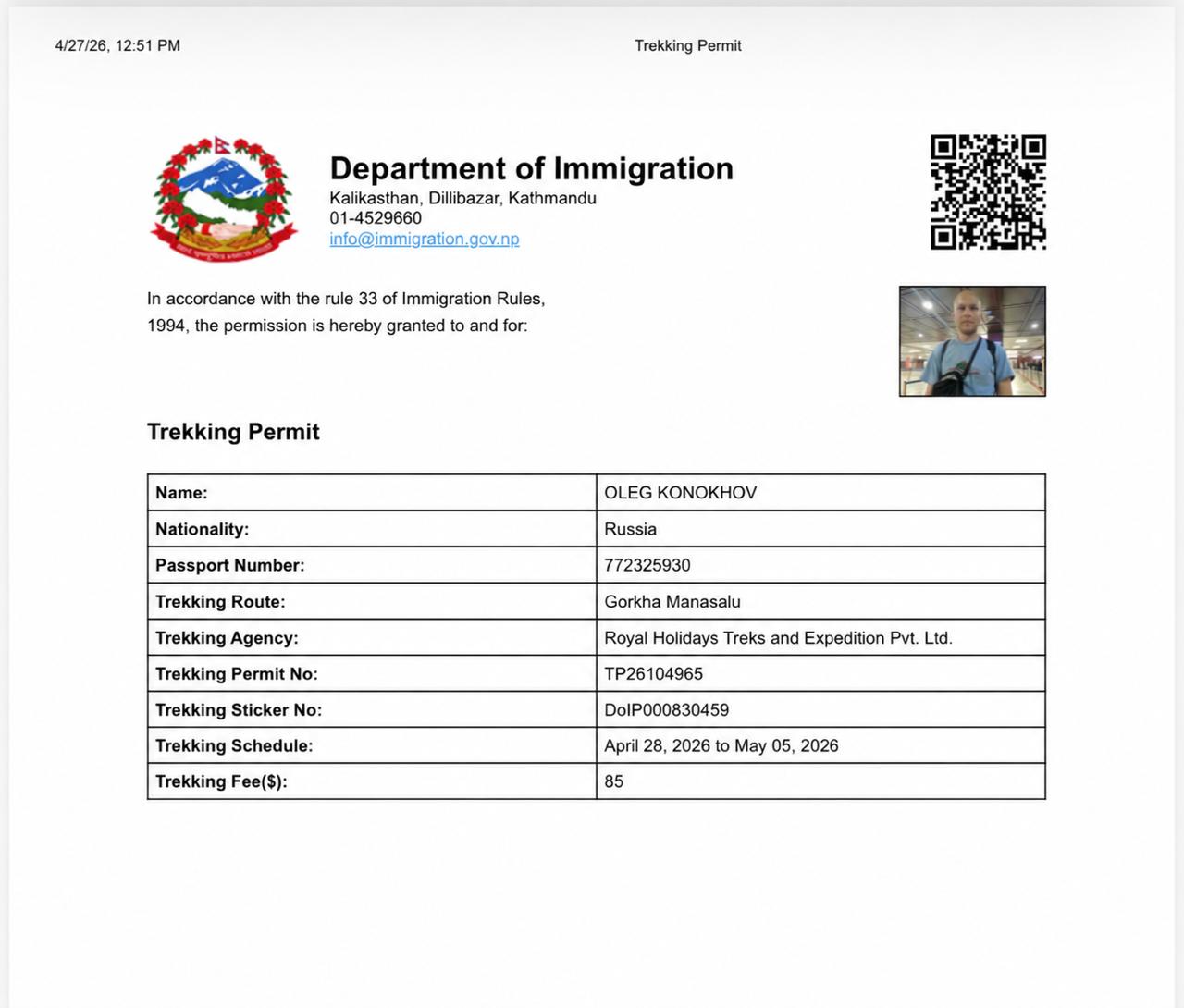
Nepal has plenteous opportunities for trekkers to walk along a mixed choice of paths. These paths comprise of low flatland and moderately rugged trails. Additionally, it also consists of rocky rigid pathways and the secluded off-the-beaten-tracks. However, all trekking areas are not as easily accessible as one may reckon. We will now talk about Manaslu Circuit Trek Permit For all the trekking routes in Nepal, it is mandatory to acquire identifiable trekking permits. The government of Nepal issues these permits after you decide to enter certain areas. Additionally, some trekking areas will require you to purchase conservation permits.

The government of Nepal has proclaimed Manaslu region as a restricted zone since a long time now. As a matter of fact, this is one such area where trekkers require conservation permits as well as restricted area permits. As a mediocre assumption, the area is a restricted precinct owing to its close proximity to the Tibetan border at a village named Samdo. Manaslu is believed to be declared as a restricted area so that unlawful movements in the border area could be curbed. Also, it is mandatory to purchase restricted area permits to impede any illegal activities.

On a general note, trekking in Manaslu areas connotes two things. First, additional cost, and second, you have to organize your trekking with a registered agency in Nepal. Being a restricted area, the government does not permit trekkers to visit Manaslu on their own. In order to acquire the right to entry for trekking in Manaslu, travelers are imposed with a special entry permit. However, the cost of permits varies depending on the season, usually being higher during the peak seasons. The peak seasons are the months between September to November, and the off-seasons falls between December and August.

Inopportunely, only a minimum of two trekkers in a group are issued with permits for trekking in Manaslu regions. That too, only if they are accompanied by a local trekking guide. Only through a locally registered trekking agency, trekkers can acquire their permits. Thus, freelancing trekking guides cannot get a permit for you. As a normal practice, if you are a solo traveler, your guide will help you acquire a ghost permit. Getting a ghost permit requires presenting the original passport of his or her companion. The individual trekker needs to pay the permit fees of two persons instead of one. Likewise, independent trekkers can approach trekking agencies to pair them up with other trekkers. Consequently, it will help to ease the process of permit application. In cases like these, they travel together with the group or another trekker till Jagat and then part ways from that point.

It is a technical requirement for each group of trekkers to go along with one or more trekking guide and/or a porter depending upon the group size. In many cases, especially for solo travelers, the trekking guide acts as a porter, or maybe the other way around. It is a risky business to find the right guy with a professional approach to guide you throughout the trip. Assuming that things go wrong, you won’t have any place to go and lodge your complaint. Hiring a guide through an agency is safer and wise too. For obvious reasons, the guide will be answerable to any mishaps or untoward incidents on the trekking routes of Manaslu.

Trekking in other regions of Nepal require an odd permit called TIMS card (Trekkers’ Information Management System). Although, the trek ends in Dharapani, TIMS card is not required while trekking in the Manaslu region. Nonetheless, if you choose to combine your Manaslu circuit trekking with the Annapurna Circuit Trekking or Annapurna Base Camp Trekking, then TIMS card is a prerequisite.

All permits require passport photos of the trekkers. So, it is advisable to carry at least 4 to 6 photos to have them glued in the permit papers. In case trekkers don’t have their passport photos with them, there are many photo shops in Kathmandu. They can have the photos made ready before commencing the trip to Manaslu.

Getting travel insurance beforehand is another equally important aspect for every trekker. Purchasing a local insurance is rather hectic and a time-consuming process. Thus, we normally advise our clients to procure the insurance from their native place. Amongst all, your activity, the altitude hazards, helicopter rescue, and medical coverage should be covered by your insurance company. If you are injured during the trekking trip, evacuation by helicopter is the quickest way of rescue. As a matter of fact, it is the sole mode of transporting you to the nearest hospital for medical attention.

Coming back to the different permits required, the Manaslu Circuit Trek cuts through two different districts, Manaslu and Annapurna. Most aptly, for these three different permits are obligatory. To add on, if a trekker wishes to do the Tsum Valley Trek along with the Manaslu Circuit Trek in one go, an additional permit is required.

Manaslu Circuit Trek Permit and Permit Fees

1. Restricted Area Permit (RAP)

A special permit required from the village of Jagat until Dharapani, the last check point up till where this permit is valid. The cost of the permits is as follows:
Peak seasons (September to November): USD 100 per person for one-week permit; additional USD 15 per person per day after the first week.
Off seasons (December to August): USD 75 per person for one-week permit; additional USD 10 per person per day after the first week. for more information please check the Official site: Department of Immigration Nepal

2. Manaslu Conservation Area Permit (MCAP)

The starting point to present your MCAP is Philim and the permit is valid up till Tal. The cost of this permit regardless of the season is NPR 3000 per person.

3. Annapurna Conservation Area Permit (ACAP)

ACAP is also required to be purchased. Although Besi Sahar is the exit point of Manaslu Circuit Trek, it is also the beginning point for Annapurna Circuit Trek. Regardless of the season, the cost of this permit is NPR 3000 per person.

4. Local permit by Tsum Nubri Municipality

Local government has started to collect NPR 1000 per trekker by issuing local permit in Jagat.

For information on the conservation permits, you may visit http://www.ntnc.org.np/projects


Manaslu Circuit Trek Cost 2026-2027

Manaslu circuit trek cost is the inclusion of everything that you want to know about the thrill-seekers Nirvana. As it is no surprise that things operate differently in the high mountains, most cost breakdown starts from the preparation and more, well before the trekking begins. With some mind-blowing facts and delights to look forward to here, we convince you why Manaslu is the perfect trekking destination for, both budget and affluent trekking in the Himalayas.

For a general comparison let’s look at two other popular trails in Nepal, the Annapurna Circuit and Everest Base Camp. Manaslu is more affordable to complete than both of them when domestic flights are included. Often considered as a more adventure-promising alternative, Manaslu has risen to the prominent pedestal in the Himalayas. On a good season trekking in the Nepalese Himalayas is not short of natural, cultural, and picturesque components. Manaslu introduces that uniqueness that even frequent trekkers to Nepal want to witness during their trek. As a whole, Manaslu per day is 15% and 18% less costly than Annapurna and Everest respectively.

From booking charges to guides permits and more, here is a detailed analysis of the Manaslu circuit trek cost for 2025 to get familiar with before your journey.

Manaslu Circuit Trek Cost for 2026

Manaslu circuit trek cost for 2026offered by Royal Holidays Adventure

Number of pax Cost in USD($)
1 person1150
2-4990
5-10 people950

This cost includes standard services as per the trip page

Tentative Cost for Solo and group Manaslu Circuit trek 

If you browse for a while most costs for completing the Manaslu Circuit Trek are between the USD 1050 and USD 1500 mark. These variations are due to the inclusion/exclusion of certain factors like transportation fares, shared rooms, guides experience, and more. If you are a solo traveler you can enjoy the lower spectrum of the cost when planned properly. The most important thing to remember for you is that the least price doesn’t always guarantee the best value for your money.

One common theme among travel operators is to keep the lowest price for gaining more attention. These might often lead to poor quality of services and sometimes inconvenient trekking experiences. Manaslu is a once-in-a-lifetime opportunity in the Himalayas and if you prefer everything to be perfect avoid those costs. A good and complete Manaslu circuit trek will balance between USD 1000 to 1300 per peerson depends on your required services. Those figures include everything but your personal expenses. You can keep that in mind and choose the right package for you.

As for the uppermost limit for Manaslu Circuit, well you can spend as much as you can. Trekkers can’t just get enough of Manaslu. If budget and time are not your problems you can add the Annapurna Circuit and extend your itinerary up to a month. A celebratory week in Pokhara might be fantastic too as well as several other mesmerizing tours around Nepal. One thing is guaranteed while you are here that every buck you spend is worth the experiences it comes with.

Budget Breakdown 

Further breaking down the total cost of the Manaslu Circuit we can separate them into seven segments. In no particular order here, we provide you the rough range of expenses with your options for the Manaslu circuit trek. 

Food 

Food during the Manaslu circuit will vary slightly as the days progress. Manaslu trek after the 2015 earthquake has transformed from a camping trek to a proper teahouse trek. The price here is that of the higher altitude teahouses i.e., after Namrung. We guarantee you there will be no problems with a fresh and warm meal throughout the trek. A typical breakfast will cost 4-8 dollars. Similarly, other meals will cost you around 10 dollars each. Drinking water could be refilled in the tea houses but a dollar mineral water is also commonly available. Per day you will spend nearly 25-30 dollars on food during the Manaslu circuit trek

As for the food menu, it slims down as we move up towards the Larkey La Pass. As far as teahouse treks go, Manaslu in recent years has grown a lot. Although not on par with the likes of Annapurna and Everest regions, trekkers can still enjoy some delicious food to select from here. The best part about food is the use of Local ingredients and resources. You can expect much more from Manaslu as the trail goes from the lower hills to the high mountains. As excited as you might be, try easting light and simple during the trek. It will repay you with the ease in walking and with good health in Manaslu region trekking.

Transportation 

The Transportation cost for any trek in the Himalayas points out the cost to head to and from the trailhead to Kathmandu Valley. In the case of the Manaslu circuit, the trail starts at the beautiful hillside village of Machha Khola. You only have the option to drive to the heart of the Gorkha district for this trek. Starting from the Kathmandu valley we follow the Prithivi Highway for a while. From Dhading onwards leaving the highway you will also have a significant off-road experience. Altogether it is a 6-7 hours’ drive with a lunch stop in between.

Now as you know the journey completely, here are your options. You can take a local bus, a private vehicle, or a tourist bus provided by your travel operator. Local transport is the cheapest option and you can reach Machha Khola for less than 20$ with it and all transportation on public vehicles cost you around $70 per person . However, it does come with local flair and is a bit more time-consuming. Your third option will be expensive but comfortable and flexible. A private jeep will empty your wallet by 250$ each way. You can plan your transport budget accordingly.

Accommodation 

Community-operated teahouses and local teahouses are the available accommodation options for travelers in the Manaslu circuit. While in Kathmandu you can select from 10$ to 500$ rooms to stay. Once the trek starts you can stay at a decent price in a basic teahouse-style room. The accommodation charges will be comparatively less as long as you have your meal at the same place. To summarize it all you can get 5$ to 15$ rooms easily at your overnight stops. Wi-Fi services are provided by some of the guesthouses so ask beforehand. Extra charges might be common for it though which might also cost you some bucks.

Unlike Everest and Annapurna, the availability of a room in the Manaslu circuit is not difficult even during the Peak season. However, you can always book or notify the teahouses to be clear and hassle-free. You can find the list of teahouses or guesthouses easily or the best way is to let the guides communicate with them.

Permit Charges for Manaslu Circuit Trekking 

Manaslu Circuit Trek requires you to attain two regular Conservation Area permits and one restricted area permit. The conservation area permit is for the Manaslu region where you will spend most of the trek walking. From Jagat to Samagaun is the restricted region enclosing the Tsum Valley hence the requirement of the Manaslu RAP. Soon after that, you will enter Annapurna CA crossing Larkey La pass where trekkers require to have the next permit. As per the general itinerary of the Manaslu circuit trek here are the charges for these permits. For more update please check Nepal immigration official site.

1. Special permit for restricted area in Manaslu (Manaslu RAP)

  • From September to November: 100 USD per person for 7 days
  • From December to August: 75 USD per person valid for 7 days

The permit extension will cost you an additional 15$ per day in case you have to stay for a longer period in the restricted region.

2. Manaslu Conservation Area Permit (MCAP)

MCAP starts from the village of Philim. The charge per person is NPR 3000 with no limit of days.

3. Annapurna Conservation Area Permit (ACAP)

This permit is required in the return trail from Dharapani till Besisahar. The charge per person is also NPR 3000 with no limit of days for ACAP.

These permit costs are generally included in your trekking package. However, make sure to ask for its inclusion before you book the trek to Manaslu.

4. Manaslu region entry permit

This local permit is required for all the trekkers. The Local government, (Tsumnubri Municipality) started to collect 1000 rupee per person as a trekker entry tax in Manaslu region.

Guide and Porters

One of the most important factors about Manaslu is that you are not allowed to do it completely alone. A local guide is mandatory even for solo travelers due to the rural nature of the trail. Guide costs are on the trekking package when you book the trek with a proper trekking operator. A personal guide here could charge you anywhere from $35 to$ 50 per day depending on their expertise and porter charge you $20 to $25. As for the porters, you can hire the local ones to aid the economy. But, if you are confident enough, you will be able to complete the circuit without one too.

Additional expenses 

Additional expenses in the Manaslu circuit include all personal expenses, tips, and unplanned expenditures. You might like a souvenir or try some local products while you are here. Similarly, hot water showers can cost extra in high altitude tea houses which you can enjoy. There are bakeries in Sama Gaon where you can treat yourself during the acclimatization stop too. Similarly, these also include the preparation shopping and items you want before the trek begins back at Kathmandu. A few hundred bucks will not hurt for the additional expense fund here.

For emergencies, the best idea will be to take travel insurance that covers evacuation, medical emergencies, or cancellation of the trek. This might cost significantly more without insurance, keep it in your mind.

The cost advantage for a group trek or fixed departures 

  • Transportation tends to get much cheaper for renting a private vehicle if you are sharing it. It is the same for local transportation but you will be traveling with familiar trekkers.
  • Sharing the guides and sometimes even porters can directly help you to split the daily charges.
  • Some hotels especially in Kathmandu offer better deals for groups and you can benefit from that too.
  • You can share the cost of any additional side trips not included in the Manaslu circuit trek as well.
  • Manaslu circuit trek cost for a group is generally found to be at least 10% or cheaper than solo cost.

Advantages as a solo traveler in Manaslu Circuit Trek

There are not many advantages cost-wise as a solo traveler. However, there is plenty to look for which will look like a bargain for trekking in the Himalayas.

  • Highly customizable itinerary, where you get to stay for the best experiences.
  • As you are mandated to take a licensed guide for Manaslu Circuit, you can communicate better with him/her.
  • Unlike the Everest and Annapurna Solo trekking in Manaslu is a challenge any adventurer can look forward to.
  • Eat at your own time and a better selection of your accommodation too.
  • You can trek at your own pace. That is, you are under less pressure to stay in the group.

Tips to cut some of your personal expenses throughout the Manaslu Circuit Trek 

Your trek package generally covers your fundamental costs like food, permits, accommodation, transportation, and guides. For fixed departure treks you are also provided with a few porters for the whole group, cost included. Personal expenses can be managed and you can spend near to nothing on the trek. Here are some general tips to cut some of your personal expenses.

  • Buy your trekking equipment in Nepal. If possible, rent them.
  • Carry a power bank as charging your phone might cost extra in some places.
  • Don’t get crazy on energy bars. Nepali foods do provide the energy to go for the trial.
  • Depending on the trekking season you might lose some extra gears for trekking.
  • Refill your water in lunch/food stops if they are not included in the package.
  • Get your guide to buying from the local shops for reasonable pricing.

For a trek lasting around two weeks in the Nepalese Himalayas, the Manaslu Circuit trek provides the best value for your money. As a majestic region known for the authentic experience and fantastic mountain trails that a traveler dreams for, one can’t simply complain about the delights received for the cost. Enjoy the snow-covered natural paradise with patches of traditional settlements on your Manaslu Circuit Trek.

Everest Base Camp Trek Guide

The Everest Base Camp Trek guide offers all the information of adventurers an unparalleled journey through the heart of the Himalayas where they traverse the scenic Khumbu Valley and encounter four of the world’s six highest peak. This trek is not just a physical challenge; it’s a passage through history, following the legendary path Sir Edmund Hillary and Tenzing Norgay took to conquer Everest, and a cultural immersion in the life of high-altitude Sherpa village. The allure of trekking to Everest Base Camp lies in its blend of natural beauty, from breathtaking vistas at Kala Patthar to the cultural richness found in Namche Bazaar, making it a coveted adventure for thrill-seekers globally.

During the 12-day Everest base camp trek itinerary from Lukla, trekkers face the dual challenges of rugged terrain and high altitudes, with Everest Base Camp. EBC is sitting at 5600m and parts of the journey requiring acclimatization above 5000. Despite these challenges, the trek remains accessible, attracting a broad spectrum of hikers drawn by the Everest Base Camp Trek cost. The experience of flying into the dramatic Lukla airport, and the guidance of experienced Sherpa guides. The trek offers more than just stunning landscapes; it’s a journey that tests the limits of the human spirit and fosters a deep connection with the natural and cultural splendor of Nepal.

Trek outline Itinerary

12 days Everest base camp trek itinerary is suggested for hikers. Here is outline itinerary below.

DayItineraryElevation (M)Trek Hour
1Fly from Kathmandu to Lukla and Trek to Phakding (30 min flight)2651m2-3 hrs
2Trek from Phakding to Namche Bazaar3440m5-6 hrs
3Side trip and rest day in Namche Bazaar3440m3-4 hrs
4Trek from Namche Bazaar to Tengboche3860m5-6 hrs
5Trek from Tengboche to Dingboche4343m5-6 hrs
6Acclimatization Day – Dingboche4343m3-4 hrs
7Trek from Dingboche to Lobuche4950m5-6 hrs
8Trek from Lobuche to Everest Base Camp, then back to Gorak Shep5370m6-7 hrs
9Morning hike up to Kala Patthar(5643M) and trek from Gorak Shep to Pheriche4371m7-8 hrs
10Trek from Pheriche to Namche Bazaar3440m6-7 hrs
11Trek from Namche Bazaar to Lukla2800m6-7 hrs
12Fly back from Kathmandu to Lukla1300m30 min

Best Time For Everest Base Camp Trek

Everest Base Camp Trek can be taken off upon at various times of the year, each offering distinct experiences depending on the season. Here’s a detailed breakdown:

Pre-Monsoon Season (February to May)

  • Late February to Early March: Trekkers enjoy clear skies and crisp air, providing spectacular views of the mountainous landscape.
  • March: The arrival of spring brings warmer temperatures and melting snow, making the paths more accessible.
  • April: This month sees the highest number of trekkers, resulting in crowded trails and fully occupied teahouses.
  • May: Weather begins to turn wetter with frequent afternoon rains and snow, which can add a layer of challenge to the trek.

Post-Monsoon Season (Late September to November)

  1. General Conditions: The skies clear up, offering less haze and more stunning views of the peaks.
  2. Temperature and Terrain: Although colder, this season is favorable for hiking to attractions like the Gokyo Lakes.
  3. Crowd Levels: Similar to the pre-monsoon season, the trails and teahouses tend to be quite busy.

Off-Peak Seasons

  • Winter (December to February): Trekking is possible but challenging due to very low temperatures (down to -30°C at night) and potential snow closures of passes.
  • Monsoon (June to September): Characterized by warm weather but heavy rainfall, making the trails muddy and less suitable for trekking.

For those, who planning their trek, the optimal times are during the stable and, dry conditions of spring (March to May) and the clear, mild weather of autumn (September to November). These periods not only offer the best weather conditions but also vibrant natural scenery, although they can also be the most crowded.

Everest Base Camp Trek Highlights

EBC trekking is a once-in-a-lifetime adventure that offers breathtaking views, unique cultural experiences, and a sense of accomplishment like no other. Here are some of the highlights of this iconic trek.

Stunning Scenery

  • Mount Everest: The trek offers unparalleled views of the world’s highest peak, Mount Everest, standing at 8,848 meters. Witnessing the awe-inspiring sight of this majestic mountain up close is an experience that remains etched in the memory forever.
  • Khumbu Icefall: This treacherous yet captivating icefall is a major highlight of the trek. The towering ice pinnacles and deep crevasses create a mesmerizing yet challenging terrain for trekkers.
  • Sagarmatha National Park: The trek takes you through the Sagarmatha National Park, a UNESCO World Heritage site, renowned for its diverse flora and fauna, including rare species like the snow leopard and red panda.

Unique Sherpa Culture

  • Tengboche Monastery: This ancient monastery, with its ornate architecture and serene surroundings, provides a glimpse into the spiritual heart of the Sherpa people. Visitors can witness the daily rituals and prayers performed by the resident monks.
  • Sherpa Villages: Along the trail, trekkers encounter traditional Sherpa villages like Namche Bazaar and Khumjung. Trekkers can immerse themselves in the warm hospitality and rich culture of the Sherpa community.

Challenging Yet Rewarding Trekking Experience

  • High-Altitude Challenge: The trek presents various challenges, including high altitude, rugged terrain, and unpredictable weather. Overcoming these obstacles and reaching Everest Base Camp at an altitude of 5,364 meters is an immensely rewarding achievement.
  • Panoramic Views: Throughout the trek, trekkers are treated to panoramic vistas of other Himalayan giants. Such as Lhotse, Nuptse, and Ama Dablam, offering ample opportunities for stunning photographs and moments of awe.

Camaraderie and Adventure

  • Fellow Trekkers: The trail to Everest Base Camp attracts adventurers from all over the world, fostering a sense of camaraderie and shared experiences. The interactions with fellow trekkers and locals create a vibrant and memorable journey.
  • Adventure of a Lifetime: From crossing suspension bridges adorned with prayer flags to staying in cozy teahouses nestled in the mountains, every moment of the trek is an adventure waiting to be embraced.

In conclusion, the Everest Base Camp trek is not just a physical journey. the trek also a deeply enriching and awe-inspiring experience that leaves an indelible mark on all who undertake it. The combination of natural beauty, cultural immersion, and personal achievement makes it a truly unparalleled adventure.

Required permit and Permit cost

To Jump on the Everest Base Camp Trekking, trekkers must secure several mandatory permits. The Permits ensure both the regulation of tourism and the conservation of the region’s unique environment. However, here’s a detailed overview of the necessary permits and their costs:

Sagarmatha National Park Entry Permit

  • Cost for Foreign Nationals: NPR 3,000 per person
  • Cost for SAARC Nationals: NPR 1,500 per person
  • Cost for Nepalese Nationals: NPR 100 per person

Where to Obtain: Nepal Tourism Board Office in Kathmandu or at the entry gate in Monjo.

Khumbu Pasang Lhamu Rural Municipality Entrance Permit

Where to Obtain: Can be acquired either in Lukla upon arrival or at Monjo

It is important for trekkers to note that the permit, previously a requirement, is no longer necessary for the Everest Base Camp trek. All permits can be conveniently purchased along the trail, allowing trekkers to manage their documentation as they progress through their journey.

Everest Base Camp Trekking Costs

The financial planning for the Everest Base Camp Trekking varies widely based on several factors. It depends on the choice of route, the trekking company employed, and the level of comfort desired during the journey. The overall cost for the trek can range from $1300 to $4000. This includes various components like travel, accommodation, meals, and guide services. Here’s a breakdown of the key expenses:

Accommodation and Meals

  • Kathmandu Hotels: Prices per night range from $10 for basic lodging to $450 for luxury accommodations.
  • Teahouses on the Trek: A bed per night costs about $5 at lower elevations, rising to $15 at Gorak Shep, the final stop before reaching the base camp.
  • Meals: The meals prices starts at per meal $10 and can go up to $20 in higher altitude areas like Gorak Shep.

Transportation and Guides

  • Flights: Round trip flights from Kathmandu to Lukla, the gateway to Everest, cost between $380 and $400
  • Transport: Both international airport pick up and drop off, cost between $50 and $100
  • Guide and Porter Fees: Daily rates for a guide range from $35, and for a porter, it’s from $25

Additional Costs

  • Travel Insurance: Essential for covering high-altitude trekking up to 6000m, typically priced around $160 for 30 days.
  • Trekking Gear: Initial costs for basic equipment range from $150 to $500, necessary for beginner trekkers.
  • Miscellaneous Expenses: These can include personal expenses and tips, adding an additional $150 to $300 to the budget.

Understanding these costs helps trekkers budget effectively, ensuring a well-prepared and enjoyable journey to Everest Base Camp. However, Royal holidays Adventure offers 12 days Everest base camp trekking in this cost with mentioned services for 2025.

Number of paxCost in USD ($)Book your trek
1 person1499Send Inquiry
2-4 people1399
5-10 people1350

Trek Difficulty

The Everest Base Camp Trek is a challenging adventure that requires a good level of physical fitness and determination. This trek spans approximately 130 km round trip, covering about 15 km per day, with daily trekking hours ranging from nearly 6 to 7.5 hours. Moreover, the journey begins at an altitude of 2,950m in Lukla and reaches up to 5,400m at Everest Base Camp. it is presenting a significant challenge due to the high altitude and rugged terrain.

Altitude Challenges and Health Risks

The most daunting aspect of the Everest Base Camp Trek is the high altitude, which poses risks of Acute Mountain Sickness (AMS) and other altitude-related illnesses. In addition, the symptoms of altitude sickness include headaches, dizziness, nausea, and vomiting, which require immediate attention and proper acclimatization. It is crucial for trekkers to be aware of these symptoms and to prepare adequately by engaging in pre-trek training such as hiking, cardio, and strength training.

Everest Base Camp Trek Preparation

To tackle the strenuous demands of the trek, proper training is essential. This includes longer hikes, strength training for legs, and aerobic exercises to build stamina and resilience. Additionally, the trek involves navigating through snow-peaked mountains, hanging bridges, raging rivers, dense forests, and waterfalls, which all add to the physical demands of the trek. Trekkers are advised to undertake the journey with a knowledgeable guide and a reliable trekking agency for safety and support, ensuring a well-prepared and successful trek to Everest Base Camp.

Responsible Trekking

The EBC trek requires a commitment to responsible trekking to preserve the unique environment and support local communities. Here are some essential practices to ensure a sustainable and respectful journey:

Alternative Trails and Waste Management

  1. Explore Alternative Trails: Consider less-traveled paths like the Chhukung Valley, Bhote Kosi Valley, or Dudh Kosi Valley to alleviate the impact on the main routes.
  2. Waste Collection: Engage in collecting waste during your trek and utilize the facilities provided by the Sagarmatha Pollution Control Committee (SPCC), which has placed rubbish bins along the trail.

Supporting Local Economy and Fair Treatment of Guides

  • Local Businesses: Opt for locally sourced food and minimize the use of products with excessive packaging to reduce waste and support the local economy.
  • Guides and Porters: Ensure that your guides and porters are provided with fair wages, appropriate clothing, and adequate food and accommodation. It’s also important they have proper insurance coverage.

Environmental and Cultural Respect

  • Carbon Footprint: To minimize your environmental impact, choose overland travel over domestic flights where possible, and stay in lodges that utilize solar energy or LPG gas.
  • Cultural Respect: Stay on marked trails, respect local customs, and use a reusable water bottle along with water purification tablets to minimize plastic usage.
  • Preparation and Safety: Properly acclimatize to avoid altitude sickness, and ensure you have a comprehensive first-aid kit and travel insurance that covers emergency evacuation and high-altitude trekking.

By adhering to these practices, trekkers can contribute positively to the sustainability of the Everest Base Camp trek and its surrounding communities.

Conclusion of Everest Base Camp Trek Guide

Through the extensive exploration of the Everest Base Camp Trek, this article unpacked the quintessential aspects needed for embarking on what can only be described as a journey of a lifetime. Moreover, from the critical details of permits and costs to insights on the best times to trek, coupled with thorough guidance on preparation, gear, and responsible trekking practices, readers have been equipped with a comprehensive roadmap. The juxtaposition of the trek’s demanding physical challenge against the backdrop of the Himalayas’ unparalleled beauty encapsulates not just an adventure but a transformative expedition.

Finally, in reflecting on the journey to Everest Base Camp, it’s evident that the expedition is more than a test of physical endurance; it’s a profound engagement with nature, local culture, and oneself. The trek’s broader implications on environmental conservation and the support of local economies emphasize its significance beyond personal achievement. However, it stands as a beacon for adventurers and ethically conscious travelers alike, suggesting further exploration and continued dialogue on sustainable trekking practices. Furthermore, this journey, fraught with challenges and rewards, underscores a deeper connection to the world’s natural wonders and a commitment to preserving them for generations to come.

Nar Phu Valley Trek Guide: Cost and itineraries for 2026-2027

Nar Phu Valley Trek is one of the most popular trekking package in Nepal in the lesser traveled trails. The Nar Phu Valley Trek can be done by bypassing the Manang Valley thereby reducing the total trekking time. The village of Nar Phu has been categorized as a restricted area. Hence, Nar Phu Valley trekking is classified as a restricted area trekking in Nepal. Previously, Nar and Phu used to be two different villages. Subsequently, the two villages merged as one and turned into a huge valley and it was jointly known as the Nar Phu Valley.

Nar Phu valley trek guide leads hikers into the unseen areas on the least visited route to experience the unexplored Himalayan wilderness. The Nar Phu valley trek guide is itself an enthralling experience for adventure lovers. During the course, trekkers may be blessed with views of snow-leopards and blue mountain sheep. In the same way, a herd of yaks or a barren of mules might bump travelers along narrow tracks.

The shorter format of the Nar Phu Valley Trek Itinerary starts from Koto in the Manang district after several hours of drive from Kathmandu. Being a restricted area, Nar Phu Valley trek solo is not possible unless you purchase your permit along with a ghost permit through a registered agency. It is mandatory to have a trekking guide with you as well. The breathtaking views of mountains, ancient Buddhist monasteries, and the Tibetan culture are some highlights of this trip. Nar Phu Valley Trek Cost can be different depending on the number of days, the trekking route, and the services required.

Nar Phu Valley Trek Itinerary

DayItineraryElevation Duration
01Drive from Kathmandu to Koto by private jeep2600 M9-10 hrs
02Trek from Koto to Meta village3560 M6-7 hrs
03Trek from Meta to Phu Village4050 M5-6 hrs
04Acclimatization day in Phu village and explore around4050 M4-5 hours
05Trek from Phu village to Nar Phedi3750 M7-8 hours
06Trek from Nar Phedi to Nar Village4150 M4-5 hours
07Trek from Nar Village to Ngawal via Kang La pass5306 M7-8 hours
08Trek from Ngawal to Chame2670 M4-5 hours
09Drive from Chame to Kathmandu1300 M8-9 hours

Nar Phu Valley Trek Highlights

  • Spectacular mountain views of Annapurna II, Himlung Himal, Gangapurna, Tilicho peak and the Manaslu ranges
  • Spend time in the colorful ancient villages and Tibetan monasteries that have remained intact over the years
  • Unique and colorful Tibetan Buddhist Chortens
  • Grab an opportunity to see the elusive snow leopard and the blue mountain sheep
  • Experience life in the Tibetan plateau extended towards Nepal
  • The medieval Nar Phedi Monastery
  • Kang La Pass, the highest point on the trek
  • Venture into Nepal’s isolated region where only a few have traveled
  • Flawless valleys, gorges and ravines
  • Lifestyle and culture of local communities with a prevalent Tibetan culture

Things to know before trekking to Nar Phu Valley

It is a well known fact that the Nar Phu Valley Short Trek will take its visitors to one of the secluded corners between the Damodar Kunda and the Annapurna Circuit. As such, trekking in this region falls under the restricted area, thereby requiring special permits to pass through. Intact and unaffected with modern influences, this trek provides experiences in the raw natural splendor along with the ancient Tibetan culture. The trek incorporates the ancient far-flung villages of Nar and Phu, age-old monasteries, Mani walls and Chortens. Besides, opportunities to see shocking rock formations, constricted canyons, dense forests, incredible glaciers, and snow-covered mountains are abundant.

Travelers to Nar Phu Valley should know the following few things before actually trekking to the Nar Phu Valley:

Nar valley

Nar Phu Valley Trekking Permits

Being a restricted area, trekkers will require purchasing two different types of permits for the Nar Phu Valley trek. However, if he or she intends to extend the trip to Annapurna region later on, then TIMS card is also mandatory. The necessary permits along with their cost are mentioned below:

  • Annapurna Conservation Area Permit (ACAP): US$ 30 per person
  • Nar Phu Valley Restricted Area Permit (NRA): US$ 90 per person/week (Sep-Nov), US$ 75 per person/week (Dec-Aug).
  • Trekking Information Management System (TIMS), (in case of trip extension to Annapurna region): US$ 20 per person.

Accommodation in Nar Phu Valley Trek

Nar Phu Valley Trek is normally a teahouse trek where trekkers will stay overnight in teahouses in the entire route. It is also possible to find home-stays at some places – in either cases trekkers do not have to set up tents and camp. Basically teahouses are combinations of lodges and guesthouses. They have a basic room with little or no furniture at all and a blanket to cover up. Trekking in winter seasons will compulsorily require trekkers to carry sleeping bags.

Teahouses at some villages may not have electricity. However, teahouse owners have managed to install solar power in the dining hall area. They also charge trekkers a small amount for charging mobile phones, cameras or other electronic appliances. In Nar Phedi, there are no teahouses, so accommodation will be arranged in the local monastery.

Trekking in the Nar Phu Valley allows one to deal with the local culture, traditional houses, and lifestyles of local people. As the trekking trails are less crowded in this area, accommodation does not face any serious issues unlike the popular trails elsewhere. The cost of a room on twin-sharing basis normally ranges from US$ 4 to US$ 7. You can expect the price to increase as you go higher. Luxury should not be expected at these inaccessible villages that are highly uninfluenced by the modern technologies.

Meals in Nar Phu Valley Trek

Food supply varies at various elevations on the trekking trails. It is obvious that trekking in far-flung areas will limit the variety of food stuff due to the inaccessibility of vehicular movement. The entire ration in those areas is carried by mules, horses or human porters. Travelers can eat their meals at the teahouses or small eateries along the way. Meals vary from simple but adequate items of food in the smaller villages to indispensable varieties in the larger places. Majority of the teahouses on the route to Nar Phu Valley will serve trekkers with the typical Nepali cuisine – Dal, Bhaat and Tarkari. Other Nepali dishes include bread,, momo, soups, curries, and other bakery items.

The cost of meals varies with season, destination, and partially the lodge owner. The cost of each meal usually is about US$ 4 to US$7. However, the cost will vary depending on the choice of food and the number of meals. On an approximate assumption, usually US$20 to US$25 should suffice for a day’s simple meals, tea and coffee. Travelers must expect an increase in food items as the elevation increases. It is always advisable to buy normal snacks, candy bars, cookies, cookies, and other light-weight quick-bites at lower elevations where the cost is tolerable.

Drinking Water

Although bottled mineral water is easily available at lower altitudes, we encourage our clients to use boiled water. We practice responsible tourism and do not want to litter and pollute our clean environment. Every shop along the way and guesthouses have hot water for which they may ask for a small charge. We also encourage you to carry water purification devices or chlorine tablets to double purify the boiled water before drinking.

Washing and Toilet Facilities

Most of the teahouses on the Nar Phu Valley trek offer hot showers; some may levy extra charges for that. The hot showers may be in the form of a standard bathroom shower or a bucket of hot water. At higher altitudes, teahouses may fail to provide hot water due to the shortage of water. It is highly recommended to limit the use of hot water for ecological reasons unless solar energy or typical firewood is used for heating.

However, showers or bath is not possible in the higher elevations due to the excess cold as well as the cost. It is in fact, a good idea to carry wet wipes and a small towel to clean your face and body. Washing facilities are available in almost all the teahouses. Nevertheless, it is always better to carry a bar of soap for your personal cleansing. Toilet is a typical Asian squat style in almost all the teahouses in the trekking route. It is normally difficult to find a room with an attached toilet. The toilets are .basically outside the room and the cleanliness depends on the availability of water and the lodge owner’s personal preference.

Difficulty of the Nar Phu Valley trek

Due to the long walking days and steep climbs in altitude, the Nar Phu Valley trek is a challenging trek. There are limited options of accommodations on the way therefore one has to walk longer to reach the next destination that has a proper accommodation arrangement. In a way, there is hardly any flexibility in the distance that must be covered on each day’s walk. The altitude gains are quite sharp on each trekking day. One cannot predict as to how your body will react to altitude gains. So, this particular trek is suitable for those who have a prior hiking experience. No doubt, a person should be perfectly fit and healthy as well.

Best Time to do the Nar Phu Valley Trek

The months from September and November are considered autumn in Nepal. These are the best months to do this adventurous Nar Phu Valley trek. During this season, the weather is more stable and trekkers can experience beautiful mountain vistas and the green hills. The spring season which falls during the months between March and May is also a good time to do this trek. During spring, flowers bloom and the lush greenery along with gleaming mountain peaks makes an excellent backdrop to the trekkers. Winter season between the months of December and February can make the trekking experience quite challenging.

During these months the Himalayan region freezes and there is excessive snowfall, especially in the higher altitudes. Likewise, the months between June and August is considered to be the summer season as well as the monsoon season. Trekking these months is very uncomfortable as the trails become wet and muddy.

Health and Fitness for Nar Phu Valley Trekking

Various treks in the Nar Phu region are classified as easy, moderate or strenuous treks depending on the number of days, altitude and the specific trekking areas. A common thing between the various categories of trekking is that trekkers need to walk for 5 to 8 hours every day. As such, every different trek requires different levels of physical fitness. Going on the Nar Phu Valley trek requires trekkers to have good health, an average physical fitness and a high determination. Prior trekking experience is not mandatory, but if you are used to walking several hours a day, then it sure becomes easier.

If trekkers have pre-existing health problems such as heart and lung diseases or any other major sickness, it is advised to consult with their physician before the trek and also inform the trekking agency accordingly. The maximum altitude of this trek is 5416m, so it is always wise to stay alert and be careful about altitude related hazards. It is suggested to drink lots of water and avoid any form of alcoholic beverages during the trek. Trekkers are also cautioned to be careful of frost bites and snow blindness at higher altitudes.

Guide and Porter Costs for Nar Phu Valley Trek

Most of the trekking areas in Nepal do not require hiring a guide and a porter for his or her adventurous trip. However, it is mandatory for foreign trekkers to hire a registered guide while trekking in the restricted areas of Nepal as per the government norms. Most of the popular treks such as the Everest Base Camp Trek, the Langtang Valley Trek or the Annapurna Base Camp Trek do not have such requirements.

Hiring a guide will cost a trekker from US$ 30 to US$ 40 per day depending on the guide’s experience, level of education, and technical proficiency. Porter, on the other hand, will cost US$ 20 per day. These costs cover their wages, accommodation, and food. It is also possible to find a trekking guide who will also act as your porter. The guide cum porter has a charge from US$ 25 to US$ 30 and he will carry a maximum weight of 15 kg only. It is highly recommended that you hire an experienced and a government registered guide while trekking in the Nar Phu valley.

Travel Insurance

It is an important pre-requisite to have your travel insurance with you before you travel to the remote corners of Nepal. You should be sufficiently protected. You insurance should cover emergency evacuations, lost items, liabilities, physical injuries, and medical ailments. Ensure that your insurance covers all the activities in the Himalayas. We do not sell or arrange your travel insurance, so you have to do it yourself at your home country. We suggest you to mention all the activities you would be participating while traveling to Nepal to your insurance company. Accordingly, they will provide you a complete travel insurance package.

Tips and Donations

Tipping or donations are not mandatory though the guide, porters or drivers expect them from you. If you are pleased and totally gratified with the services offered to you during your trip, you might want to show your gratitude towards them in the form of small tips. In fact, tipping culture is quite common in Nepal. It is an indirect way to say thank you to your guides or porters for their dedicated work. It is a way to show how grateful you are to them for making your trip fun, safe and enjoyable.

Conclusion of Nar Phu Valley Trek Guide

There are several fascinating reasons as to why one should do the Nar Phu Valley Trek. All the required information above will meet the inquisitive minds of novice travelers or trekking enthusiasts. As a basic fact, trekking to the mountains of Nepal itself is an adventurous trip that will surely satisfy the wanderlust in you. Crawling further and beyond, the majestic beauty of the mountains and green hills don’t fail to lure you.

The warm welcome of the friendliest people on earth is something that will remain etched in your memory forever. The thrills of the trekking trails, on the other hand, are unforgettable experiences worth every dime you spend. Give us an opportunity to serve you once – it is a promise from Royal Holidays to offer more than your expectations!