
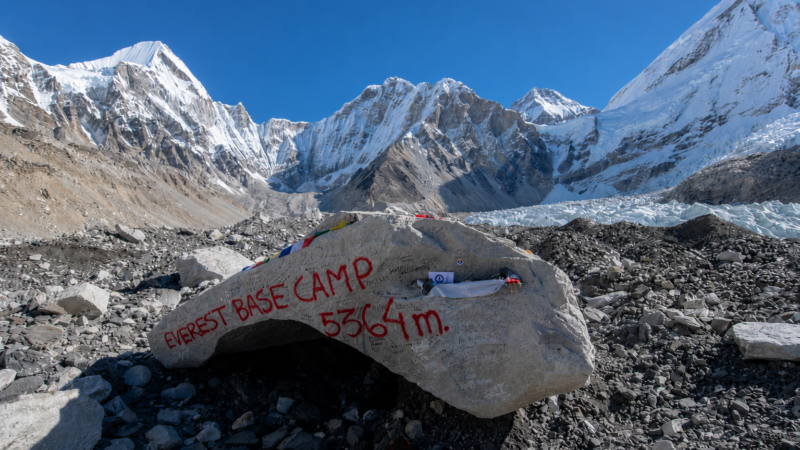
Everest Base Camp Trek with Helicopter Return
 70 Reviews
in TripAdvisor
70 Reviews
in TripAdvisor


EBC Trek with Helicopter Return | Trip Overview
-
Duration 9 days
-
Max Altitude 5,644 m / 18,519 ft (Kala Patthar)
-
Group Size Private and group options available
-
Difficulty Moderate to Challenging
-
Region Khumbu Region
-
Best Season March-May and September-November
-
Start/End Point Lukla / Kathmandu
-
Accommodation Tea houses (lodges) throughout


About the Everest Base Camp Trek with Helicopter Return
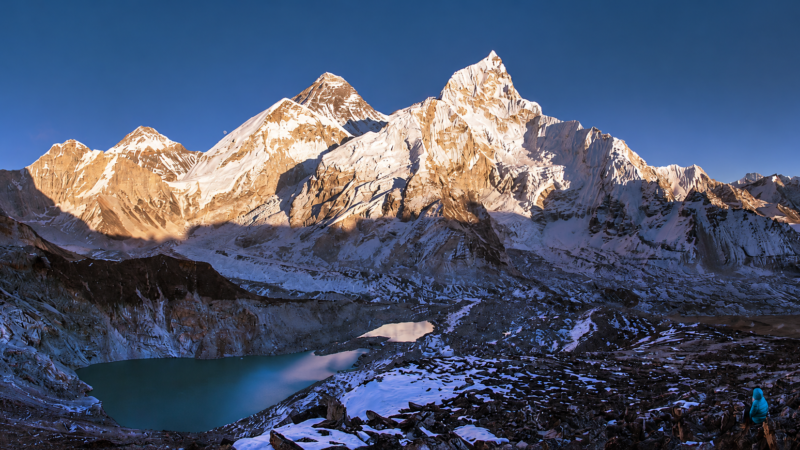
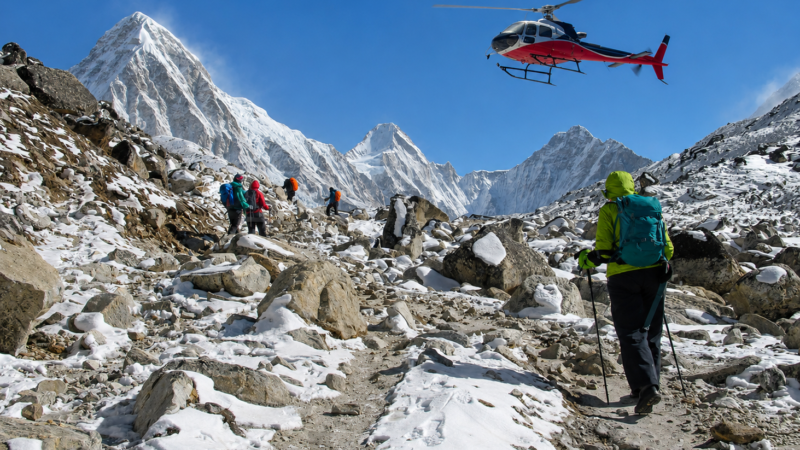
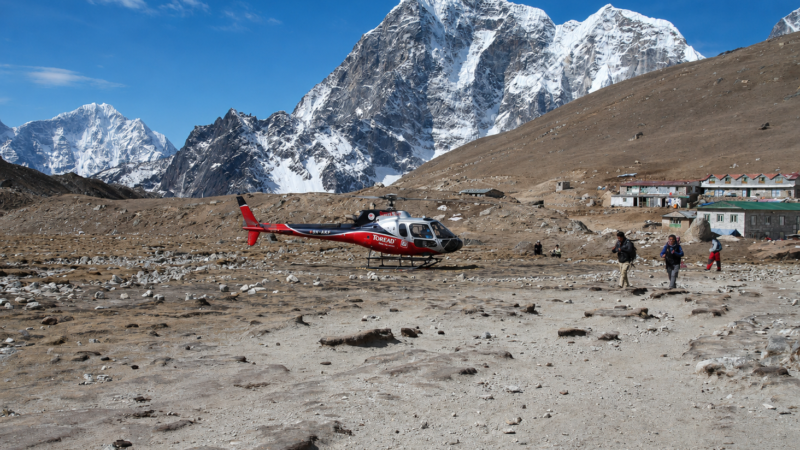
The Everest Base Camp Trek with Helicopter Return is a 9-day adventure that takes you through Sagarmatha National Park, one of the most celebrated UNESCO World Heritage Sites on earth. You trek from Lukla through the valley of the Dudh Koshi River, passing through Namche Bazaar, Tengboche, Dingboche, and Lobuche before reaching Gorak Shep and Everest Base Camp at 5,364 metres. The following morning you summit Kala Patthar at 5,644 metres for sunrise views of Everest, Lhotse, Nuptse, and Pumori, then board a helicopter that returns you directly to Kathmandu, saving two to three days of return trekking.
This itinerary is ideal for first-time high-altitude trekkers who are physically fit and have completed some prior hiking or training. Unlike a fully independent trek to Everest Base Camp, this guided format ensures proper acclimatization scheduling, permit management, and daily safety monitoring by experienced Sherpa guides. The key distinction of this package over standard helicopter tours is that you walk every kilometre of the approach, earning each view and fully absorbing the culture and landscape of the Khumbu people.
EBC Helicopter Return Itinerary | 9 Days
Show All
Day 1 – Fly to Lukla and Trek to Phakding
-
 Accomodation: Tea house / Lodge
 -
 Meals: Breakfast, Lunch, Dinner
 -
 Elevation: 2,610 M
 -
 Duration: ~3–4 hours
 -
 Distance: ~8 km
Day 2 – Trek to Namche Bazaar
-
Accomodation: Tea house / Lodge
-
Meals: Breakfast, Lunch, Dinner
-
Elevation: 3,440 M
-
Duration: ~4-5 hours
-
Distance: ~11 km
Day 3 – Acclimatization Day, Namche Bazaar
-
Accomodation: Tea house / Lodge
-
Meals: Breakfast, Lunch, Dinner
-
Elevation: 3,440 M
-
Duration: ~2-3 hours
-
Distance: ~ 5 km
Day 4 – Trek from Namche Bazaar to Tengboche
-
Accomodation: Tea house / Lodge
-
Meals: Breakfast, Lunch, Dinner
-
Elevation: 3,867 M
-
Duration: ~5–6 hours
-
Distance: ~10 km
Day 5 – Trek from Tengboche to Dingboche
-
Accomodation: Tea house / Lodge
-
Meals: Breakfast, Lunch, Dinner
-
Elevation: 4,410 M
-
Duration: ~5–6 hours
-
Distance: ~11 km
Day 6 – Acclimatization Day, Dingboche
-
Accomodation: Tea house / Lodge
-
Meals: Breakfast, Lunch, Dinner
-
Elevation: 4,410 M
-
Duration: ~4-5 hours
-
Distance: ~6 km
Day 7 – Trek from Dingboche to Lobuche
-
Accomodation: Tea house / Lodge
-
Meals: Breakfast, Lunch, Dinner
-
Elevation: 4,940 M
-
Duration: ~5–6 hours
-
Distance: ~9 km
Day 8 – Trek from Lobuche to Everest Base Camp, then to Gorak Shep
-
Accomodation: Tea house / Lodge
-
Meals: Breakfast, Lunch, Dinner
-
Elevation: 5,364 M (EBC) / 5,164 M (Gorak Shep)
-
Duration: ~7–8 hours
-
Distance: ~13 km

Day 9 – Hike Kala Patthar, then Helicopter back to Kathmandu
-
Accomodation: Hotel
-
Meals: Breakfast, Lunch
-
Elevation: 5,545 M (Kala Patthar) / 1,300 M (Kathmandu)
-
Duration: Hike: ~2–3 hours, Flight : ~1 hour 15 minutes
EBC Trek with Helicopter Return: Route and Map
The classic Everest Base Camp route begins in Lukla (2,860 m) and follows the beautiful Dudh Koshi Valley. Along the way, trekkers cross several iconic suspension bridges, pass traditional Sherpa villages, yak caravans, and ancient mani stone walls before reaching the vibrant mountain town of Namche Bazaar (3,440 m).
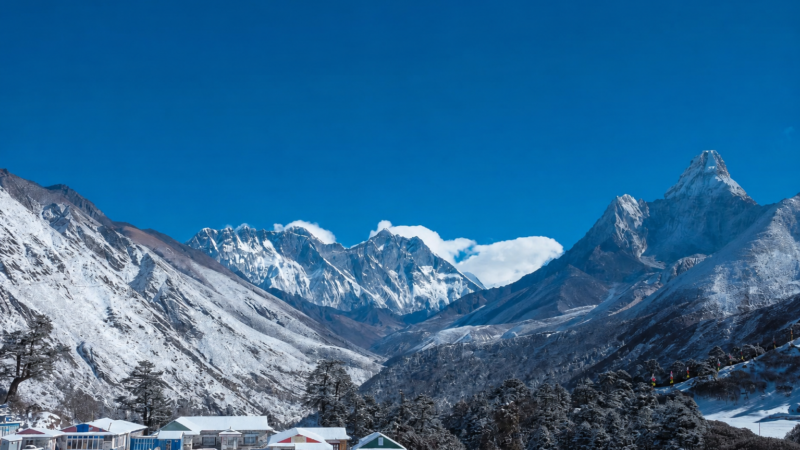
From Namche Bazaar, the trail ascends through the scenic Khumbu Valley to Tengboche, home to the famous Tengboche Monastery, the spiritual heart of the Sherpa community. The journey then continues to Dingboche (4,360 m), where the landscape becomes more open and alpine as the altitude increases.
Beyond Dingboche, the trail follows the Khumbu Glacier moraine to Lobuche (4,940 m) before reaching Gorak Shep (5,140 m), the final settlement on the route. From here, trekkers make the unforgettable final hike to Everest Base Camp (5,364 m), surrounded by towering Himalayan peaks and spectacular glacial scenery.
Cost and Package Inclusions
-
 Kathmandu international airport Pick up and drop off
-
Kathmandu-lukla-Kathmandu both way flight tickets
-
Two nights Hotel accommodation in Kathmandu with breakfast
-
Domestic airport transfers by private car/jeep/van
-
A professional and responsible trekking guide during the trek
-
Accommodation in the tea house during the trek (twin sharing)
-
Three meal a day (Breakfast, Lunch and Dinner) during the trekking
-
seasonal fruit salad during the trek as per availability
-
Trekking route map, duffel bag and water purification tablet
-
 Travel insurance
-
Tip to the guide and porter
-
Porter during the trek
-
Any Kinds of drinks
-
Personal expenses; hot shower, internet, battery charging
This cost and inclusion are based on standard group bookings. If you are not satisfied with the itinerary or package includes details, please contact us, we are happy to customize the trek according to your preferences.
Altitude and Acclimatization on EBC Trek with Helicopter Return
The highest sleeping altitude on this trek is Gorak Shep at 5,140 metres, while the highest point reached is Kala Patthar at 5,644 metres. Above 3,500 metres, altitude-related illness becomes a real risk. Acclimatization days at Namche Bazaar (Day 3) and Dingboche (Day 6) follow the established high-altitude protocol of climbing high and sleeping low. Symptoms of Acute Mountain Sickness (AMS) include persistent headache, nausea, loss of appetite, dizziness, and fatigue. If symptoms worsen, the only safe response is immediate descent. Our guides carry pulse oximeters and supplemental oxygen for emergencies.
Royal Holidays Adventure guides are trained in Wilderness First Aid and high-altitude protocols. They monitor every trekker's oxygen saturation daily above 3,500 metres and are authorized to make descent decisions if a trekker's health is at risk. This professional oversight is one of the most important reasons to trek with a licensed agency rather than independently, particularly on a route that culminates at nearly 5,400 metres above sea level.
Is the Everest Base Camp Trek with Helicopter Return Suitable for Beginners
The Everest Base Camp (EBC) trek is not recommended for complete beginners with no mountain hiking experience, but it is achievable for first-time high-altitude trekkers who prepare properly. Before attempting the trek, you should be comfortable hiking continuously for 6 to 7 hours across varied terrain, including steep ascents, rocky trails, and uneven paths. While no prior Himalayan trekking experience is required, having a basic understanding of endurance hiking and physical resilience is important for a safer and more enjoyable experience.
Proper preparation is essential, and most trekkers benefit from 8 to 12 weeks of aerobic training that includes hiking, running, cycling, or stair climbing, ideally with elevation gain when possible. Although altitude adaptation cannot be fully trained at sea level, strong cardiovascular fitness can help reduce the risk of Acute Mountain Sickness (AMS) and improve overall stamina during the trek. Trekkers should also approach the journey with realistic expectations, understanding that physical discomfort, changing weather conditions, and basic lodge accommodation are all part of the Everest Base Camp experience.
Why Choose Royal Holidays Adventure for Everest Base Camp Trek with Helicopter Return
Royal Holidays Adventure is a Nepal Tourism Board registered and licensed trekking company with over a decade of experience leading groups on high-altitude routes across Nepal, Tibet, and Bhutan. Our guides are government-licensed, bilingual, and trained in high-altitude first aid. Every itinerary we operate is designed by team members who have personally walked the route multiple times under different seasonal conditions. We keep group sizes small by design, which allows for more attentive safety monitoring and better overall experience for each trekker. Our Sherpa guides bring generations of accumulated Khumbu knowledge that no guidebook can replicate.
We are committed to sustainable and responsible trekking. This means fair wages for all local staff, waste management on the trail, partnerships with local tea house owners, and contribution to regional porter welfare programs. When you trek with Royal Holidays Adventure, your investment directly supports the Khumbu communities you pass through. Our client safety record, transparent pricing, and documented guide credentials make us a trusted choice for the Everest Base Camp trek return by helicopter.
Book Your Everest Base Camp Trek with Helicopter Return with Experts
Royal Holidays Adventure offers fixed departure dates throughout the spring and autumn seasons, with the option to arrange fully private departures year-round subject to availability. Our small group sizes, licensed guides, verified safety protocols, and direct relationships with Khumbu tea house operators make us a reliable choice for one of the world's most iconic high-altitude treks. Every trekker who books with us receives a detailed pre-departure briefing, a curated gear checklist, permit coordination, and direct communication with their assigned guide before arrival in Kathmandu.
To book or enquire about the Everest Base Camp Trek with Helicopter Return, contact us through our website or reach us directly by phone or email. Our team responds within 24 hours and is happy to answer detailed questions about the itinerary, fitness requirements, or any aspect of the experience. We look forward to guiding you to the roof of the world.

Everest Base Camp Trek with Helicopter Return FAQs
Find answers to the most common questions about the Everest Base Camp Trek with Helicopter Return, including permits, itinerary, cost, and difficulty.
1. How physically fit do I need to be for this trek?
You should be able to walk 6 to 7 hours continuously on uneven terrain before attempting this trek. Prior experience with day hiking or multi-day trekking is strongly recommended. Aerobic fitness built through running, cycling, or stair climbing over 8 to 12 weeks before departure significantly reduces your risk of altitude sickness and improves your overall experience on the route. You do not need to be an athlete, but baseline cardiovascular endurance is essential for this itinerary.
2. What is the difference between a standard EBC trek and this helicopter return package?
The standard Everest Base Camp trek typically takes 12 to 14 days round trip because trekkers walk back down from Gorak Shep via the same route to Lukla. The helicopter return package replaces the 3 to 4 days return descent with a 45-minute helicopter flight from Gorak Shep to Kathmandu. You still walk every kilometre of the approach, so the full trekking experience is preserved going up. The helicopter return saves time, reduces knee strain on the descent, and adds a spectacular aerial perspective of the Khumbu Glacier and Himalayan ridgeline.
3. Can altitude sickness affect me even if I am fit and healthy?
Yes. Altitude sickness is not correlated with general fitness levels. Even elite athletes can develop Acute Mountain Sickness above 3,500 metres. The risk is determined by how quickly you ascend, your individual physiology, and how well you hydrate and acclimatize. Our itinerary is being built in two full acclimatization days at Namche and Dingboche specifically to reduce AMS risk. Our guides monitor oxygen saturation daily and are trained to respond appropriately if any trekker shows symptoms.
4. What permits do I need and are they included in the package?
Two permits are required: the Sagarmatha National Park Entry Permit and the Khumbu Pasang Lhamu Rural Municipality Permit. Both are included in our standard package price. Royal Holidays Adventure handles all permit procurement before departure. Trekkers only need a valid passport and Nepal tourist visa. We recommend obtaining your Nepal visa in advance through the official Nepal government e-visa portal or on arrival at Tribhuvan International Airport in Kathmandu.
5. What type of accommodation can I expect on the trek?
Accommodation is in tea houses (also called lodges or guesthouses) throughout the trek. Below Namche Bazaar, lodges are relatively comfortable with attached bathrooms in most cases. Above Namche, rooms become simpler with shared bathrooms, thin mattresses, and limited heating. Thick blankets are provided. Electricity from solar panels is available at most lodges but charging may require a small fee. The focus of the lodges is function rather than comfort, and this is an accepted and integral part of the trekking experience in the Khumbu region.
6. Is travel insurance mandatory for this trek?
Yes, travel insurance that covers high-altitude trekking and helicopter evacuation up to at least 6,000 metres is a mandatory requirement for booking this trek with Royal Holidays Adventure. In the event of a medical emergency, helicopter evacuation from Khumbu is very expensive and without insurance, costs can reach thousands of dollars. We require proof of valid insurance at the time of final booking. We strongly advise purchasing this insurance well in advance of your departure, not on the day of travel.
7. When is the best time of year to do this trek?
The best seasons are spring (March to May) and autumn (September to November). Autumn, particularly October and November, is considered the single best time for clear skies and mountain visibility. Spring offers warmer temperatures at lower elevations and the spectacle of rhododendron forests in bloom. Winter trekking is possible but extremely cold above 4,000 metres and is only recommended for experienced cold-weather trekkers. The monsoon season (June to August) brings daily rain and poor trail conditions and is not recommended.
8. How much does the Everest Base Camp Trek with Helicopter Return cost?
The package price with Royal Holidays Adventure starts from approximately USD 1,800 per person for a group trek. Private or customised departures are priced higher depending on group size and specific requirements. The package includes accommodation on the trek, all meals during the trek, permits, guide and porter fees, Kathmandu to Lukla flight, and the helicopter return from Gorak Shep. International flights, Nepal visa, personal gear, travel insurance, and personal spending money are not included in the package price.
9. What is Kala Patthar and why is it important on this trek?
Kala Patthar is a prominent dark rocky peak rising to 5,644 metres above sea level, located just above Gorak Shep in the Khumbu region. It is considered the best publicly accessible viewpoint for a direct face-on view of the South Face of Mount Everest and the surrounding peaks including Nuptse, Lhotse, Changtse, and Pumori. Most serious EBC trekkers prioritize the Kala Patthar summit over Everest Base Camp itself for photography because EBC is surrounded by the Khumbu Glacier and offers limited open mountain views. Our itinerary includes an early morning ascent of Kala Patthar before the helicopter departure.
10. Can I do this trek solo without a guide?
Technically, the Everest Base Camp route does not require a mandatory licensed guide by law as of the current regulations, though proposed changes to Nepal trekking law may introduce this requirement soon. However, Royal Holidays Adventure strongly recommends guided trekking on this route for safety, acclimatization monitoring, and logistics management. A licensed guide provides daily health checks, manages permits and accommodation bookings, coordinates emergency communication, and brings essential local knowledge. The relatively small additional cost of a guide is justified entirely by the safety advantage it provides at this altitude.