
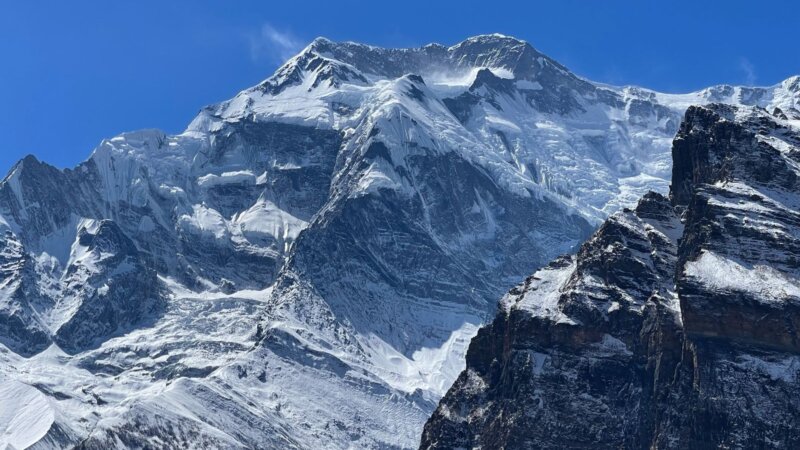
Annapurna Circuit Trek 14 Days Itinerary
Expert-led scenic trek featuring altitude safety protocols and licensed mountain specialists 70 Reviews
in TripAdvisor
70 Reviews
in TripAdvisor


Annapurna Circuit Trek: Trip Overview
A snapshot of essential details for the Annapurna circuit trek
-
Duration 14 Days
-
Trekking Days 10 Days
-
Max Altitude 5,416 m (Thorong La Pass)
-
Group Size 2 – 10 Trekkers
-
Difficulty Moderate to Challenging (High-Altitude Trek)
-
Region Annapurna Conservation Area, Nepal
-
Best Season March–May & September – November
-
Start/End Point Kathmandu / Kathmandu
-
Accommodation Hotel | Tea House trekking




About the Annapurna Circuit Trek
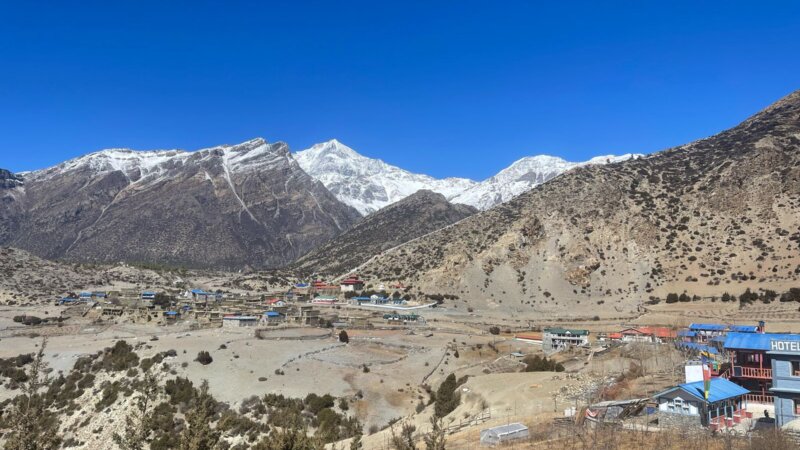
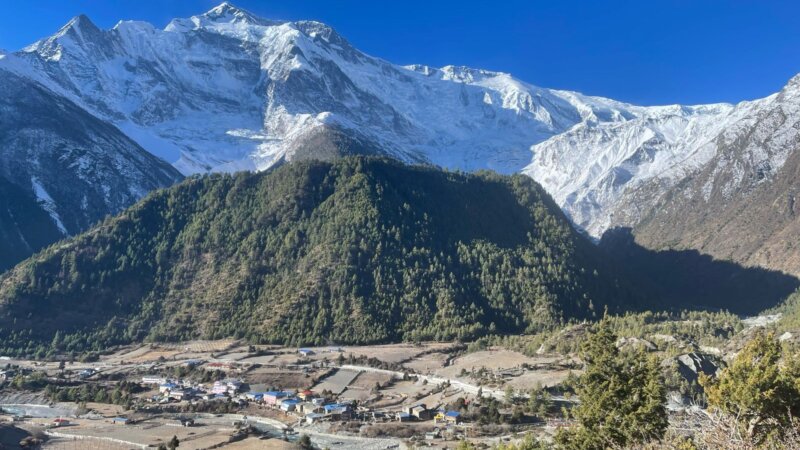
The Annapurna Circuit Trek is a classic Himalayan journey that gradually reveals Nepal’s incredible geographic and cultural diversity. The trail loops around the vast Annapurna Massif, starting in lush river valleys before climbing through the Marsyangdi River valley into the dry, high-altitude landscape of Manang. The highlight comes with the demanding but rewarding crossing of Thorong La Pass (5,416 m), followed by a descent into the dramatic Kali Gandaki Gorge.
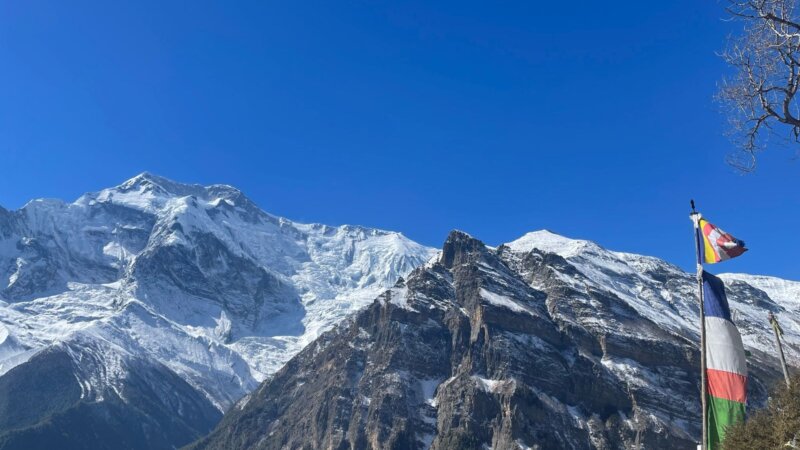
What sets this trek apart is its blend of remote mountain terrain and the comfort of teahouse trekking, allowing trekkers to experience the Himalayas without complex expedition logistics. Along the route, you’re rewarded with sweeping views of iconic peaks such as Annapurna I, Dhaulagiri, and Manaslu.
The Annapurna Circuit trek difficulty is considered moderate to challenging, making it ideal for fit trekkers seeking more variety than the Everest Base Camp trek and a broader experience than the Annapurna Base Camp trek. Cultural encounters, from monasteries in upper Manang to the sacred site of Muktinath, add depth to this unforgettable Himalayan adventure.
Annapurna Circuit Trek Itinerary (Day-by-Day)
Show All
Day 01: Drive from Kathmandu to Dharapani
-
 Elevation: ~1,860 m
 -
 Duration: 8–10 hours
Day 02: Trek from Dharapani to Chame
-
Elevation: 2,670 m
-
Duration: 5–6 hours
Day 03: Chame to Pisang
-
Elevation: 3,300 m
-
Duration: 4–5 hours
Day 04: Pisang to Manang
-
Elevation: 3,540 m
-
Duration: 5–6 hours
Day 05: Acclimatization Day at Manang
-
Elevation: 3,540 m
-
Duration: 2–4 hours
Day 06: Trek from Manang to Siri Kharka
-
Elevation: 4,060 m
-
Duration: 4–5 hours
Day 07: Siri Kharka to Tilicho Base Camp
-
Elevation: 4,150 m
-
Duration: 5–6 hours
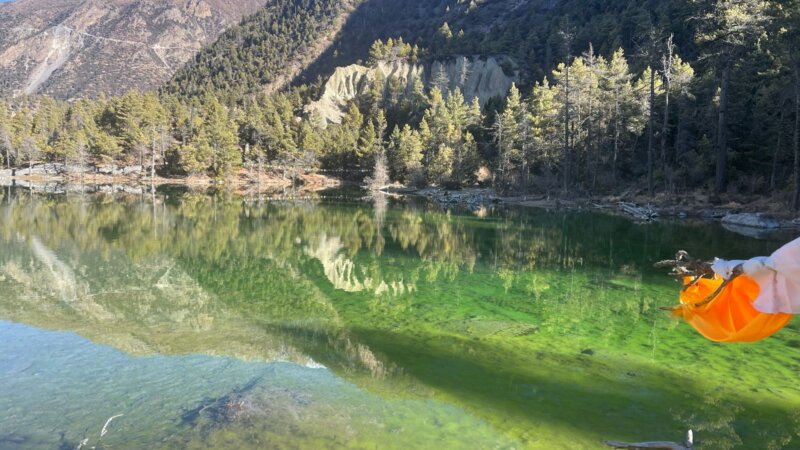
Day 08: Hike to Tilicho Lake (4,919m) and return to Siri Kharka
-
Elevation: 4,060 m
-
Duration: 5–6 hours
Day 09: Siri Kharka to Yak Kharka
-
Elevation: 4,050 m
-
Duration: 4–5 hours
Day 10: Yak Kharka to Thorong Phedi
-
Elevation: 4,540 m
-
Duration: 4–5 hours
Day 11: Cross Thorong La Pass → Trek to Muktinath
-
Elevation: 3,760 m
-
Duration: 8–9 hours
Day 12: Drive from Muktinath to Tatopani
-
Elevation: 1,190 m
-
Duration: 6-7 hours
Day 13: Tatopani to Pokhara Drive
-
Elevation: 822 m
-
Duration: 5–6 hours

Day 14: Drive from Pokhara to Kathmandu
-
Elevation: 1,350 m
-
Duration: 6–7 hours
Annapurna Circuit Trek Route & Map
The Annapurna Circuit trek route forms a sweeping loop around the Annapurna mountain range, beginning in the lush Marsyangdi River valley and rising toward the arid landscapes of Manang. After acclimatization, it crosses Thorong La Pass before descending past Muktinath through the dramatic Kali Gandaki Gorge toward Pokhara.
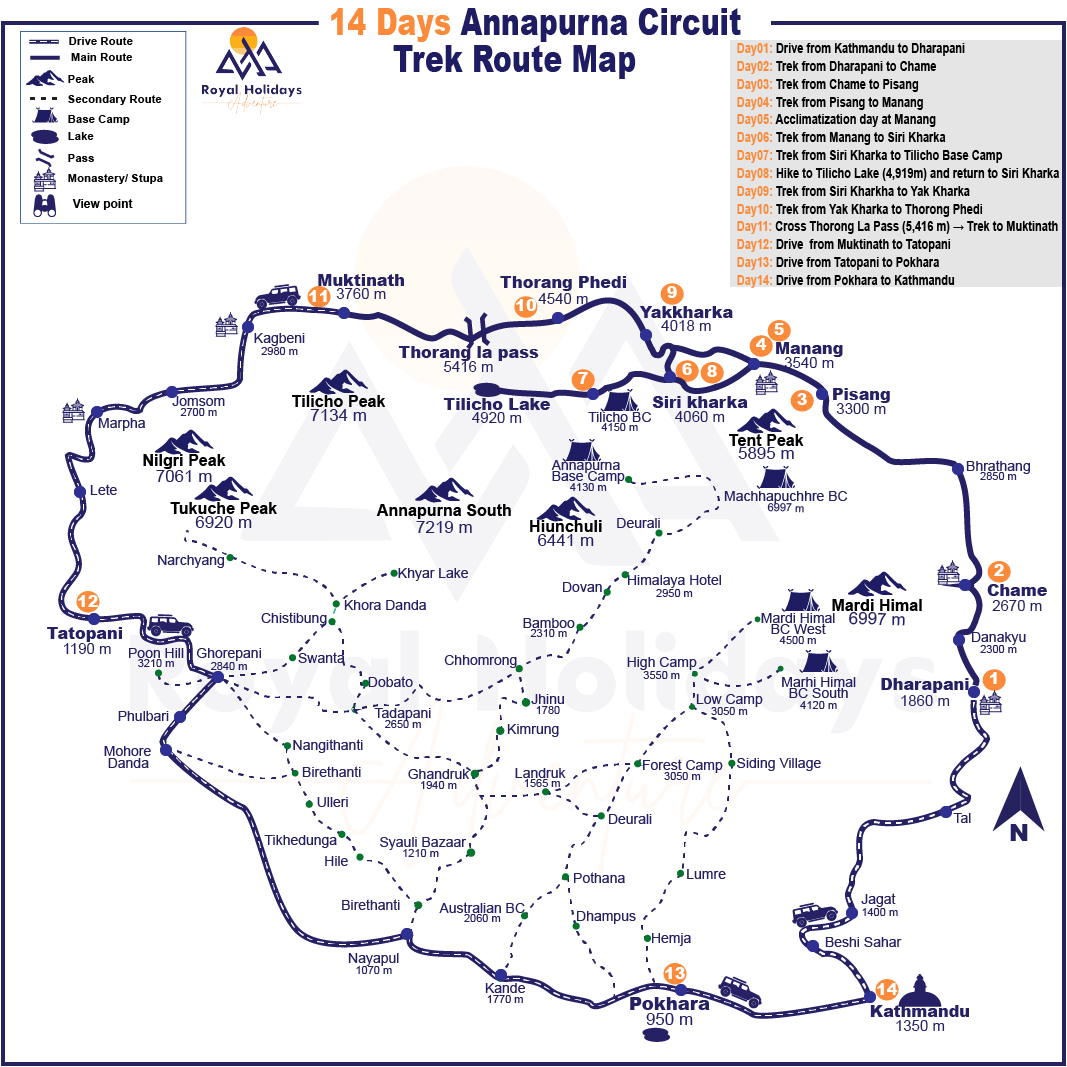
Annapurna Circuit Trek route map showing the Marsyangdi River valley ascent, Manang acclimatization zone, Thorong La Pass, Muktinath, and the descent through the Kali Gandaki Gorge toward Pokhara.
This route map helps visualize elevation gain, regional transitions, and key acclimatization points, making it easier to understand pacing, safety planning, and why proper altitude management is essential on the Annapurna Circuit.
Cost Includes and Excludes
-
 Kathmandu international airport Pick up and drop off
-
Two nights Hotel accommodation in Kathmandu with breakfast
-
A professional and responsible trekking guide during the trek
-
All Necessary Trekking permits and paper work
-
Accommodation in the tea house during the trek (twin sharing)
-
Three meal a day (Breakfast, Lunch and Dinner) during the trekking
-
Trekking route map, duffel bag and water purification tablet
-
All Necessary ground Transportation by public bus and sharing jeep
-
seasonal fruit salad during the trek as per availability
-
 Any Kinds of drinks
-
Personal expenses; hot shower, internet, battery charging
-
Tip to the guide and porter
-
Travel insurance
This cost and inclusion are based on standard group bookings. If you are not satisfied with the itinerary or package includes details, please contact us, we are happy to customize the trek according to your preferences.
Altitude & Acclimatization on Annapurna Circuit Trek
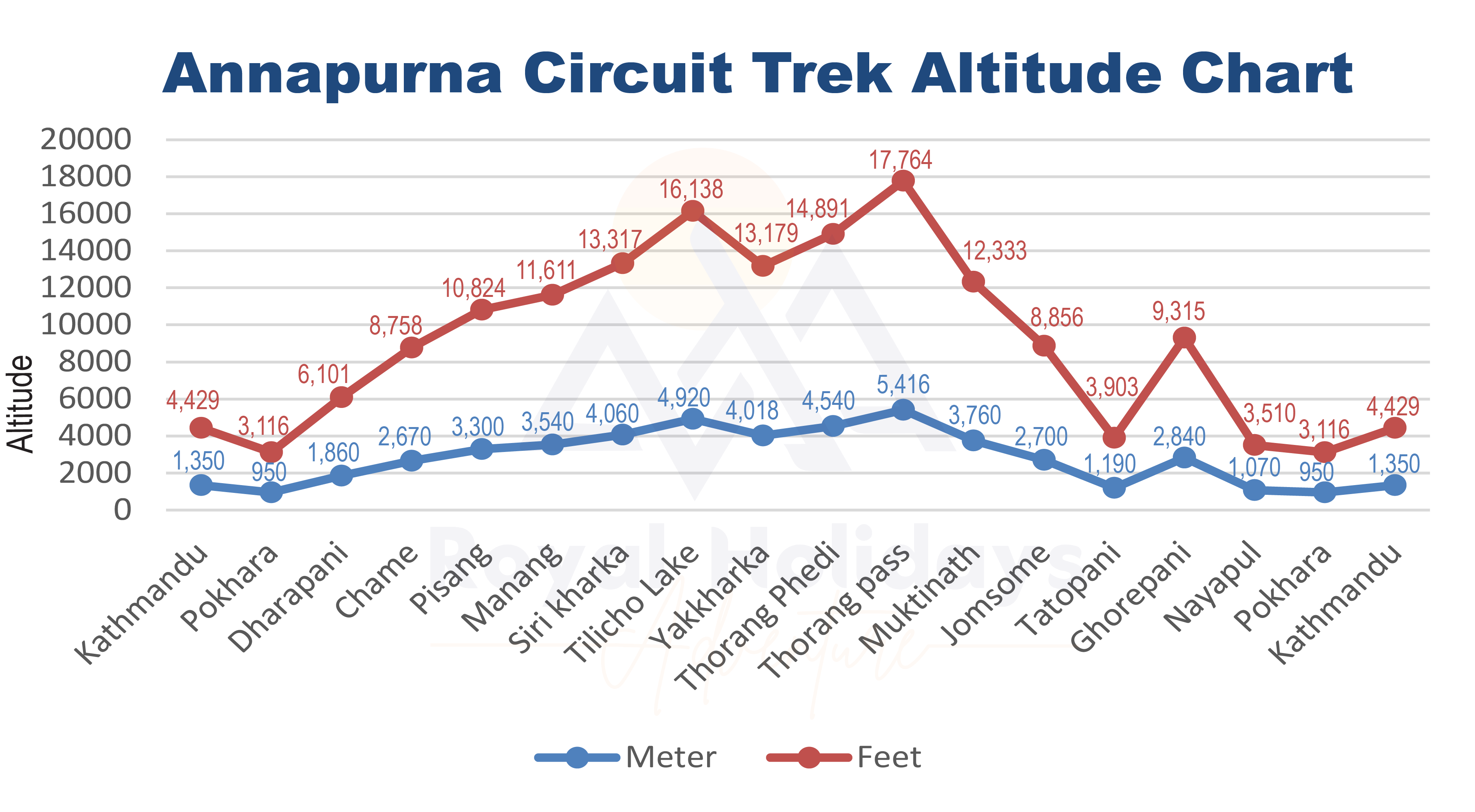
Altitude management is the single most important safety factor on the Annapurna Circuit Trek, especially as the route climbs rapidly from river valleys to one of the highest trekking passes in Nepal. The combination of long walking days, thin air, and cold alpine conditions makes proper acclimatization essential for a safe and enjoyable trek.
Highest Altitude: Thorong La Pass (5,416 m)
The highest point of the trek is Thorong La Pass, one of the highest non-technical trekking passes in the Himalayan mountain range. The crossing typically begins before sunrise from Thorong Phedi or High Camp, with a long, gradual climb in cold, oxygen-thin air. At this elevation, physical output drops sharply, and weather conditions, such as wind, cold, or snowfall on pass, can significantly increase fatigue and risk.
Importance of Acclimatization Days
A well-designed Annapurna Circuit trek itinerary includes a mandatory acclimatization day at:
- Manang (3,540 m) – with short hikes toward the Gangapurna Glacier or nearby ridgelines
These hikes follow the “climb high, sleep low” principle, allowing the body to adapt before moving higher. Skipping this rest day is one of the most common causes of altitude-related problems before the pass.
AMS: Signs & Preventions
High altitude sickness can affect anyone, regardless of fitness. Early symptoms include headache, nausea, dizziness, poor sleep, and loss of appetite.
Key AMS prevention measures include:
- Gradual ascent with proper acclimatization in Manang
- Maintaining hydration and regular meals in teahouses on Annapurna
- Walking at a steady pace (bistari, bistari)
- Immediate descent if symptoms worsen
Ignoring symptoms to “push for the pass” is the leading reason trekkers fail to complete the circuit safely.
Why Professional Guides Matter
A licensed guide is trained to:
- Monitor early AMS symptoms that trekkers often overlook
- Control daily pacing and rest breaks
- Adjust plans based on weather and trail conditions
- Coordinate descent or emergency evacuation when required
With long distances between settlements near the pass, professional guidance adds a vital safety layer in high-altitude terrain.
Culture, Villages & Local Life
The trek offers a close look at how culture changes with altitude. In Manang, daily life reflects strong Tibetan Buddhism, seen in centuries-old monasteries, fluttering prayer flags, and carved mani walls along the trail. These villages feel quiet, spiritual, and deeply connected to the mountains.
After crossing the high pass, the atmosphere shifts in the Mustang region, where Hindu traditions become more visible. The Muktinath temple stands out as a sacred pilgrimage site, known for its 108 stone water spouts and eternal flame. Along the way, meeting Gurung, Thakali, and Manangi communities reveals how Himalayan cultures have adapted to harsh landscapes through tradition, trade, and resilience.
Flora, Fauna & Conservation Areas
The trek runs entirely within the Annapurna Conservation Area, the largest protected region in Nepal. Along the route, landscapes change from subtropical forests and rhododendron hills to alpine pastures and dry trans-Himalayan terrain, home to blue sheep, Himalayan tahr, musk deer, and many bird species.
This region is protected through strong eco-tourism and conservation practices. Responsible trekking, such as reducing plastic waste, respecting wildlife, and using local teahouses, helps protect fragile ecosystems. These efforts ensure the long-term preservation of Annapurna’s flora and fauna while supporting sustainable mountain communities.
Is the Annapurna Circuit Trek Suitable for Beginners?
Yes, the Annapurna Circuit Trek is suitable for beginners who have good physical fitness and prepare properly for altitude and long trekking days. Its gradual elevation gain, well-marked trails, and frequent villages make it one of Nepal’s most beginner-friendly high-altitude treks.
- Required Fitness Level: Beginners should be capable of walking 5–7 hours per day on uneven trails, handling sustained ascents, and staying active for multiple consecutive days above 3,000 m.
- Prior Trekking Experience: Previous high-altitude trekking is not mandatory. However, experience with multi-day hikes or hill walking improves pacing, endurance, and overall comfort on the route.
- Preparation Tips:
- Train cardiovascular endurance and leg strength for at least 6–8 weeks
- Include acclimatization days, especially in Manang
- Trek with a licensed Annapurna trekking guide
Why Choose a Licensed Agency for Annapurna Circuit Trek?
The Annapurna Circuit Trek is not a restricted-area trek, but choosing a government-licensed trekking agency greatly improves safety, planning accuracy, and overall trek quality, especially on a long, high-altitude route.
Legal Requirements
While permits like ACAP and TIMS are mandatory, licensed agencies handle:
- Correct permit processing and verification
- Checkpoint compliance along the route
- Updated regulations for 2026 trekking seasons
Safety Implications
Professional agencies provide structured safety management, including:
- Proper acclimatization planning before Thorong La Pass
- Early detection and response to altitude sickness
- Emergency evacuation coordination and insurance liaison
Local Expertise Advantages
Experienced Annapurna guides contribute:
- Accurate pacing and route decisions based on daily conditions
- Local knowledge of teahouses, weather patterns, and trail alternatives
- Cultural insight in Gurung, Thakali, and Manangi villages
Long-Term Sustainability
Licensed agencies support responsible trekking by:
- Employing trained local guides and porters
- Promoting eco-tourism within the Annapurna Conservation Area
- Reducing environmental impact through regulated operations
Trek the Annapurna Circuit Confidently with Complete Support
With licensed guides, all required ACAP and TIMS permits, and proven safety protocols, your Annapurna Circuit Trek is managed from start to finish. Our experienced team handles logistics, altitude safety, and emergency planning, so you can focus on the breathtaking landscapes, cultural immersion, and the adventure of crossing Thorong La Pass.
Secure your trek today and explore Nepal’s Annapurna region safely, responsibly, and with peace of mind, knowing every detail, from teahouse accommodations to high-altitude guidance, is professionally taken care of.

Annapurna Circuit Trek 14 Days Itinerary FAQs
Find answers to the most common questions about the Annapurna Circuit Trek 14 Days Itinerary, including permits, itinerary, cost, and difficulty.
-
Can the Annapurna Circuit Trek be done independently without a guide?
Yes, the Annapurna Circuit Trek can be done independently without a guide, as it is not a restricted area. However, doing the Annapurna Circuit Trek independently requires strong navigation skills, altitude awareness, and self-managed logistics, especially when crossing Thorong La Pass.
-
How crowded does the Annapurna Circuit get during peak trekking seasons?
The Annapurna Circuit gets crowded during peak trekking seasons, especially in autumn and spring. Popular sections like Manang, Thorong Phedi, and Muktinath see higher foot traffic, while remote stretches remain quieter compared to Everest Base Camp.
-
What happens if bad weather delays crossing Thorong La Pass?
If bad weather delays crossing Thorong La Pass, trekkers must wait at Thorong Phedi or High Camp. Guides may adjust schedules, add rest days, or descend if conditions remain unsafe, prioritizing safety over fixed itineraries.
-
How cold does it get at night on the Annapurna Circuit at higher elevations?
At higher elevations, it gets very cold at night on the Annapurna Circuit, especially above 4,000 meters. Night temperatures in Manang and Thorong Phedi often drop below –10°C, requiring proper sleeping bags and layered clothing.
-
How safe is drinking water on the Annapurna Circuit, and what purification methods work best?
Drinking water on the Annapurna Circuit is not recommended without treatment. The best water purification methods include purification tablets, UV purifiers, or boiling. Bottled water is available but costly and discouraged due to plastic waste.
-
Is travel insurance mandatory for the Annapurna Circuit Trek, and what should it cover?
Yes, travel insurance is mandatory for the Annapurna Circuit Trek. It should cover high-altitude trekking, emergency helicopter evacuation, medical treatment, and trip interruption, especially for altitude-related illnesses above Manang.
-
How physically demanding is the Tilicho Lake section compared to the main Annapurna Circuit trail?
The Tilicho Lake section is more physically demanding than the main Annapurna Circuit trail. It involves steeper ascents, loose terrain, and longer walking days, making it suitable only for trekkers with strong fitness and acclimatization.
-
Is the Annapurna Circuit suitable for trekkers over 50 with good fitness levels?
Yes, the Annapurna Circuit is suitable for trekkers over 50 with good fitness levels. With proper pacing, acclimatization days, and medical preparation, age is less important than cardiovascular fitness and previous trekking experience.