
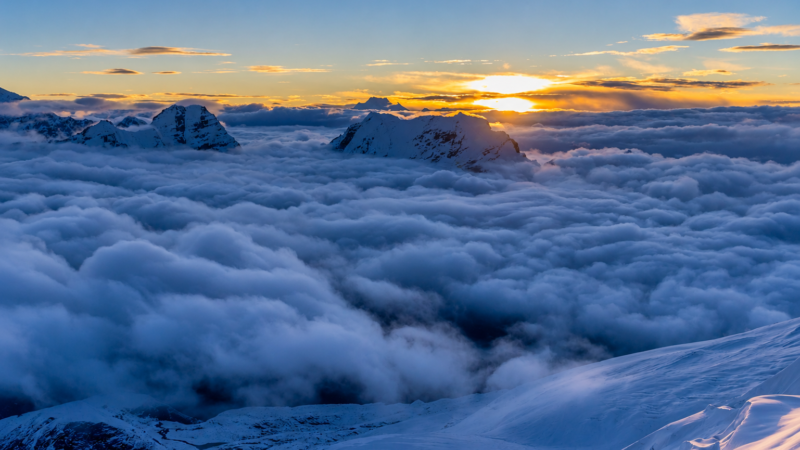
Mera Peak Climbing in Nepal
 70 Reviews
in TripAdvisor
70 Reviews
in TripAdvisor


Mera Peak Climbing | Trip Overview
Here is a quick summary of what to expect on this trek:
-
Duration 15 Days
-
Max Altitude 6,476 m / 21,247 ft
-
Group Size 2 to 12 Persons
-
Difficulty Moderate to Challenging
-
Region Hinku Valley, Solukhumbu
-
Best Season March to May / September to November
-
Start/End Point Kathmandu / Kathmandu
-
Accommodation Teahouse and Base Camp Tent


About Mera Peak Climbing in Nepal
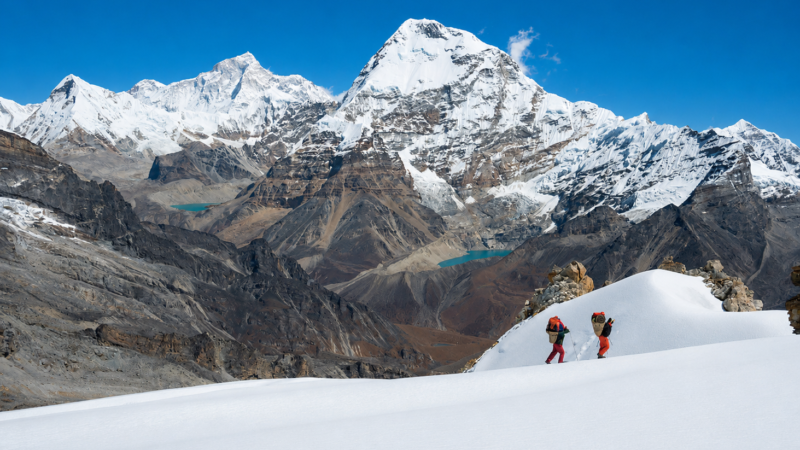
Mera Peak Climbing in Nepal is one of the most popular trekking adventures in the Himalayas offering climbers the chance to reach the top of Mera Peak, the highest trekking peak in Nepal at 6,476 meters (21,247 feet). Mera Peak is situated in a pristine Hinku Valley of the Solukhumbu region in the protected Makalu-Barun National Park, where the best of trekking and mountaineering are in perfect balance. The typical 15-day tour starts in Kathmandu and continues with a flight to Lukla to trek into the remote Sherpa villages, the dense forests and stunning mountain scenery until you reach the high-altitude climbing route.
A major attraction of Mera Peak Climbing in Nepal is to stand at the top of a magnificent Himalayan peak, enjoying some of the world's best mountain views. Mera Peak is a cluster of three summits, Mera North (6,476 m), Mera Central (6,461 m) and Mera South (6,065 m) of which Mera North is the most popular climbing objective. Climbers from the summit enjoy sweeping vistas of the five of the world's highest peaks: Everest, Lhotse, Makalu, Cho Oyu and Kanchenjunga, making this a truly memorable high-altitude adventure.
While not as technically challenging as many of the other mountains in the Himalayas, a Mera Peak Climbing in Nepal demands good physical fitness, proper acclimatization, and determination. Climbers hike through glaciers and utilize simple mountaineering gear like crampons and ice axes, as well as spend their nights above 5,500 meters, before climbing to the summit on the day. This is a fantastic opportunity for those seeking their first taste of the Himalayan mountain peak adventure while enjoying all the beauty, culture and adventure of Nepal's Mountains.
Mera Peak Climbing Itinerary - 15 Days
Show All
Day 1 Fly from Kathmandu to Lukla & Trek to Paiya
-
 Accomodation: Tea house / Lodge
 -
 Meals: Breakfast, Lunch, Dinner
 -
 Elevation: 2,730 M
 -
 Duration: ~5 hours
Day 2 | Trek from Paiya to Panguam
-
Accomodation: Tea house / Lodge
-
Meals: Breakfast, Lunch, Dinner
-
Elevation: 2,850 M
-
Duration: ~5 hours
Day 3 | Trek from Panguam to Nagindingma
-
Accomodation: Tea house / Lodge
-
Meals: Breakfast, Lunch, Dinner
-
Elevation: 2,650 M
-
Duration: ~5 hours
Day 4 | Trek from Nagindingma to Cholem Kharka
-
Accomodation: Tea house / Lodge
-
Meals: Breakfast, Lunch, Dinner
-
Elevation: 3,350 M
-
Duration: ~5 hours
Day 5 | Trek from Cholem Kharka to Khola Kharka
-
Accomodation: Tea house / Lodge
-
Meals: Breakfast, Lunch, Dinner
-
Elevation: 3,930 M
-
Duration: ~5-6 hours
Day 6 | Trek from Khola Kharka to Kothe
-
Accomodation: Tea house / Lodge
-
Meals: Breakfast, Lunch, Dinner
-
Elevation: 4,180 M
-
Duration: ~6-7 hours
Day 7 | Trek from Kothe to Thaknak
-
Accomodation: Tea house / Lodge
-
Meals: Breakfast, Lunch, Dinner
-
Elevation: 4,350 M
-
Duration: ~4 hours
Day 8 | Trek from Thaknak to Khare
-
Accomodation: Tea house / Lodge
-
Meals: Breakfast, Lunch, Dinner
-
Elevation: 5,045 M
-
Duration: ~5–6 hours
Day 9 | Acclimatisation & Training in Khare
-
Accomodation: Tea house / Lodge
-
Meals: Breakfast, Lunch, Dinner
-
Elevation: 5,045 M
Day 10 | Trek from Khare to Mera High Camp
-
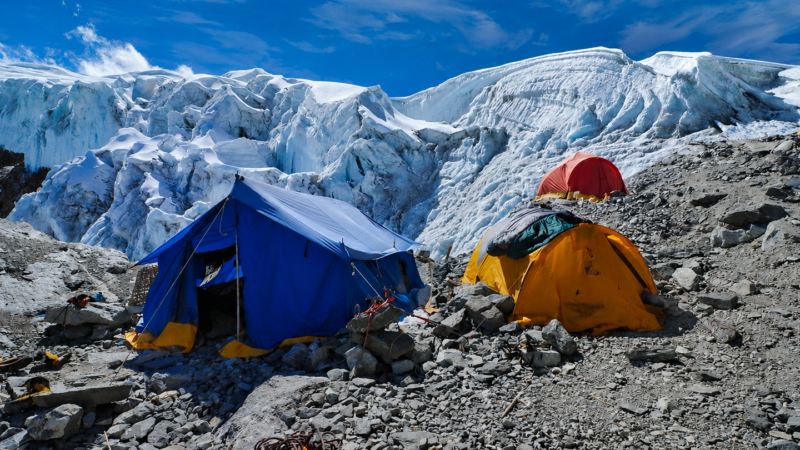
Accomodation: Tented Camp
-
Meals: Breakfast, Lunch, Dinner
-
Elevation: 5,780 M
-
Duration: ~6-7 hours
Day 11 | Summit Day: High Camp to Mera Summit (6,461 M) & Back to Khare
-
Accomodation: Tea house / Lodge
-
Meals: Breakfast, Lunch, Dinner
-
Elevation: Summit 6,461 M / Return to 5,045 M
-
Duration: ~8 hours
Day 12 | Trek from Khare to Kothe
-
Accomodation: Tea house / Lodge
-
Meals: Breakfast, Lunch, Dinner
-
Elevation: 4,180 M
-
Duration: ~5 hours
Day 13 | Trek from Kothe to Chetarwa
-
Accomodation: Tea house / Lodge
-
Meals: Breakfast, Lunch, Dinner
-
Elevation: 3,580 M
-
Duration: ~5 hours
Day 14 | Trek from Chetarwa to Lukla
-
Accomodation: Tea house / Lodge
-
Meals: Breakfast, Lunch, Dinner
-
Elevation: 2,880 M
-
Duration: ~6–7 hours

Day 15 | Fly from Lukla to Kathmandu
-
Accomodation: Hotel
-
Meals: Breakfast
-
Elevation: 1,400 M
-
Duration: ~25–30 minutes
-
 Kathmandu international airport Pick up and drop off
-
Two nights Hotel accommodation in Kathmandu with breakfast
-
Kathmandu-lukla-Kathmandu both way flight tickets
-
A professional and responsible trekking guide during the trek
-
Accommodation in the tea house during the trek (twin sharing)
-
All Necessary Trekking permits and paper work
-
Three meal a day (Breakfast, Lunch and Dinner) during the trekking
-
Trekking route map, duffel bag and water purification tablet
-
Mera peak climbing permit
-
Camping accomodation on tent during the climbing period in high camp
-
Climbing Sherpa guide for 2 days
-
 Travel insurance
-
Tip to the guide and porter
-
Personal expenses; hot shower, internet, battery charging
-
Any Kinds of drinks
This cost and inclusion are based on standard group bookings. If you are not satisfied with the itinerary or package includes details, please contact us, we are happy to customize the trek according to your preferences.
Mera Peak Climbing Route and Map
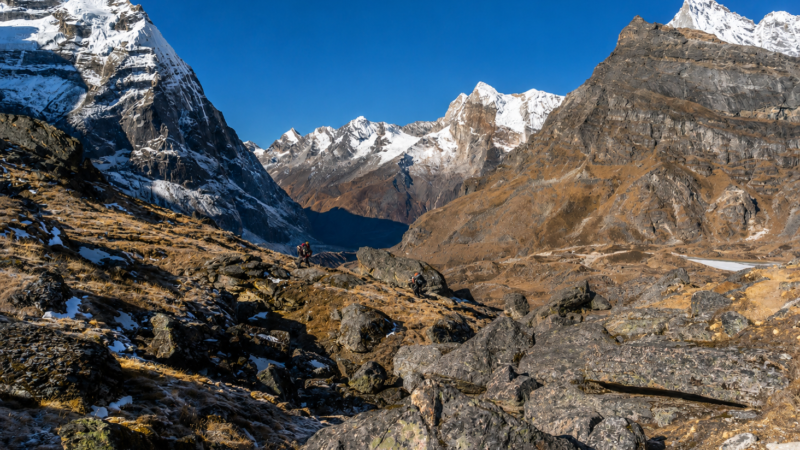
The Royal Holidays Adventure route is the most scenic and well-acclimatized route to Mera Peak, and is the route that is included in the tour. It starts with a flight from Kathmandu to Lukla (2,860 m) and then the path turns south and bypasses the populated route of EBC. One of the most notable aspects of the Mera Peak route is the separation at Paiya and Panggom, through dense rhododendron woodlands, over the Zatrwa La Pass (4,610 m) into the Hinku Valley, from where you then head up towards the summit.
Mera Peak Climbing Difficulty Level
Mera Peak is a moderate to difficult climb. The physical aspect of the hike will involve walking for 6 to 8 hours a day on uneven ground, crossing rivers, climbing on steep ridges and walking on the Hinku Glacier at height. Climbing non-technically. For most climbers no vertical rock faces, no complicated ropes. The upper part from High Camp (5780m) to the summit, however, is on snow slopes, cramponing on ice and is basic rope work with fixed lines set by your Sherpa team.
Difficulty Comparison: Mera Peak vs. Other Peaks
| Peak | Altitude | Technical Difficulty | Physical Demand | Recommended For |
| Mera Peak | 6,476 m | Low to Moderate | High | First-time high-altitude climbers |
| Island Peak | 6,189 m | Moderate | High | Climbers with prior peak experience |
| Pisang Peak | 6,091 m | Moderate | Moderate | Climbers with basic climbing exposure |
| Dhampus Peak | 5,950 m | Low | Moderate | True beginners |
Climbers without prior mountaineering experience may try to summit Mera Peak as long as they are trained by their Sherpa guide at Khare (5045 m) which is the acclimatization stop prior to the High Camp. Royal Holidays Adventure teaches all climbing skills including the use of crampons, ice axe and rope protocol at Khare. It is not recommended for people who have a serious cardiac condition, a recent history of high-altitude sickness, or who do not have a good fitness for trekking.
Altitude and Acclimatization on Mera Peak Climbing
The highest sleeping elevation is ~5,780 m at High Camp and the summit is at 6,476 m. This imbalance is significant as your body needs to adapt before you try to climb for first place. The main health hazards on this trek are Acute Mountain Sickness (AMS), which is the most common, characterized by a constant headache, nausea, loss of energy and lack of sleep. A more severe condition is High Altitude Pulmonary Edema (HAPE), which is an accumulation of fluid in the lungs and High-Altitude Cerebral Edema (HACE), fluid accumulation in the brain, both of which are rare but potentially life-threatening conditions if not treated promptly with rapid descent.
Our route follows the rule of high peaks and low sleeping if possible. In our program there will be no other day for acclimatization but the Khare acclimatization day. It is not a luxury and is actually one of the most important factors as to whether you get to the top safely or whether you get off early. On all expeditions, Royal Holidays Adventure guides bring pulse oximetry, supplemental oxygen for emergencies, and portable altitude chambers.
Villages and Local Life on the Route
The best part about Mera Peak climbing in Nepal is that you have the chance to see some of the more remote communities in the Himalayas, which are very little impacted by mass tourism. The Mera Peak trail is a quieter option than the route to Everest Base Camp, which offers the chance to visit traditional Sherpa and Rai villages, including Panggom, Ningsow, Chhatra Khola and Kothe. The settlements provide a serene hiking experience with the opportunity to experience true mountain living and enjoy the natural beauty of the area without the crowds.
As you hike through Mera Peak Climbing in Nepal, you'll also see great cultural heritage and centuries of Buddhist tradition. The roadside is adorned with colorful prayer flags, ancient monasteries, mani stone walls, and sacred chortens, providing a spiritual atmosphere to enhance the pilgrimage journey. It's not uncommon to spot yaks while trekking to higher altitudes above 4,000m, where you can witness the lifestyle of the local mountain communities.
Aside from the physical exertion and gorgeous views, Mera Peak Climbing Nepal stands out as a deeply enriching cultural journey that will impact climbers forever. Guided by local experts who can provide valuable insights into the history, traditions, and customs of the area, visitors can connect with the people and places they encounter in a more meaningful way. For many adventurers, these real experiences of culture are as memorable as reaching the summit itself.
Flora, Fauna, and Conservation
Mera Peak is located in Makalu-Barun National Park which was established in 1992 and has about 1500 kms of protected land. The park has one of the highest altitudinal gradients in the Himalayas, ranging from subtropical riverine forests at 900 m to permanent ice fields above 5000m. The lower sections of the trail traverse rhododendron and birch woodlands, where the red pandas, Himalayan black bears, snow leopards and other pheasant species (including Nepal's national bird, the Impeyan pheasant) are sheltered.
Royal Holidays Adventure follows the leave no trash policy. Our support team brings all waste, including packaging, canned food and human waste from the tent camp back. Any burning of rubbish at an altitude is strictly forbidden. Our pre-trip orientation includes information on responsible trekking.
Mera Peak Climbing Permits and Regulations
There are three permits to climb Mera Peak in Nepal in 2026. These are to be organized through a registered trekking agency. Currently, there is no provision in Nepal Mountaineering Association (NMA) rule book for such applications from individuals directly to the issuing organizations.
Required Permits for Mera Peak Climbing (2026)
| Permit | Issuing Authority | Spring Cost | Autumn/Winter Cost |
| NMA Climbing Permit | Nepal Mountaineering Association | USD 350 per person | USD 175 per person |
| Makalu Barun National Park Entry | Department of National Parks | USD ~30 per person | USD ~30 per person |
| Khumbu Pasang Lhamu Municipality | Local Municipality | Approx. USD 23 per person | Approx. USD 23 per person |
Safety Measures and Risk Management on Mera Peak Climbing
The safety of people is very important while climbing Mera Peak in Nepal and proper planning, experienced leadership and emergency procedures make a successful expedition possible. Climbers will always be accompanied by extremely trained and experienced Sherpa guides who have years of experience on Mera Peak. For those who opt to climb Mera Peak, they are rewarded with a well-structured risk management strategy that ensures safety is optimised throughout the expedition.
Key safety measures during Mera Peak Climbing in Nepal include:
- NMA-certified climbing Sherpa guides with multiple successful Mera Peak ascents.
- Regular health monitoring using pulse oximeters to track acclimatization.
- Access to a Gamow bag (portable altitude chamber) and supplemental oxygen.
- Comprehensive first-aid equipment carried by the guide team.
- Pre-arranged helicopter evacuation procedures for emergency situations.
- Mandatory travel insurance covering high-altitude medical evacuation.
Weather monitoring and communication systems are essential on an expedition for climbers seeking an opportunity to climb Mera Peak. Guides use VHF radio to communicate frequently and closely monitor mountain weather forecasts to find suitable summit windows. The only time summit attempts are made is when daylight hours, weather and other factors allow safe ascent and descent. Maximum possible care is always taken, and if conditions in the mountains or the weather get bad, the summit attempt is postponed or cancelled. It's a philosophy that is uncomplicated: it's hard to make it to the top, but it's even more important to get back down safely.
Mera Peak Climbing vs. Other Popular Peaks
The Mera Peak is often compared to other trekking peaks in Nepal like Island Peak, Pisang Peak and Dhampus peak. All four peaks are great introductions into the Himalayan climbing world but Mera Peak is Nepal's highest trekking peak at 6,476m. Although it is higher in elevation, it is not quite as challenging as Island Peak and is a great choice for those new to climbing who want to experience high altitudes. The trail through the secluded Hinku Valley is also less crowded and more authentic than the more popular Everest Base Camp area.
Those who wish to undertake the climb of Mera Peak will find the expedition an exciting combination of adventure, accessibility and a high probability of reaching the summit. The overall success rate is higher at Mera Peak as compared to many other similar trekking peaks, because it has a gradual acclimatization profile and doesn't require any technical approach to climb up. Ideal for fit beginners and trekkers wishing to move on from trekking to mountaineering but still offers exhilaration of glacier travel and magnificent Himalayan views. Mera Peak offers a more remote wilderness adventure, less crowds and some of the best mountain views in Nepal compared to Island Peak, Pisang Peak, and Dhampus Peak.
Is Mera Peak Climbing Suitable for Beginners?
Of course, Mera Peak is the most appropriate first technical peak in Nepal, but with respect to Nepal it's a matter of honesty. Not recommended for the individual who has never been hiking at higher altitudes above 4,000m and has only a sedentary level of fitness. The challenge of the climb is suitable for a person who has climbed a high-altitude trek (at least 4,500 meters) and has been training regularly for 3-6 months prior to departure.
Fitness Preparation Recommendations
| Training Type | Recommended Frequency | Purpose |
| Cardiovascular (running, cycling, swimming) | 4 to 5 times per week | Build aerobic base for long trekking days |
| Strength and Endurance (weighted hiking, lunges) | 3 times per week | Leg strength for steep ascent and descent |
| Altitude Simulation (if available) | Optional | Pre-exposure to reduced oxygen levels |
| Day Hikes with Load | Weekly | Simulate actual trek conditions |
Why Choose Royal Holidays Adventure for Mera Peak Climbing
Royal Holidays Adventure is one of the government registered trekking and expedition company in Kathmandu, Nepal, with more than 10 years of experience in peak climbing. The Sherpa team has long ties to the Solukhumbu region, and they operate the route of Hinku Valley in regular seasons. No subcontracting of guides or porter services, the person you brief with in Kathmandu, is the person you climb with.
We process permits, arrange insurance, organize gear and schedule our daily activities in-house. Groups of 12 people or less are the maximum size to provide: adequate guide-to-climber ratios and meaningful attention at altitude. All clients are contacted prior to departing by their assigned lead guide for a pre-departure call or meeting. We are 100% transparent in pricing. The breakdown of charges you see in your package is the same that you'll be charged for. No concealed admin fees, no markup on equipment rentals and no extra pressure to pay for services that you were never asked for.
Book Your Mera Peak Climbing with Royal Holidays Adventure
Royal Holidays Adventure is ready to guide you safely and responsibly to the top of the trekking peak in Nepal and enjoy the view from the peak of 6,476 meters to Everest, Lhotse, Makalu, Cho Oyu and Kanchenjunga. The program is run by certified Sherpas and has been designed to be successful and is supported by a rich heritage of high-altitude climbing experience for a decade. Send an email to check the availability, price and booking of the tour to your group.
There are departure dates in the spring (March to May) and the fall (September to November). There are limited spaces available on each group's departures. Private departures, available on request, are tailor-made for groups or individuals wishing for a specific travel program and itinerary.

Mera Peak Climbing in Nepal FAQs
Find answers to the most common questions about the Mera Peak Climbing in Nepal, including permits, itinerary, cost, and difficulty.
1. How difficult is Mera Peak climbing compared to Everest Base Camp?
The Mera Peak climbing trek is much more challenging than the trek to Everest Base Camp. The whole EBC trek is technically no climbing, and the highest point is 5364m. Mera Peak is a 6,476m peak that involves using crampons, an ice axe and fixed ropes on glacier terrain. Both are physically demanding in the sense that they involve good cardiovascular fitness, but at Mera Peak, you’ll also be getting some altitude exposure, technical skills training and the mental challenges of a summit push at high altitudes.
2. Do I need prior climbing experience to attempt Mera Peak?
No prior climbing experience is required, although previous experience of high-altitude trekking is highly recommended. For climbers with no technical skills, they get training from their Sherpa guide at the base camp Khare (5,045 m) before the summit push. Training includes using cramps, ice axe and self-arrest techniques, and moving on fixed ropes. For those who have climbed with little AMS problems at altitudes above 4,500m, and who have maintained a consistent level of fitness, they are likely candidates for this climb.
3. What is the success rate for Mera Peak?
Mera Peak is considered an easier climb and is successful for about 85-95 percent of those who are well equipped and take part in guided expeditions. This rate is the highest one among 6000m peaks in Nepal. Poor weather on the summit day, acclimatization problems and fatigue are the main causes of not reaching the summit. Select a well-experienced agency with a well-planned itinerary and a prudently planned acclimatization will improve your odds.
4. What permits are needed for Mera Peak climbing in 2026?
The three permits required are NMA Climbing Permit, Makalu Barun National Park Entry Permit and the Khumbu Pasang Lhamu Rural Municipality permit. Permits are only available from registered trekking agencies in Kathmandu. No solo/direct applications will be accepted. All permit application processes are included as part of the package for Royal Holidays Adventure.
5. How much does Mera Peak climbing cost in total?
The total cost of Mera Peak hiking in Nepal in 2026 is from USD 2,200/ person to USD 3,800/ person for an organized trip. Permit, licensed guide/porter, domestic flights, all meals on trek, teahouse/tent accommodation, group climbing gear, and NMA Summit certificate. Costs not included include; personal climbing equipment (USD 100 to USD 500), travel insurance (USD 100 to USD 200), tips for guides and porters (USD 50 to USD 150) and personal costs on the trail.
6. When is the best time to climb Mera Peak?
Spring (March-May) and autumn (September-November) are the best seasons to visit. Spring is a good time to observe a pre-monsoon view, as the temperature is warmer. In terms of permit cost, the post monsoon season in autumn is the best time to go.In terms of skies, temperatures are colder in autumn, and in terms of permit cost, the post monsoon season is the best time to go. By most experienced Sherpa guides, October offers the best time of year for a combination of stable weather, good clear summits and reasonable cold temperatures. The monsoon season (June to August), and deep winter (January to February) are not recommended for safety reasons.
7. Is a guide mandatory for Mera Peak?
Yes. The Nepal Mountaineering Association (NMA) requires that all foreign climbers on Mera Peak must be accompanied by a licensed climbing guide. There are no legal rights to climbing alone or on an unguided expedition. The trail up to Khare is to be done with a trekking guide and the glacier and summit part above Khare is to be done with a certified climbing Sherpa.
8. What happens if I get altitude sickness on the climb?
If you have AMS symptoms, your guide will follow standard AMS guidelines to determine the severity. Rest at the current altitude, hydration and Diamox (if prescribed) are used to treat mild AMS. Immediate descent is initiated, if symptoms worsen or do not resolve within 24 hours. If the HAPE or the HACE occurs, the Gamow bag is used, and helicopter evacuation is activated. That is why high-altitude evacuation is an essential part of all Royal Holidays Adventure travel insurance.
9. Can I climb Mera Peak and Island Peak on the same trip?
Yes. Most trekkers opt for both Mera Peak and Island Peak in a single 25–28-day trek. The two peaks lie in neighbouring valleys in the Solukhumbu region and can be linked through Amphu Labtsa Pass (5,845 m) which calls for extra technical climbing experience and preparation. On request, Royal Holidays Adventure will provide combined itineraries. The total price of the expedition is in the range of USD 4 000 – USD 5 500 per person and depends largely on the route, duration and size of the group.
10. What is included in the NMA summit certificate?
Climbers who make the summit of Mera peak will receive an official certificate from Nepal Mountaineering Association. The certificate lists the climbers’ names, nationality, the height of the summit (6,476 m in this case) and the date of the accent. It gets issued through the agency of the registered agency and delivered in Kathmandu after the expedition is over. The certificate is a component of the NMA permit fee and will be paid through Royal Holidays Adventure as part of a standard permit package.