
Ghorepani Poon Hill Trek
 70 Reviews
in TripAdvisor
70 Reviews
in TripAdvisor


Ghorepani Poon Hill Trek: Trip Overview
-
Duration 9 days
-
Trekking Days 6 days of active trekking
-
Max Altitude Poon Hill — 3,210 m (10,531 ft)
-
Group Size 2 – 16 Trekkers
-
Difficulty Easy to Moderate
-
Region Annapurna Conservation Area, Nepal
-
Best Season March–May, September–November
-
Start/End Point Nayapul (1.5 hrs from Pokhara)
-
Accommodation Hotel | Tea House trekking


About the Ghorepani Poon Hill Trek
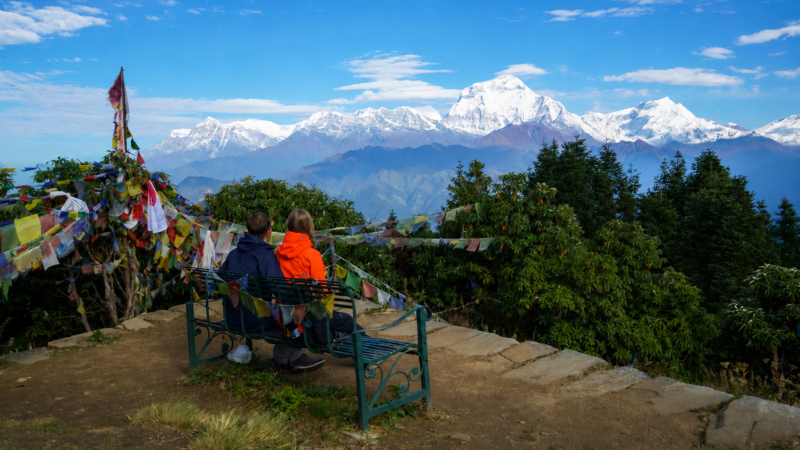
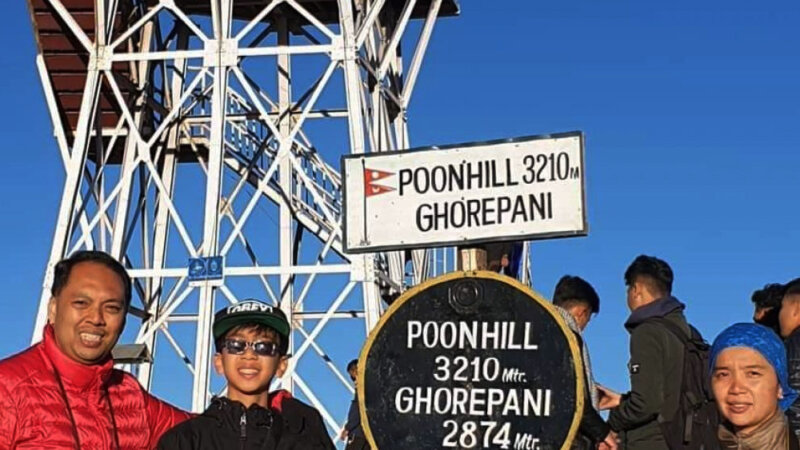
Ghorepani Poon Hill Trek is one of the best and most popular trekking routes in the Himalayas which is an ideal route for trekking in the Annapurna Conservation Area of Nepal, considered as one of the best routes in the low altitude region of Nepal. This hikes up for 45 km through heavy rhododendron and oak forests, stone-paved paths, terraced farms and traditional villages of Gurung and Magar ethnic people to the stunning Poon Hill viewpoint at 3210m to experience the sunrise. After arriving to look through the first light of the day on the snow-clad ridgelines of Dhaulagiri (8167m), Annapurna I (8091m), Annapurna South (7219m) and Machhapuchhre (6993m), one can easily understand why this one angle is appealing to tens of thousands of trekkers annually. The Ghorepani Poon Hill trek in Nepal offers a perfect blend of the mountainside beauty which is usually associated with much longer treks, with the length and level of the trek being suitable for the beginner trekker.
It is entirely in the Annapurna Conservation Area (ACA), the biggest trekking area under the umbrella of the Protected Area System (PAS) in Nepal covering 7629 square kilometers of high altitude, starting at an altitude of about 1050 meters at Birethanti and ending at 3210 meters at Poon Hill. Most healthy adults, however, at Ghorepani sleeping site, will not be above 2860 meters, and will not suffer any physiological stress on the body and will not be exposed to any risks of acute mountain sickness. That is the reason why Ghorepani Poon Hill is an ideal starting point for novice trekkers who wish to venture the Himalayas for a first-time trek in Nepal.
The trek is highly recommended for teenagers in families, to older people in good health and to the single trekkers to a compact but rich cultural Himalayan adventure. This hike is also a popular warm up trek for those who are going on to the Annapurna Base Camp trek or the Everest Base Camp trek the following season, as it helps in developing stamina, mountain awareness and teahouse system awareness.
Ghorepani Poon Hill Trek Itinerary - 6 Days
Show All
Day 1: Kathmandu to Pokhara
-
 Accomodation: Hotel (Pokhara)
 -
 Meals: Breakfast, Lunch, Dinner
 -
 Elevation: 800 M (Pokhara)
 -
 Duration: ~6-7 hours
 -
 Distance: 200 km
Day 2: Pokhara to Barethanti to Ulleri
-
Accomodation: Tea house/Lodge
-
Meals: Breakfast, Lunch, Dinner
-
Elevation: 2,050 M (Ulleri)
-
Duration: ~5-6 hours
-
Distance: 9 km
Day 3: Ulleri to Ghorepani
-
Accomodation: Tea house/Lodge
-
Meals: Breakfast, Lunch, Dinner
-
Elevation: 2,874 M (Ghorepani)
-
Duration: ~4-5 hours
-
Distance: 7 km
Day 4: Poon Hill Sunrise & Ghorepani to Tadapani
-
Accomodation: Tea house/Lodge
-
Meals: Breakfast, Lunch, Dinner
-
Elevation: 2,630 M (Tadapani)
-
Duration: ~6-7 hours (including Poon Hill)
-
Distance: 11 km
Day 5: Tadapani to Ghandruk
-
Accomodation: Tea house/Lodge
-
Meals: Breakfast, Lunch, Dinner
-
Elevation: 2,012 M (Ghandruk)
-
Duration: ~3-4 hours
-
Distance: 6 km

Day 6: Ghandruk to Pokhara
-
Accomodation: Hotel (Pokhara)
-
Meals: Breakfast, Lunch, Dinner
-
Elevation: 822 M (Pokhara)
-
Duration: ~2 hours
-
Distance: 30 km
Ghorepani Poon Hill Trek Route and Map
The classic trek route to Poon Hill starts and finishes at Nayapul, which lies about 42 kilometers east of Pokhara on the Pokhara–Baglung Highway. The trail then follows the Modi Khola (river) northwards from Nayapul through Birethanti which is the main permit check point at 1025 meters and then steadily up the Bhurungdi Khola valley to Tikhedhunga and then on to Ulleri via the well-known stone steps. The trail then passes through oak and rhododendron woods and winds through Nangethanti to Ghorepani (2860 m) where you will spend the night before heading up early to Poon Hill. The return route goes through the dense forest from Ghorepani to Tadapani and then to Ghandruk, the largest Gurung village on the track, south to Nayapul via Kimche.
The geographic highlights along the way are the Modi Khola gorge at the start, the wide rhododendron and oak forested belt between 2,000m to 2,860m that stretches across the mid-section of the route and the open ridgeline at Poon Hill where the entire western flank of the Annapurna Sanctuary and the Dhaulagiri massif can be viewed in a single panorama. Overall, the forests along the trail from top to bottom are safeguarded, animals are relatively undisturbed, and the villages have much of their traditional architecture and farming character. No technical climbing of any type and no glacier crossing.
Altitude and Acclimatization on Ghorepani Poon Hill Trek
The highest point on the trek Ghorepani Poon Hill is Poon Hill at 3210m, but that is only a one or two-hour walk early in the morning from Ghorepani. There is no accommodation at Poon Hill. Ghorepani village is the highest sleeping point of the regular tour at 2860 meters. Acute mountain sickness (AMS) typically starts to be a problem at elevations over 2,500 meters, therefore a night at or around Ghorepani as planned in the Royal Holidays Adventure allows for a natural acclimatization phase before summit morning. The tour is well structured, allowing the body to acclimatize gradually, and the steady ascent is not too high, with most trekkers not experiencing too much of a problem as long as they follow the pace set by the guide and are well hydrated. Signs of acute mountain sickness include a headache that is not relieved by paracetamol, nausea or vomiting, dizziness, tiredness of the body more than the activity, loss of appetite and sleep disturbances.
In the event of two or more of these symptoms developing and increasing over a 6-hour period, it is the safe option to descend rather than attempt to rest at the same altitude. Our guides are trained to keep an eye on trekkers on an ongoing basis, make basic wellness checks in the morning and make a decent call when it is required by the signs. It is recommended to have one's own supply of ibuprofen or paracetamol for the management of headache. Acetazolamide (Diamox) is used as a prophylactic by some trekkers - should be taken only with prior medical advice - has its own side effects. The best and most common methods of acclimatizing on this route are drinking 2-3 litres of water daily, don't drink alcohol on the ascent days, and going slowly.
Trekking vs Hiking | Understanding the Difference
One of the most frequently asked questions by first time travellers to Nepal is whether this trek is a hike or trek? Realistically, the term hike usually means a day hike in which the hike begins and ends at the same point, no overnight in the wild and distances are reasonably short. Trekking, on the other hand, is a multi-day hike through the mountains with overnight trips in villages or teahouses, necessitates planning of permits and accommodations for the trek, and involves a physical effort that is maintained for several days in succession. The Ghorepani Poon Hill Trek is a trek, covering six days of walking, 4-6 hours a day of hiking on mountain land, and the need for the two government permits, and the use of teahouses for food and shelter along the way. It is not a hike fit for beginners, but not impossible, and requires careful planning and physical fitness for a fun and safe trip.
Safety Measures and Risk Management on Ghorepani Poon Hill Trek
Royal Holidays Adventure adopts a safe and systematic approach to all treks from Ghorepani Poon Hill, whatever the size of the group or the time of the year. All the guides working at Royal Holidays Adventure are certified by Nepal Tourism board and trained in Wilderness First Aid. The first aid kits are fully equipped, and each guide will have an emergency pulse oximeter for checking blood oxygen saturation at altitude. All trekkers are briefed beforehand about AMS recognition and descent protocol, emergency contact procedures, route checkpoint system and what to do in case of separation from the group, in a verbal manner at Pokhara.
The GHOREPANI area can be reached by helicopter from Pokhara (ca. 35–40 flight minutes away) for emergency evacuation. Royal Holidays Adventure staff, in the case of an emergency where medical evacuation becomes necessary, will start the process of coordinating helicopter evacuation, based on the pre-arranged relationship with the helicopter services located in Pokhara. It is strongly recommended that all trekkers bring travel insurance which does include coverage for helicopter evacuation from mountain trek in Nepal as many travel insurance policies would exclude this and must be checked prior to the trek.
The rates for an uninsured helicopter evacuation from the Annapurna region may be as high as USD 3,000–5,000. From the Royal Holidays Adventure side, the ratio of guides to trekkers is kept a maximum of one guide to eight trekkers, meaning no trekker is ever too far from professional support.
Villages and Local Life on the Ghorepani Poon Hill Trek
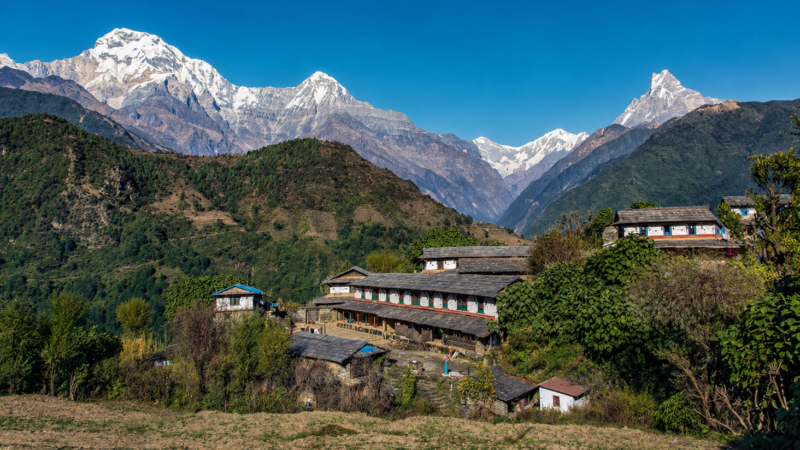
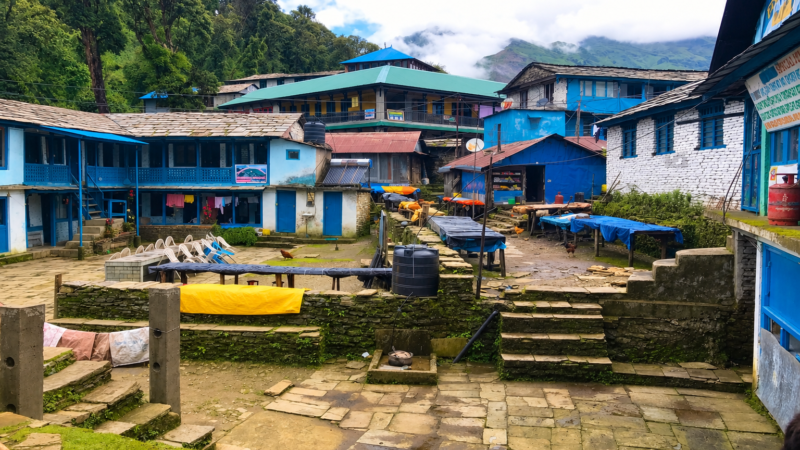
The path winds through villages, providing authentic cultural experiences at each turn. Birethanti at the beginning is a small, but lively settlement of the bazaar that crosses the confluence of the Modi Khola and Bhurungdi Khola rivers and is the first stop on the permit checkpoint system. Above the stone staircases of Ulleri, which stands on a high ridge, there is a traditional Magar village of approximately 40 stone and slate houses where the villagers continue the practice of terraced cultivation on slopes that defy gravity. At a height of 2,860 meters Ghorepani, or horse water, as its name translates loosely, is a saddle where cloud and mountain air meet, and was historically a watering point for the mule trade between Pokhara and Mustang.
The cultural highlight of the whole circuit is Ghandruk, which is 1940 meters down from Tadapani. It is the second largest Gurung village in Nepal and is one of the best preserved Gurung villages with a museum about the Gurung people's history as Gurkha soldiers in the British and Indian armies, stone paved streets and intricately carved wooden windows and a community that has embraced tourism since the 1980s without losing their cultural identity.
The alleys of the village are lined with trees, forming a maze to walk through at dusk, and the small monastery can be visited, as well as eating meals prepared by the local families of dhido and gundruk. For centuries, the Gurung and Magar communities have preserved their unique languages, festivals and farming practices, and the trek provides a rare opportunity to experience a lifestyle completely different from that of the urban Nepal.
Ghorepani Poon Hill Trek Permits and Regulations
By this regulation, Nepalese tourists and trekkers must have two permits, Annapurna Conservation Area Permit (ACAP) and Trekkers' Information Management System (TIMS) card on hand when entering Annapurna Conservation Area. They are not just formality, checked at several manned checkpoints along the trail including Birethanti, Ulleri, Ghorepani etc. and if someone does not carry valid documents then they may be turned back or fined. Independent trekkers must pay for a TIMS card. Also, you will have to pay a minimal entrance fee on the spot at Poon Hill viewpoint gate.
If you book a full package with Royal Holidays Adventure, they will arrange all permits on your behalf. The requirements for a permit are a valid passport (at least 6 months validity), 2 passport-size photographs and fees. Permits are non-refundable and non-transferable after being issued for both the ACAP and TIMS. There is no cost saving to hurry on trail, as permits are available regardless of the number of days spent on trail.
Launched in 1986, the Annapurna Conservation Area Project (ACAP), is the largest conservation area in Nepal with more than 1,226 species of flowering plants, 105 mammal and 518 bird species. Your donation of fees to the trail fund helps maintain the trails, protects the wildlife, and supports community growth in this remarkably diverse area.
In 2023, the government of Nepal requires that foreign trekkers in the Annapurna region hire a guide from a government registered trekking agency. This measure was put in place to make trekking safer, and to promote responsibility within the trekking trail and the livelihood of qualified local guides.
With a licensed agency such as Royal Holidays Adventure, trekkers can be certain they are booked with one that complies with all current regulations, will not have to bother with collecting permits for the trek and will have access to guides who are certified by the Trekking Agencies' Association in Nepal. It is not recommended to do any independent trek (travel without a licensed guide), and may not be allowed, depending on enforcement at checkpoints.
Is the Ghorepani Poon Hill Trek Suitable for Beginners?
Yes, the Ghorepani Poon Hill Trek Nepal is suitable for beginners with a realistic approach to preparation and an honest assessment of current fitness. The route does not require previous trekking experience, technical climbing skills, or acclimatization above 3,500 meters. The teahouse network provides food and shelter at regular intervals, so trekkers are never far from basic services. Trail markings, while not exhaustive, are supplemented by the guide's local knowledge, and the route is one of the most frequently walked in Nepal, meaning that rescue and emergency services are well-practiced and responsive.
However, it is important to be clear that being a beginner does not mean being unprepared. The sustained stone staircase ascent on day two, the pre-dawn cold at Poon Hill, and the cumulative leg fatigue of consecutive trekking days all demand a level of baseline fitness that cannot be improvised on the mountain.
The recommended minimum preparation for a first-time trekker planning the Ghorepani Poon Hill circuit is six to eight weeks of consistent aerobic exercise, with a focus on stair climbing, hill walking, and lower body strengthening. Trekkers should be comfortable walking four to five hours on uneven terrain without significant discomfort before the trek. Carrying a day pack of 5–7 kg during training walks helps the body adapt to the realistic load on the trail. Age is not a barrier, the route has been successfully completed by trekkers in their 60s and 70s with good baseline fitness, but age makes the preparation phase more important, not less.Royal Holidays Adventure offers pre-trek consultations for first-time trekkers, during which our team assesses current fitness, provides honest guidance on suitability, and recommends specific preparation activities if needed.
Why Choose Royal Holidays Adventure for Ghorepani Poon Hill Trek
Royal Holidays Adventure is a Nepal Tourism Board registered trekking company with a team of licensed, experienced guides and a reputation built on responsible, safety-first adventure tourism in the Annapurna and Everest regions. Every guide on our Ghorepani Poon Hill Trek departures holds a current guide licence issued by the Nepal Tourism Board, has completed Wilderness First Aid certification, and carries mountain rescue coordination experience accumulated across multiple seasons on Himalayan trails. Our local expertise means that permit arrangements, teahouse bookings, and transportation logistics are handled seamlessly, trekkers arrive at Nayapul ready to walk, with nothing to organise except personal packing.
Beyond logistics, Royal Holidays Adventure is committed to sustainable trekking practices that benefit the communities along the trail. We operate a strict no-single-use-plastic policy on all treks, pay our guides and porters above the minimum wage standard set by Nepal's trekking associations, and contribute a portion of each booking fee to the ACAP conservation fund. Local staff are sourced from villages along the trekking route wherever possible, keeping tourism income within the communities that maintain the trail and its cultural landscape. When you book the Ghorepani Poon Hill Trek with Royal Holidays Adventure, you are not just purchasing a logistics service, you are participating in a form of tourism that actively sustains the mountain environment and communities that make the trek worth doing.
Book Your Ghorepani Poon Hill Trek with Experts
The Ghorepani Poon Hill Trek Nepal delivers everything that draws people to the Himalayas, towering mountain panoramas, living cultural traditions, dense forest trails, and the quiet satisfaction of arriving somewhere extraordinary under your own effort, in a route accessible to any healthy, reasonably prepared adult. It is not a casual walk in the park. But it is a manageable, deeply rewarding Himalayan experience that most trekkers describe as one of the most memorable weeks of their lives.
Royal Holidays Adventure has guided hundreds of trekkers through this route across every season. We know the trail, we know the teahouses, we know the weather patterns, and we know what it takes to bring a group of people safely to Poon Hill at sunrise and safely back to Pokhara with full packs of photographs and empty legs. When you book with Royal Holidays Adventure, you receive a fully licensed, registered guide, all permits arranged on your behalf; teahouse bookings confirmed in advance for peak season; round-trip transportation from Kathmandu or Pokhara, all meals during the trek, and direct access to our emergency support line throughout your time on the trail.
Our team is available to answer pre-booking questions, provide honest fitness assessments for first-time trekkers, and customize itineraries for families, solo travelers, or groups with specific requirements. Contact Royal Holidays Adventure to request a full itinerary, a cost breakdown, and availability for your preferred travel dates. Your Poon Hill sunrise is waiting.

Ghorepani Poon Hill Trek FAQs
Find answers to the most common questions about the Ghorepani Poon Hill Trek, including permits, itinerary, cost, and difficulty.
1. How many days does the Ghorepani Poon Hill Trek take?
This walk lasts around 6 to 9 days if you are going alone and on active trekking days. The full package is 9 days travel days included from Kathmandu to Pokhara and back included with Royal Holidays Adventure. For trekkers with a limited time, there’s a shorter 4-day trekking package that starts directly from Pokhara. Both routes are the main circuit from Nayapul to Ghorepani, Nayapul to Poon Hill and then to Ghandruk, and the longer route gives more time to enjoy the route and has more cultural stops.
2. Is the Ghorepani Poon Hill Trek safe for solo travellers?
The Ghorepani Poon Hill Trek Nepal route has been a popular one among trekkers and it is one of the easiest routes for trekking in Nepal, even for solo trekkers, who have successfully completed the trek for decades. At present, however, in 2023 the Government of Nepal has made it mandatory for foreign trekkers in Annapurna to join a registered guide agency to hire a guide. A guide’s knowledge of route, local language skills, permit management and medical responses are all benefits to the solo trekker that go beyond legal requirements. Solo Join-In Departures are available at a competitive per-person rate with Royal Holidays Adventure.
3. What is the best season for the Ghorepani Poon Hill Trek?
Both autumn (October – November) and spring (March – May) are good. Poon Hill offers the clearest mountain views of the year in the fall, after the monsoon season. Spring is a time of warmer weather and the spectacular rhododendron flowering, which are visible on the trails from Ghorepani to Tadapani in a red and pink array. October is the rushiest month – book early. Late November or early March are good times to go and have almost the same conditions as May or June, but with a lot less crowded.
4. Do I need permits for the Ghorepani Poon Hill Trek?
Yes. There are two permits that are legally required: Annapurna Conservation Area Permit (ACAP) and the Trekkers’ Information Management System (TIMS) card. It is required to pay an entry fee at the Poon Hill viewpoint gate. Royal Holidays Adventure organizes permits as part of the entire trek package, so the trekker doesn’t have to deal with any paperwork.
5. What is the altitude of Poon Hill and is altitude sickness a risk?
Poon Hill is at 3210m (10531ft) and overnight accommodation is taken in Ghorepani at 2860m, the highest overnight trekking point in the standard route. For most healthy adults, AMS is low to moderate risk at these altitudes. This well-planned tour gradually increases the altitude gain, minimizing risk. The best preventive measures are to stay well-hydrated, slow down when walking and skip alcohol on ascent days. Our guides supervise trekkers daily and are trained to start descent protocols if symptoms occur.
6. Can children or elderly trekkers do the Ghorepani Poon Hill Trek?
Yes, if they are prepared and have realistic expectations. Trail is successfully completed by children 10 years and older with a reasonable number of stamina and by adults in 60s and 70s with good cardiovascular fitness. For younger and older trekkers, the long stretch of stone stairs between Tikhedhunga to Ulleri is the challenging part of the trail, with over 3,000 steps on a steep grade. For most people who are reasonably fit, this section is not too difficult with trekking poles and a slow, steady pace. On request, Royal Holidays Adventure can adjust the speed of the hiking to better suit the family or the older hiker.
7. What do I eat on the Ghorepani Poon Hill Trek?
Along the trail, one can find Teahouse menus featuring consistent menus of Nepali dishes, Tibetan dishes and Continental cuisine. The traditional Nepali dish of Dal bhat (lentil soup, rice, seasonal vegetables and pickle) is the most filling and calorie-dense feed and is served endless refills. Other popular alternatives are noodle soup, fried rice, pasta, momos (steamed dumplings) and various egg dishes. Porridge, pancakes, toast and muesli are all available for breakfast. Vegetarians are very well catered to. The price of food in trail teahouses is an average of NPR 400-700 per meal.
8. What is the difference between the Poon Hill Trek and the Annapurna Base Camp Trek?
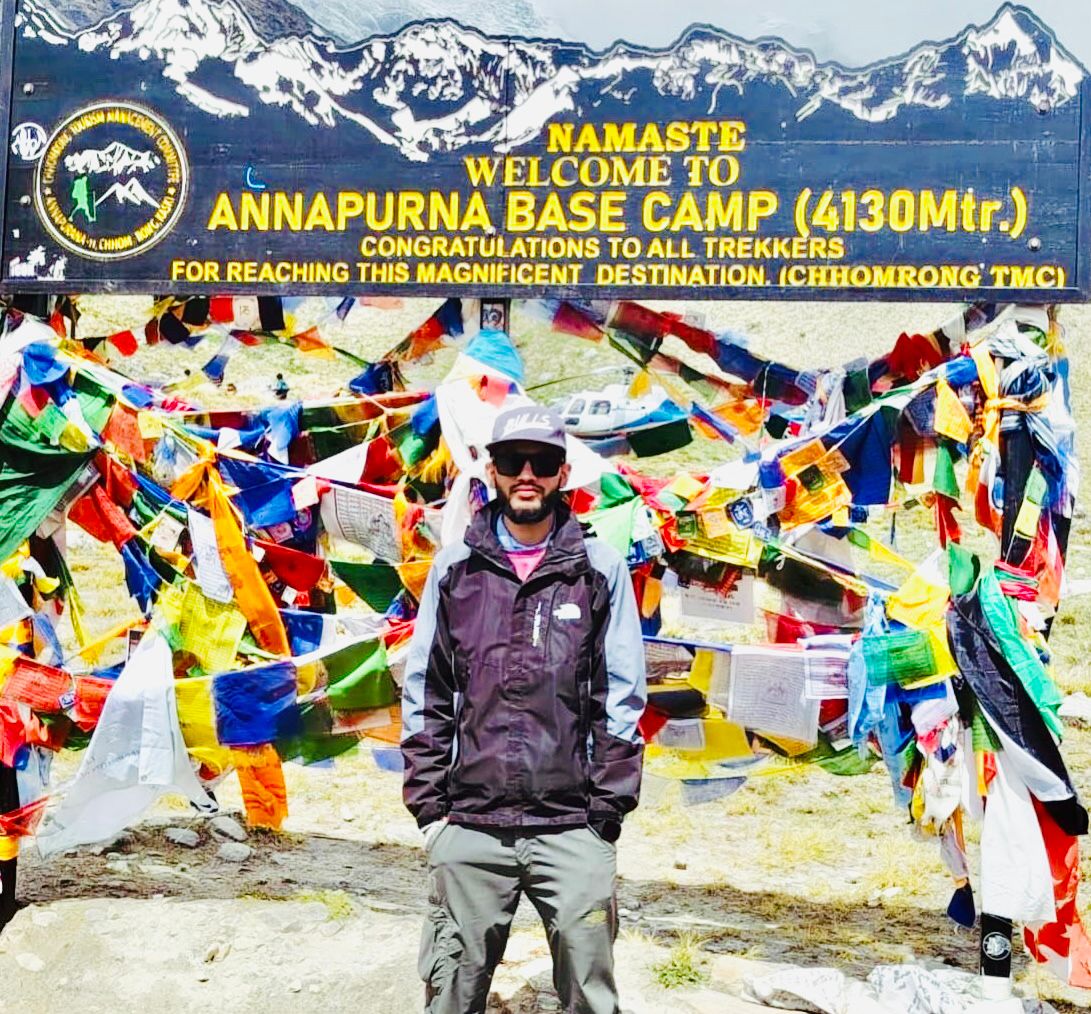
The Ghorepani Poon Hill trek and the Annapurna Base camp trek are both operating in the Annapurna Conservation Area and share some part of the trail, but their length, altitude and difficulty are vastly different. Poon Hill’s a 4–6 days trek and is at 3210 meters, while Annapurna Base Camp is at 4130 meters and is a 10–14 days trek. The ABC trek is at a higher altitude, has a higher risk of AMS, requires more sustained fitness, and provides a dramatically different experience than trekking on a ridgeline looking at Annapurna. A number of trekkers do the Poon Hill circuit on the way to ABC.
9. What should I pack for the Ghorepani Poon Hill Trek?
Essential gear includes well broken-in waterproof trekking boots, an insulated mid-layer (down or synthetic), a waterproof outer jacket, trekking poles, a head torch to use before sunrise on the Poon Hill, a sleeping bag or liner that is rated to at least minus 5°C (cold frames are not available on the trail) and enough cash in Nepali currency (ATMs are not found on the trail). Essential items include a sleeping bag liner, water purification tablets and an elementary personal first aid kit that contains blister pads, ibuprofen and antidiarrheal medicine. A comprehensive packing list will be sent at the time of booking at Royal Holidays Adventure.